
Church of Saint Cecilia, Cologne — History & Facts
In the quiet echo of absence, grief lingers like a fading hymn in the air. It is this sentiment that permeates the intricate depths of the Church of Saint Cecilia, Cologne, inviting viewers to confront the haunting beauty that lies within loss itself. Focus first on the towering spires that reach skyward, their gothic architecture imbued with an ethereal light. Notice how the soft glow cascades through the stained glass, illuminating the sacred space with a mix of vibrance and melancholy.
The composition draws your gaze upward, as if inviting you to ponder not just the structure, but the souls it has sheltered through time. Rich browns and deep golds dominate the palette, evoking the warmth of community while hinting at the quiet sorrow that accompanies memory. In the interplay of light and shadow, Berckheyde captures a moment frozen in time — a silent witness to countless prayers and farewells. The serene faces of figures, perhaps mourners or worshippers, reveal various shades of emotion, from devotion to despair.
The rich texture of the walls suggests weight and history, while the doors, slightly ajar, hint at both welcome and loss, embodying the thresholds between life and the beyond. Painted during a period when artists were exploring deeper emotional landscapes, Berckheyde captured this masterpiece in an era where the church remained a central pillar of life. While the exact date remains undetermined, he was active in the late 17th century in the Netherlands, a time marked by a complexity of spiritual and artistic expression. The work reflects an intricate dialogue between faith, grief, and artistic innovation, revealing how art serves as a conduit for collective memory.
More Artworks by Gerrit Adriaensz. Berckheyde
Browse all →
View of the Golden Bend in the Herengracht
Gerrit Adriaensz. Berckheyde
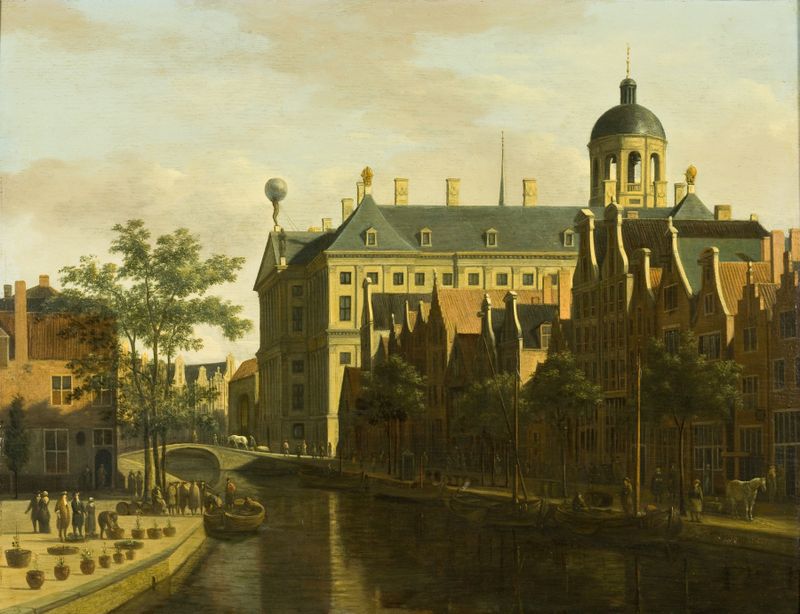
The Nieuwezijds Voorburgwal with the Flower and Tree Market in Amsterdam
Gerrit Adriaensz. Berckheyde
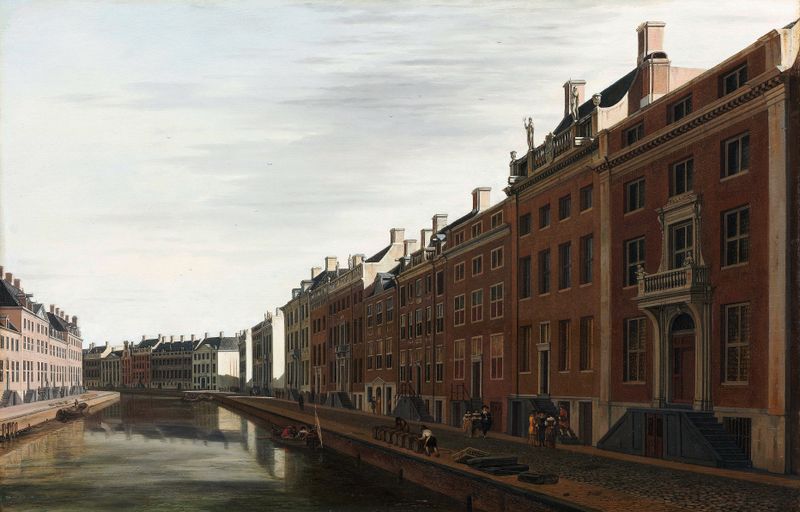
De Gouden Bocht in de Herengracht in Amsterdam vanuit het westen
Gerrit Adriaensz. Berckheyde
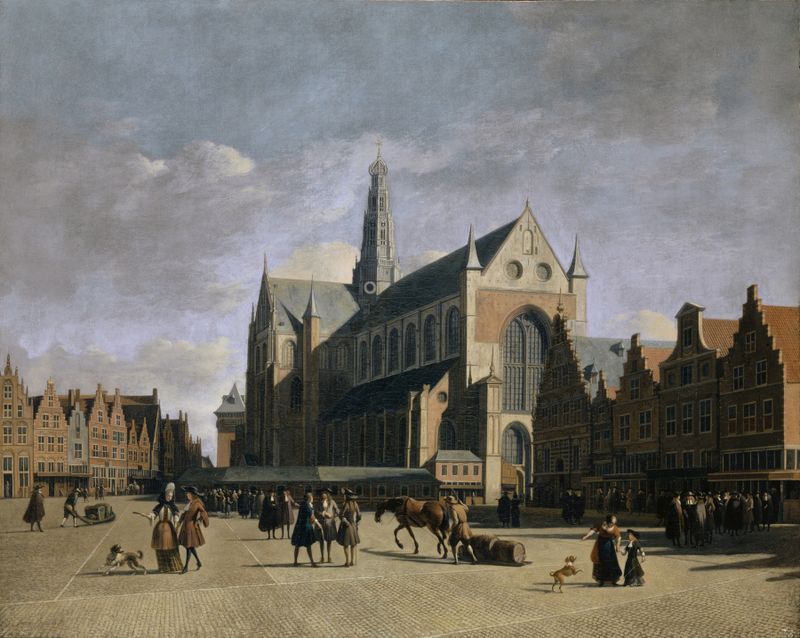
The Market Place in Haarlem
Gerrit Adriaensz. Berckheyde
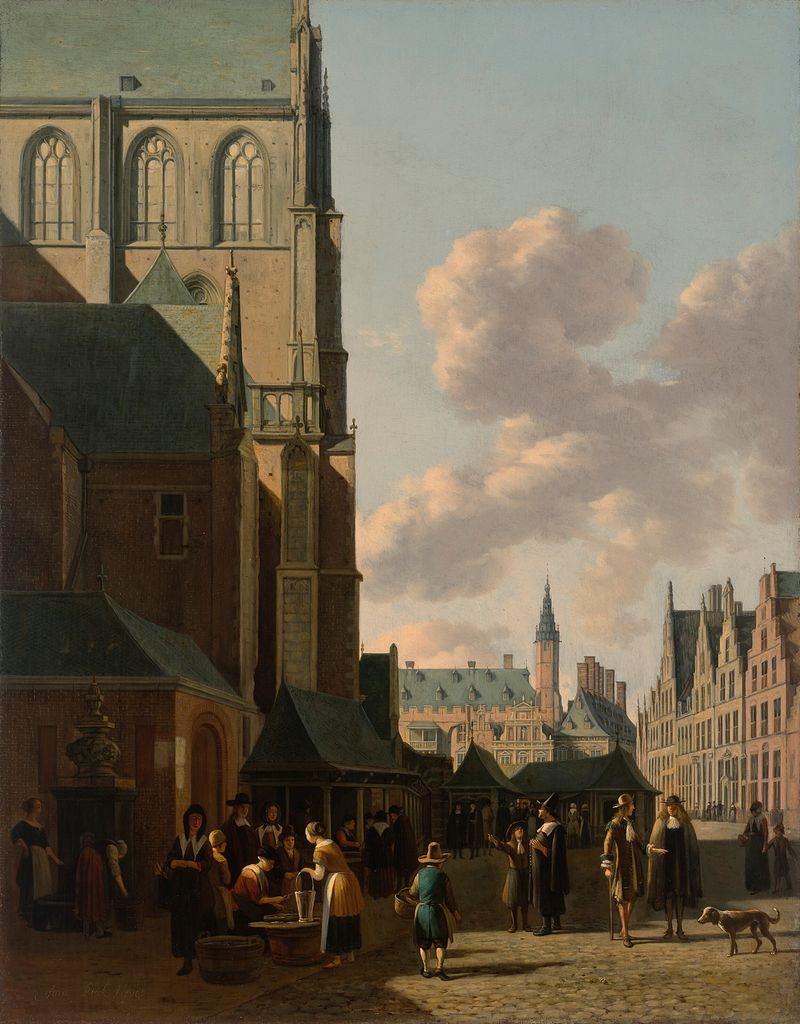
The Grote Markt, Haarlem, looking west, with the Grote Kerk (St Bavo’s) and the fish-market, the Town Hall beyond
Gerrit Adriaensz. Berckheyde
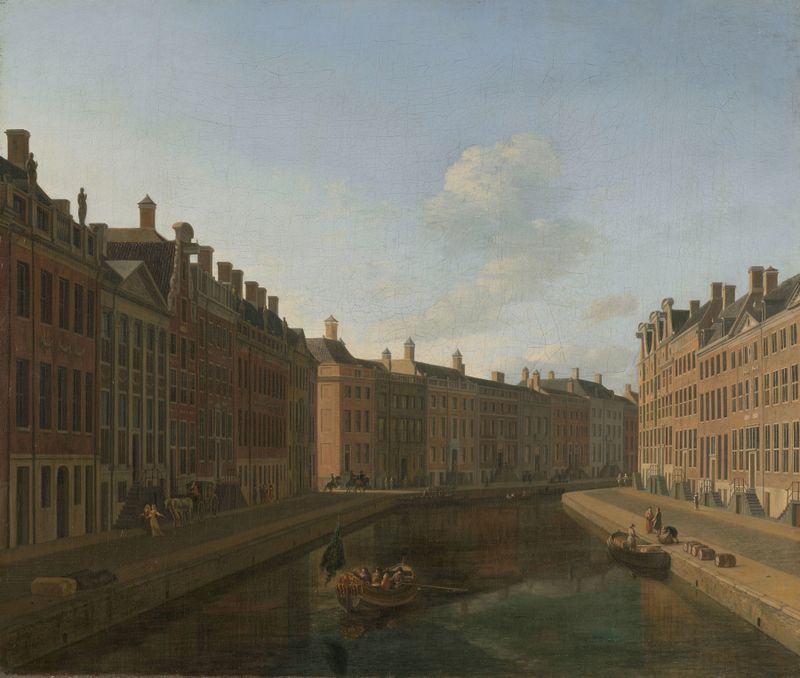
Gezicht op de Gouden Bocht in de Herengracht vanuit het oosten
Gerrit Adriaensz. Berckheyde

The Town Hall on Dam Square, Amsterdam
Gerrit Adriaensz. Berckheyde

The Town Hall in Amsterdam
Gerrit Adriaensz. Berckheyde
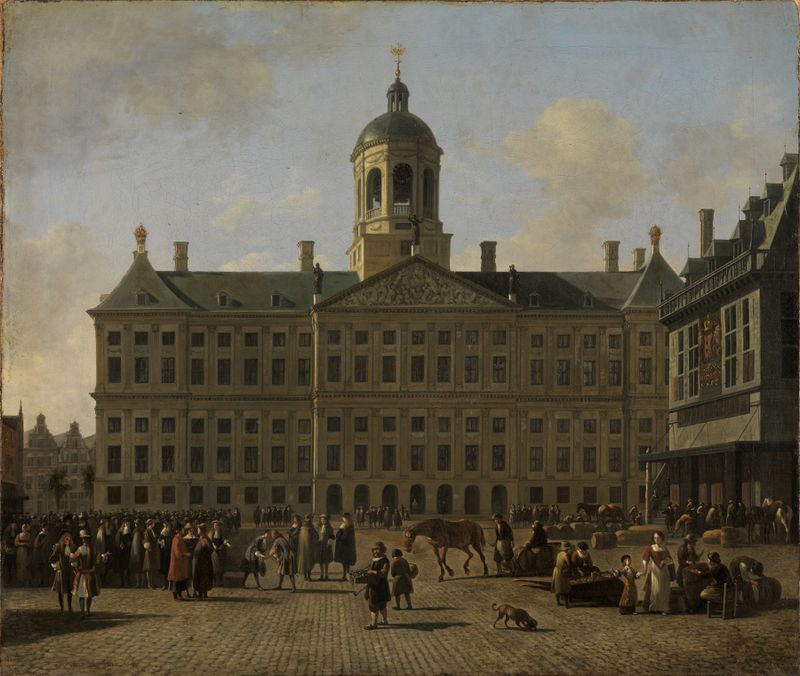
Der Damplatz zu Amsterdam mit dem Rathaus und der Waage
Gerrit Adriaensz. Berckheyde
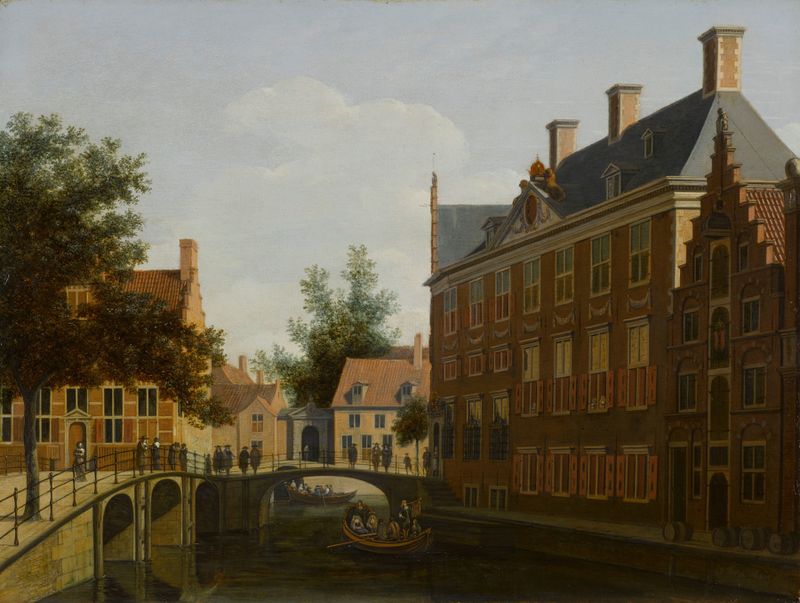
The Oude Zijds Herenlogement (Gentlemen’s Hotel) in Amsterdam
Gerrit Adriaensz. Berckheyde
More Architecture Art
Browse all →
The statue of Liberty
Frédéric Auguste Bartholdi

View of Houses in Delft, Known as ‘The Little Street’
Johannes Vermeer

View of Houses in Delft, Known as ‘The Little Street’
Johannes Vermeer

The Cathedral in Rouen. The portal, Grey Weather
Claude Monet

The yellow house
Vincent van Gogh

The Church in Auvers-sur-Oise, View from the Chevet
Vincent van Gogh