
Der Damplatz zu Amsterdam mit dem Rathaus und der Waage — History & Facts
What if silence could speak through light? In the stillness of Der Damplatz zu Amsterdam mit dem Rathaus und der Waage, a profound sense of grief is etched into the very fabric of the scene, where the bustling life of the square feels muted, as if holding its breath. Look to the left, where the iconic façade of the Town Hall rises majestically against a pale sky. The intricate details of its architecture draw the eye with a meticulous precision that hints at the weight of history. Notice how the soft light cascades over the buildings, creating gentle contrasts between the sunlit surfaces and the cool shadows that linger in the corners.
This masterful use of chiaroscuro adds depth to the composition, enveloping the viewer in a quiet reverie. Delve deeper, and you’ll find that the solitary figures dotting the square evoke a sense of longing amidst the vibrancy of their surroundings. The stillness of their postures and the way they gaze into the distance suggest moments of introspection and loss. The imposing presence of the weights and measures building looms behind them, a silent witness to the passage of time and the burdens borne by its citizens.
This juxtaposition between the lively setting and the emotional weight carried by the figures invites contemplation on the coexistence of joy and sorrow. In 1689, Berckheyde was firmly established in the artistic milieu of Amsterdam, a city marked by prosperity yet shadowed by the memories of loss from recent conflicts. During this period, the artist focused on capturing the essence of urban life, blending architectural grandeur with the human experience. His works resonated with the civic pride of his time, yet beneath the surface, they also conveyed the quiet ache of a community reflecting on its past.
More Artworks by Gerrit Adriaensz. Berckheyde
Browse all →
View of the Golden Bend in the Herengracht
Gerrit Adriaensz. Berckheyde
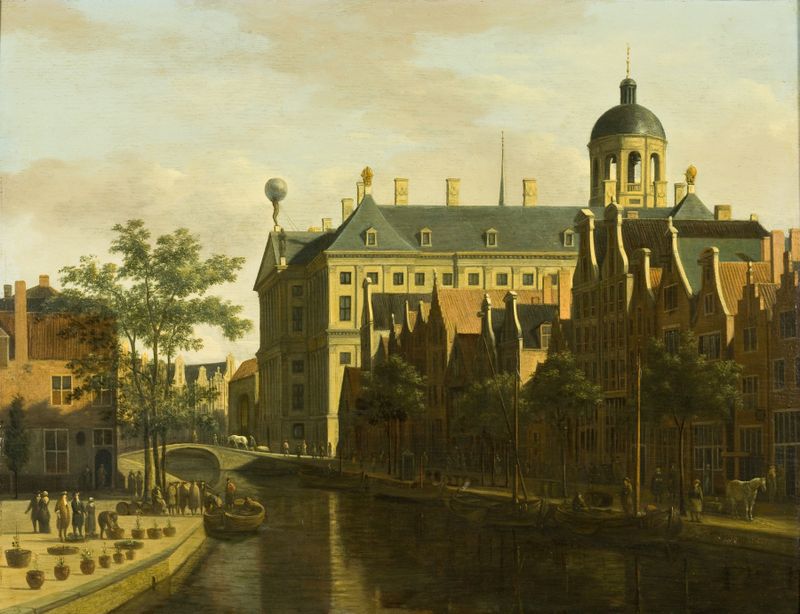
The Nieuwezijds Voorburgwal with the Flower and Tree Market in Amsterdam
Gerrit Adriaensz. Berckheyde
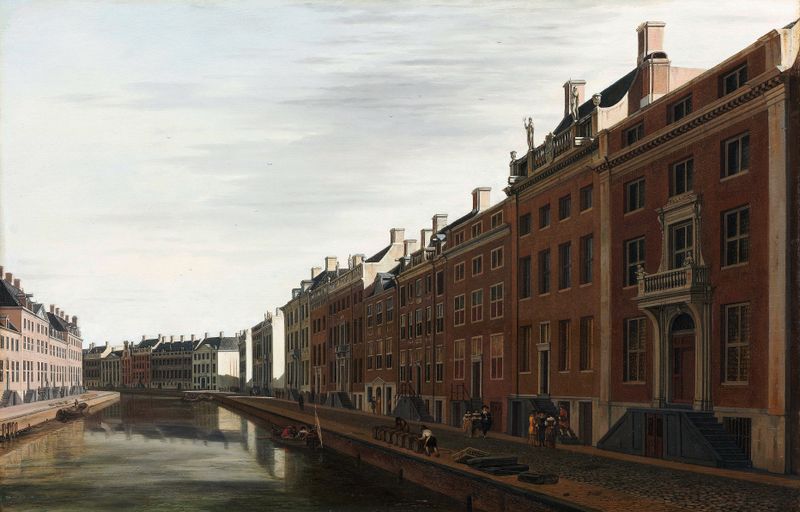
De Gouden Bocht in de Herengracht in Amsterdam vanuit het westen
Gerrit Adriaensz. Berckheyde
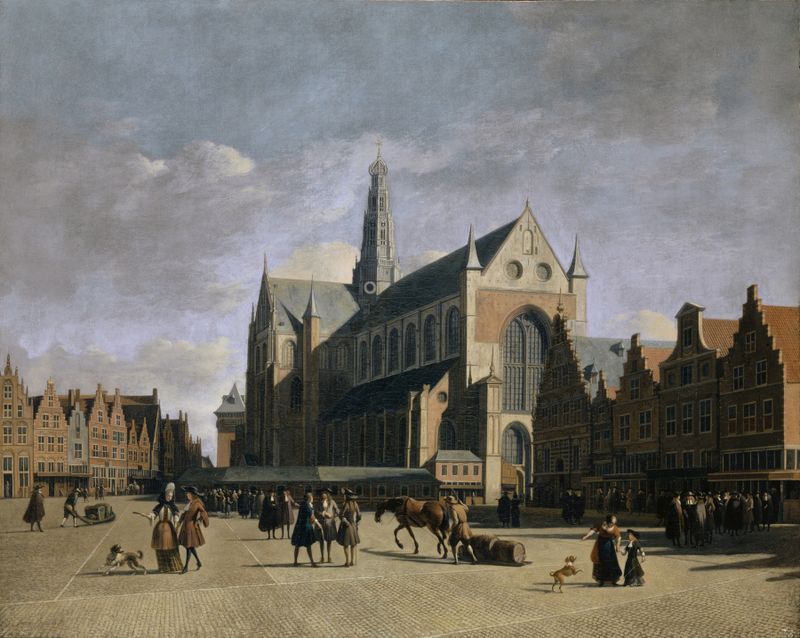
The Market Place in Haarlem
Gerrit Adriaensz. Berckheyde
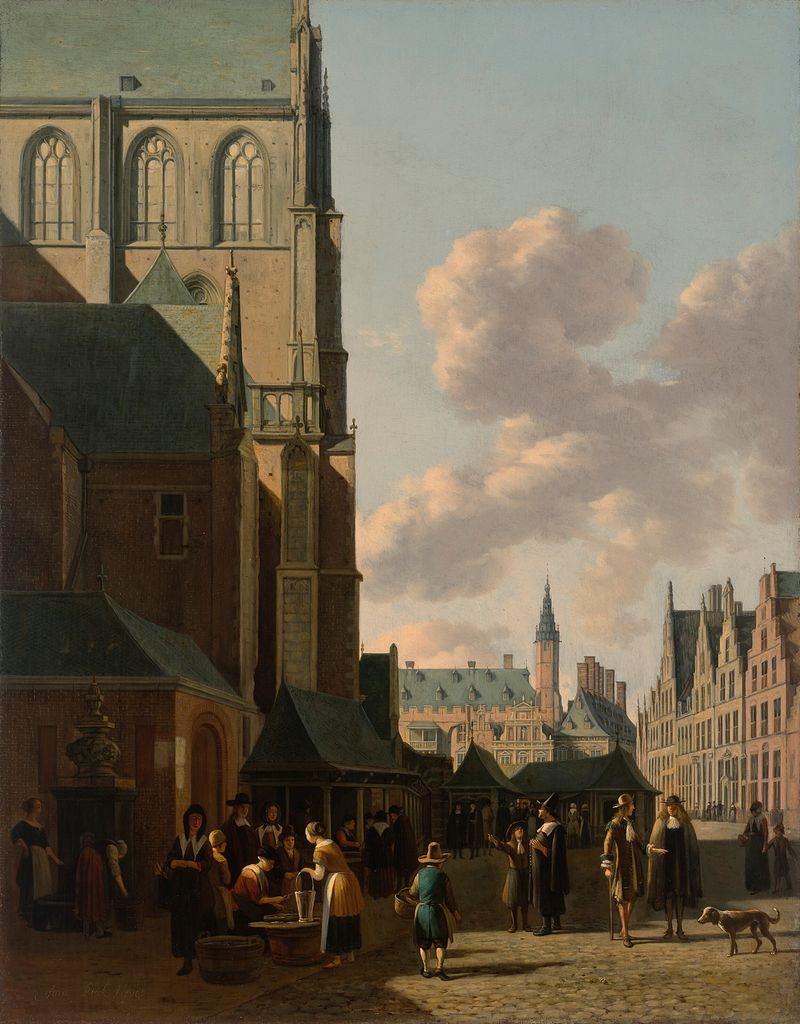
The Grote Markt, Haarlem, looking west, with the Grote Kerk (St Bavo’s) and the fish-market, the Town Hall beyond
Gerrit Adriaensz. Berckheyde
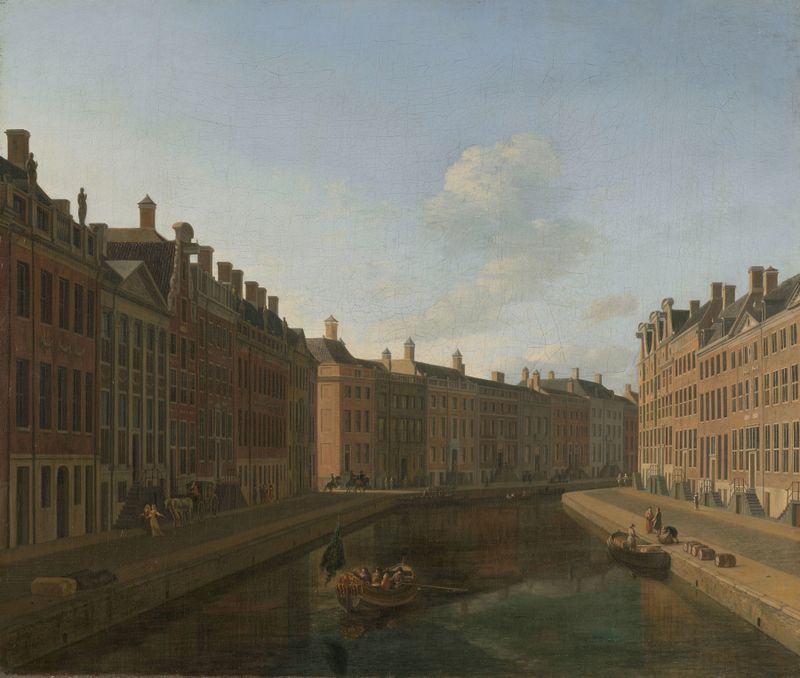
Gezicht op de Gouden Bocht in de Herengracht vanuit het oosten
Gerrit Adriaensz. Berckheyde

The Town Hall on Dam Square, Amsterdam
Gerrit Adriaensz. Berckheyde

The Town Hall in Amsterdam
Gerrit Adriaensz. Berckheyde
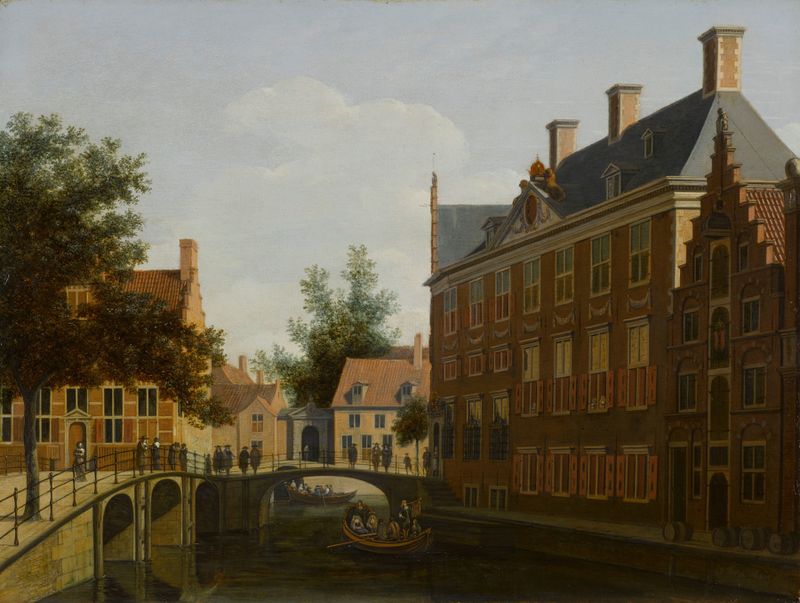
The Oude Zijds Herenlogement (Gentlemen’s Hotel) in Amsterdam
Gerrit Adriaensz. Berckheyde
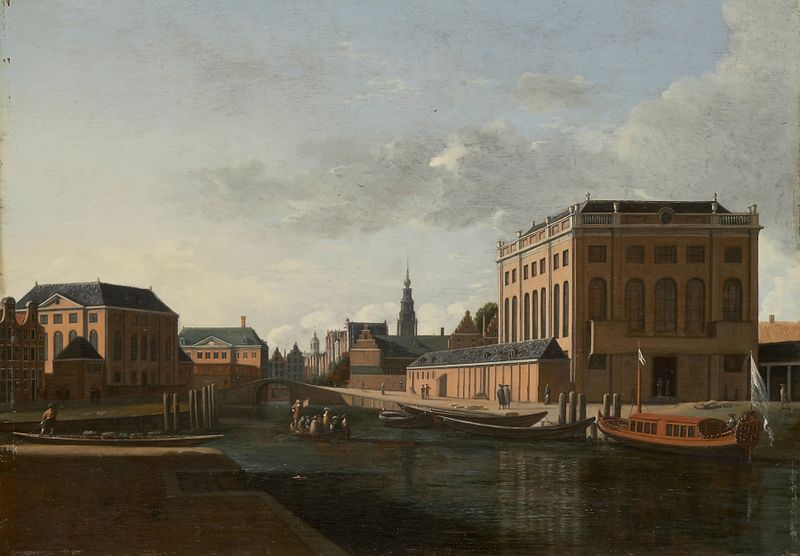
The two Synagogues in Amsterdam
Gerrit Adriaensz. Berckheyde
More Architecture Art
Browse all →
The statue of Liberty
Frédéric Auguste Bartholdi

View of Houses in Delft, Known as ‘The Little Street’
Johannes Vermeer

View of Houses in Delft, Known as ‘The Little Street’
Johannes Vermeer

The Cathedral in Rouen. The portal, Grey Weather
Claude Monet

The yellow house
Vincent van Gogh

The Church in Auvers-sur-Oise, View from the Chevet
Vincent van Gogh