Classical Landscape — History & Facts
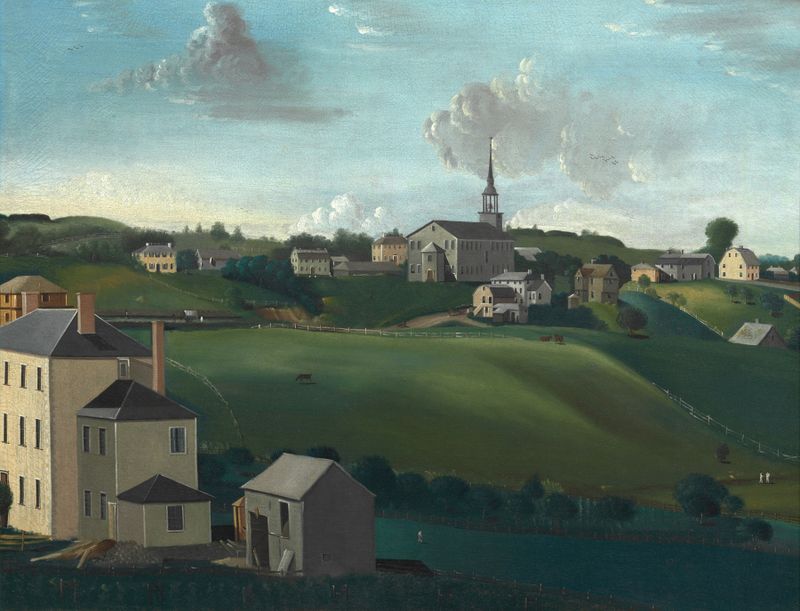
What secret hides in the quiet of the canvas? In John Ritto Penniman's Classical Landscape, a serene expanse stretches before us, beckoning the viewer to contemplate the emptiness that lies not only within the scene but within ourselves. Look to the left at the gentle bend of the river, where muted greens and soft blues converge in a tranquil dance. The meticulous brushwork captures a stillness, while the distant mountains loom gracefully, their edges softened by a delicate mist. The sky, painted in pale hues, casts a gentle light that bathes the landscape in a dreamlike quality, inviting the eye to linger on its quiet beauty.
Every element is thoughtfully composed, leading the viewer’s gaze across the horizon, where the earth meets the sky in an embrace of tranquility. Yet, beneath the calm surface, a tension simmers — a juxtaposition of grandeur and isolation. The vastness of the landscape evokes a sense of solitude, whispering of the human experience in nature. The sparse trees and empty spaces suggest a yearning for connection, hinting at the existential weight of empty places and unfulfilled dreams.
In this stillness, one can sense both the beauty and the melancholy of the untouched world, a reminder of our own fleeting existence. Between 1822 and 1826, Penniman created this piece during a period of artistic exploration in America, where Romanticism began to take hold. He was influenced by the landscapes of the European masters, yet sought to establish a distinctly American voice. As he painted, the country was grappling with its own identity, and his work reflects both the untouched beauty of the land and the deep sense of introspection that accompanied the era’s search for meaning in nature.