Meetinghouse Hill, Roxbury, Massachusetts — History & Facts
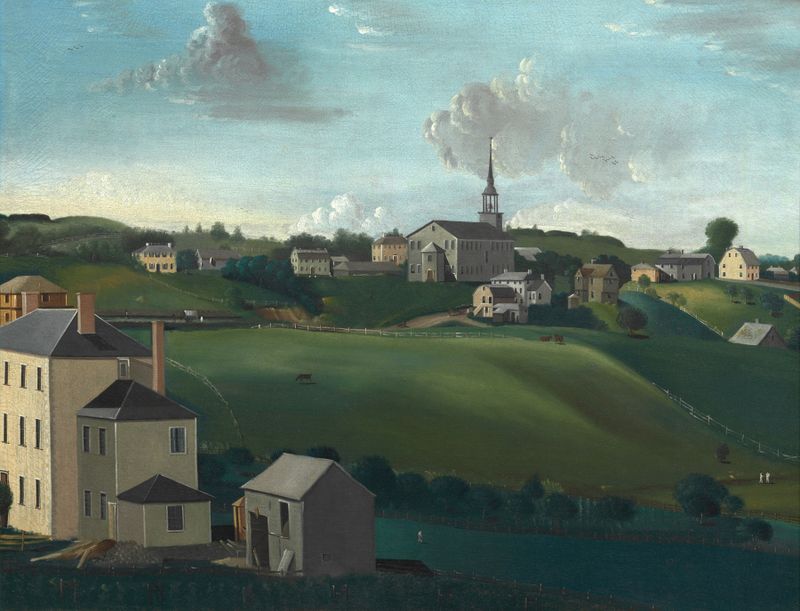
The sun hangs low in the early evening sky, casting a golden hue over the quiet village of Roxbury. Children chase each other through the lush grass, their laughter ringing through the air like a distant melody. An old meetinghouse, proud and resolute, stands sentinel against the backdrop of a vibrant sunset, its weathered façade whispering stories of yesteryears. Look to the left at the meetinghouse itself, its triangular gable reaching towards the heavens, framed by the deep, warm colors of the setting sun.
Notice how the light bathes the structure, illuminating the wooden texture and casting long shadows that stretch across the lawn. A few sparse figures dot the scene, their silhouettes infused with a sense of community and reverence, inviting the viewer to contemplate their presence within this pastoral tapestry. As the colors blend, a tension emerges between the steadfastness of the meetinghouse and the fleeting nature of the moment. The juxtaposition of the vibrant sky and the tranquil earth evokes a longing for connection—between people, history, and the untamed beauty surrounding them.
Each brushstroke seems to echo the heartbeat of the village itself, a palpable nostalgia for a time and place both cherished and transient. In 1799, John Ritto Penniman painted this work during a period of personal growth and exploration in the American art scene. Living in Massachusetts, Penniman was influenced by the burgeoning Romantic movement, which sought to capture the beauty of nature and the human experience. This piece reflects not only his dedication to local landscapes but also his role in shaping the early American artistic identity amid a nation in flux.