
Cleveland Skyline — History & Facts
What if beauty was never meant to be finished? In Cleveland Skyline, the scene unfolds like a whisper of the past, where shadows dance at the edges of familiarity and hint at an intricate story waiting to be revealed. Focus on the delicate interplay of light and shadow. The lower half of the canvas showcases a spectrum of deep blues and soft grays, while the skyline looms above, stark and formidable. Notice how the artist captures the shimmering glass of the buildings, reflecting the fading sunlight, creating a contrast that draws your eye upward.
Each silhouette stands in stark relief against a warm, dusky sky, inviting contemplation of the industrial heart of the city. Beneath the surface, the artwork reveals dualities: the enduring strength of the structures versus the transient beauty of twilight. The shadows elongate, suggesting the passage of time, while the emerging stars in the background hint at possibility and dreams. This tension between permanence and ephemerality evokes a sense of nostalgia, reminding viewers of the stories woven into the urban landscape—both vibrant and shadowed. In 1956, Kulhanek crafted this piece during a pivotal time for both himself and the city of Cleveland.
Amid post-war optimism, he sought to capture the evolving urban identity while grappling with his own artistic style. The mid-century modern movement was gaining traction, and as he painted, he was influenced by contemporary abstraction, striving to balance realism with his unique vision of the city's dynamic essence.
More Artworks by James C. Kulhanek
Browse all →
Under Full Sail
James C. Kulhanek
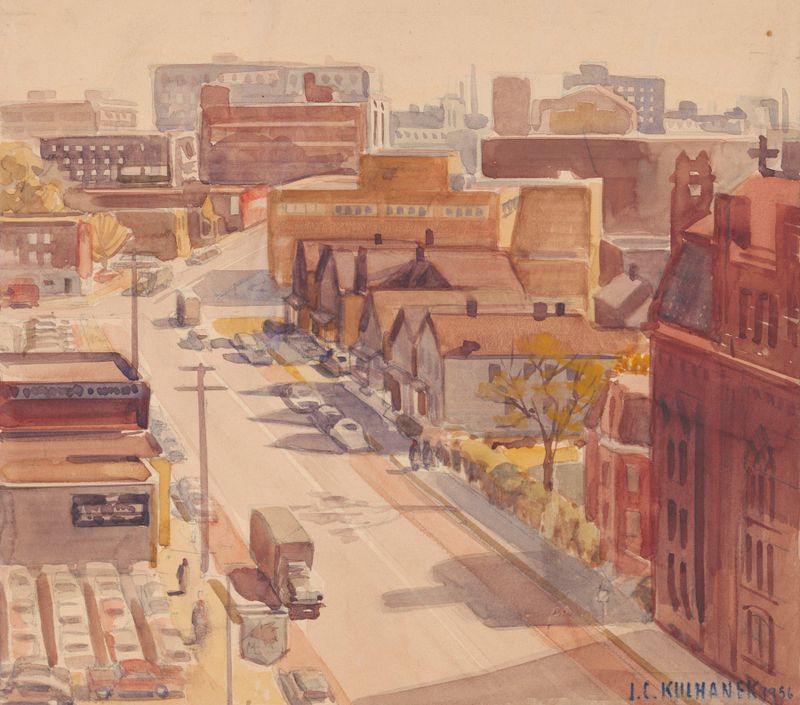
E18th street Looking South from Plain Dealer Building Cleveland Ohio
James C. Kulhanek
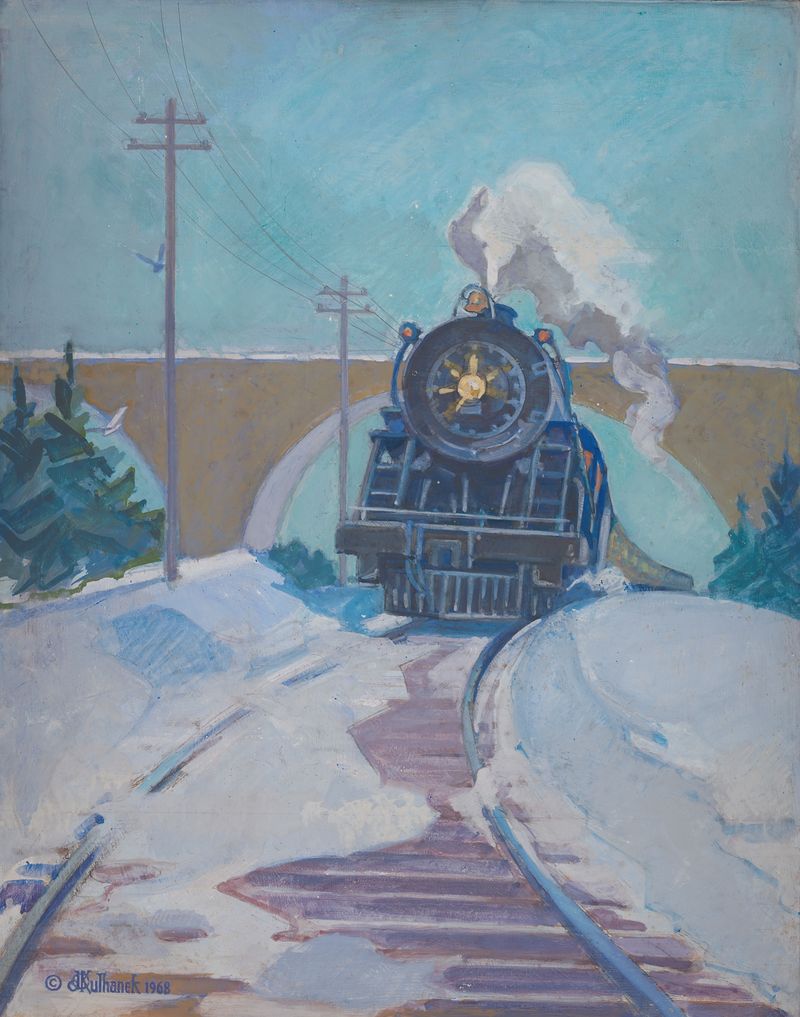
Winter Express
James C. Kulhanek
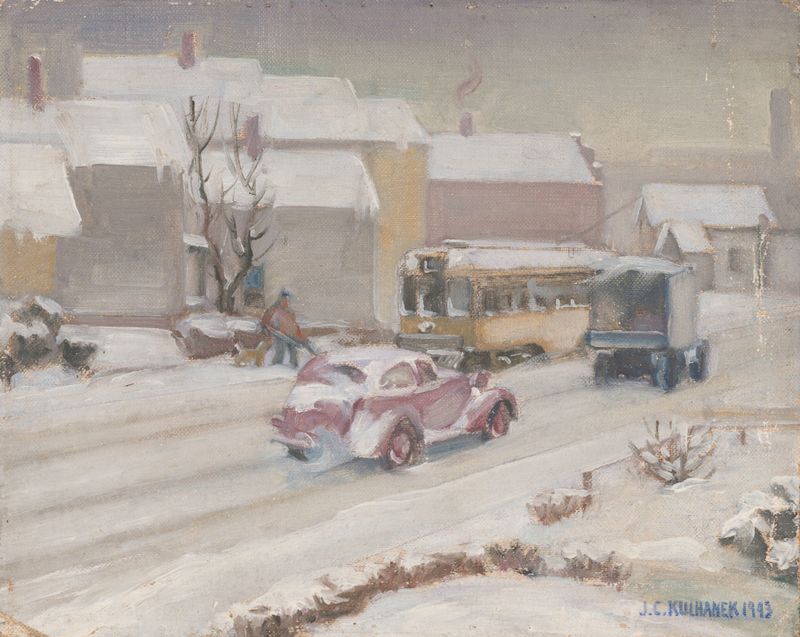
Fulton Road, Cleveland, Ohio
James C. Kulhanek
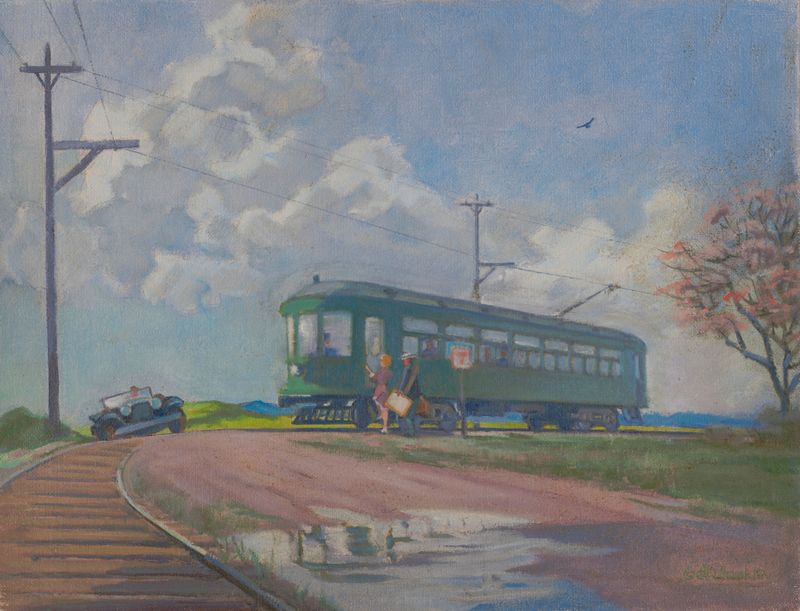
Interurban Stop
James C. Kulhanek
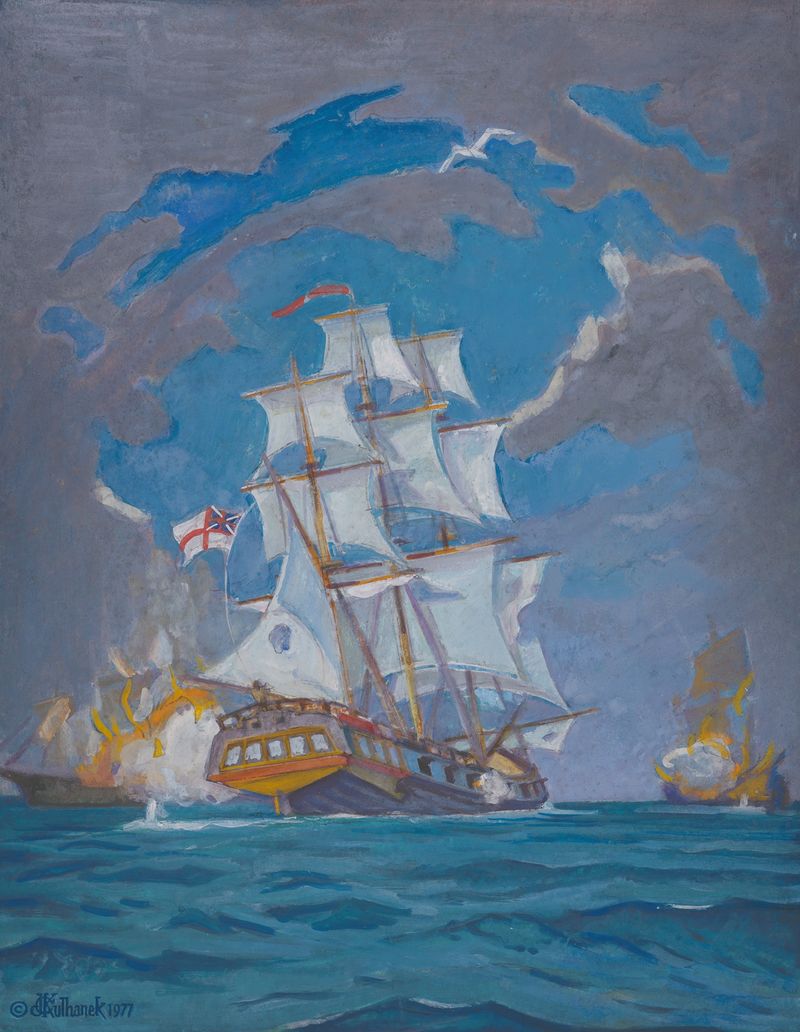
Rule Britannia
James C. Kulhanek

Provincal Jewel
James C. Kulhanek

Northern Ohio Food Terminal
James C. Kulhanek

Whistle Stop
James C. Kulhanek

Chateau Fleur-de-Lis
James C. Kulhanek





