Interurban Stop — History & Facts
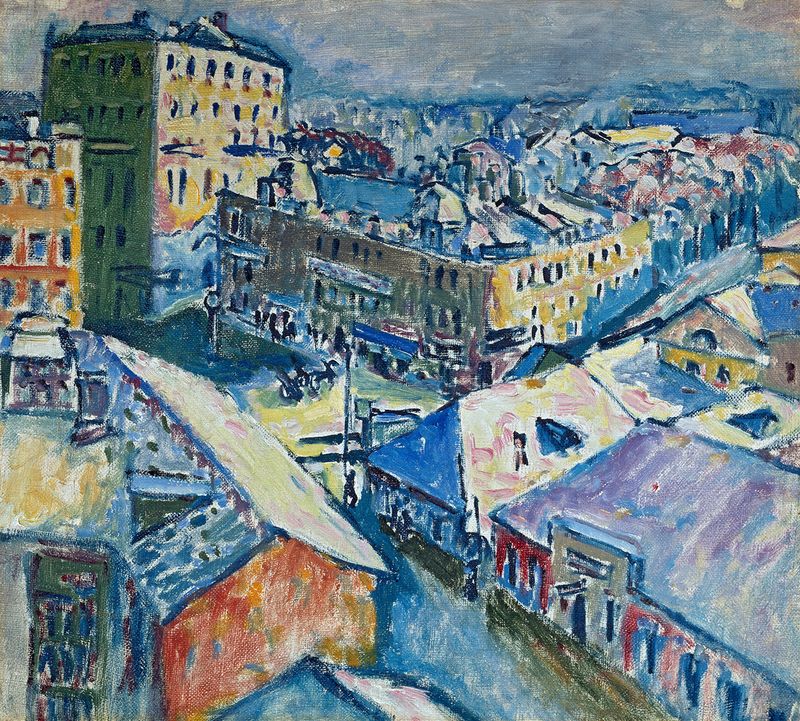
When did color learn to lie? In the vibrant yet disorienting chaos of urban life, one might wonder if the hues we see reflect reality or merely mask it. Look to the center, where a bus shelter stands amidst a whirlwind of dynamic brushstrokes. The structure, stark against a backdrop of frenetic colors, seems to pulse with the energy of the city. Notice how the bright yellows clash with deep blues, creating a sense of motion that invites viewers to feel the rush of passing commuters.
The artist employs layered textures, allowing each color to bleed into the next, blurring the lines between form and atmosphere. Beneath the apparent disarray lies a commentary on modern existence. The solitude of the bus shelter emphasizes the isolation that can emerge in a crowded world, where individuals become mere silhouettes against a cacophony of color. The disjointedness of the urban environment mirrors the confusion of contemporary life, challenging the viewer to confront the layers of chaos that often go unnoticed.
Here, the vibrant palette serves both as a celebration of urban vibrancy and a critique of its alienating effects. James C. Kulhanek created this work in 1970, a period marked by significant social upheaval and artistic experimentation. Emerging from the heart of the American urban landscape, he navigated the rise of abstraction and the questioning of traditional representation.
This painting reflects not just his artistic journey, but also the tumultuous environment of a society struggling to define itself amidst rapid change.
More Artworks by James C. Kulhanek
Browse all →
Under Full Sail
James C. Kulhanek
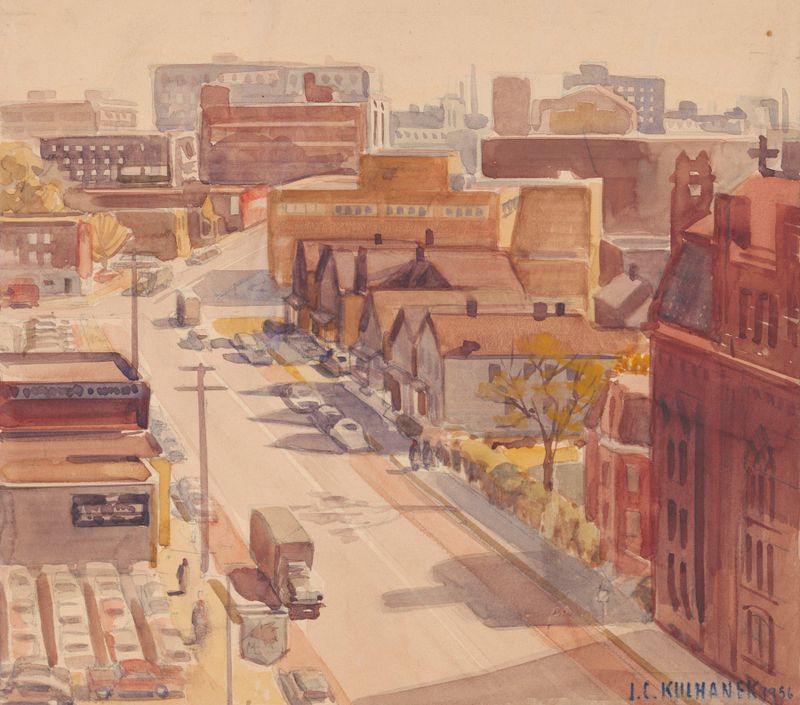
E18th street Looking South from Plain Dealer Building Cleveland Ohio
James C. Kulhanek
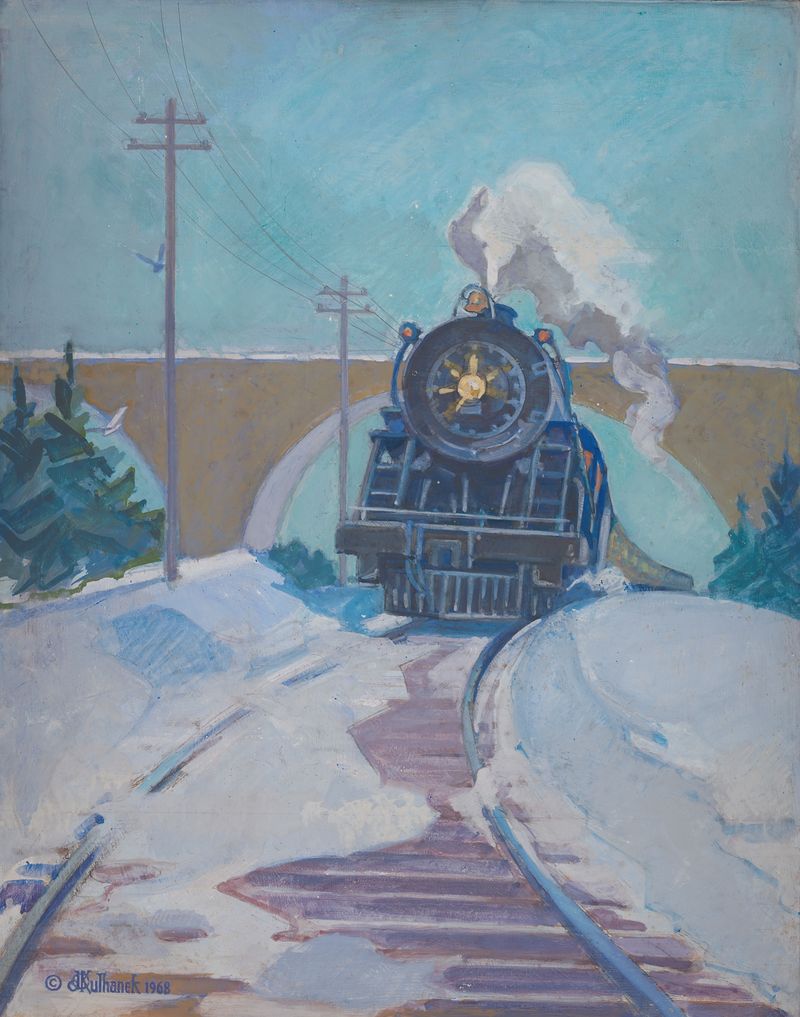
Winter Express
James C. Kulhanek
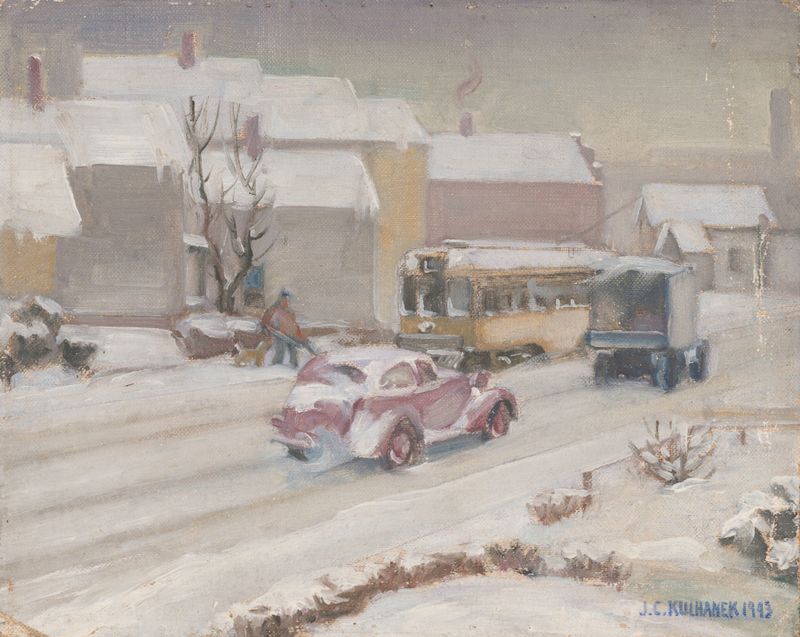
Fulton Road, Cleveland, Ohio
James C. Kulhanek
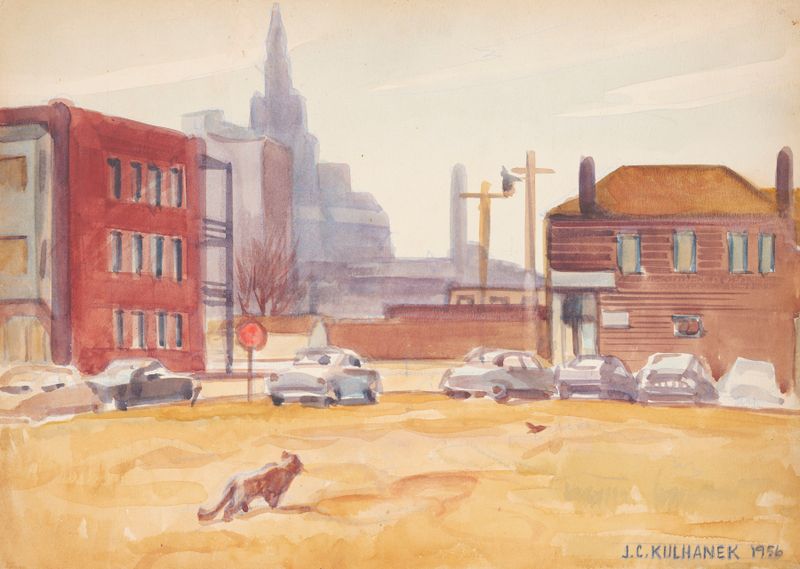
Cleveland Skyline
James C. Kulhanek
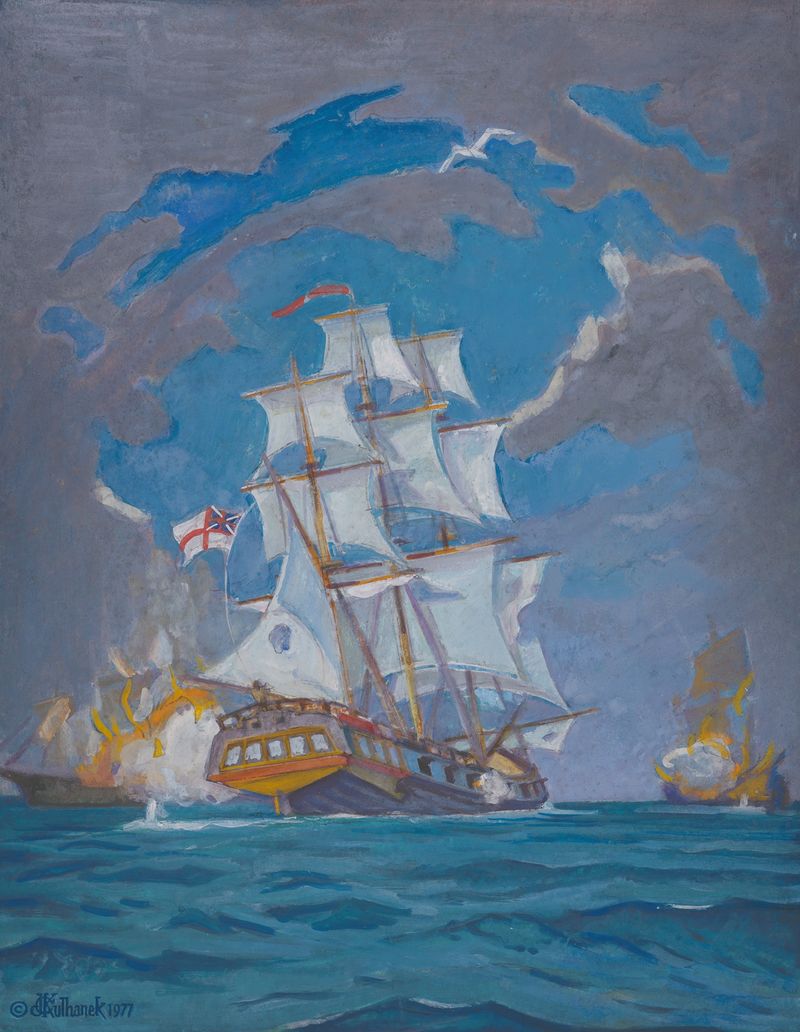
Rule Britannia
James C. Kulhanek

Provincal Jewel
James C. Kulhanek

Northern Ohio Food Terminal
James C. Kulhanek

Whistle Stop
James C. Kulhanek

Chateau Fleur-de-Lis
James C. Kulhanek