Close of a Winter Day — History & Facts
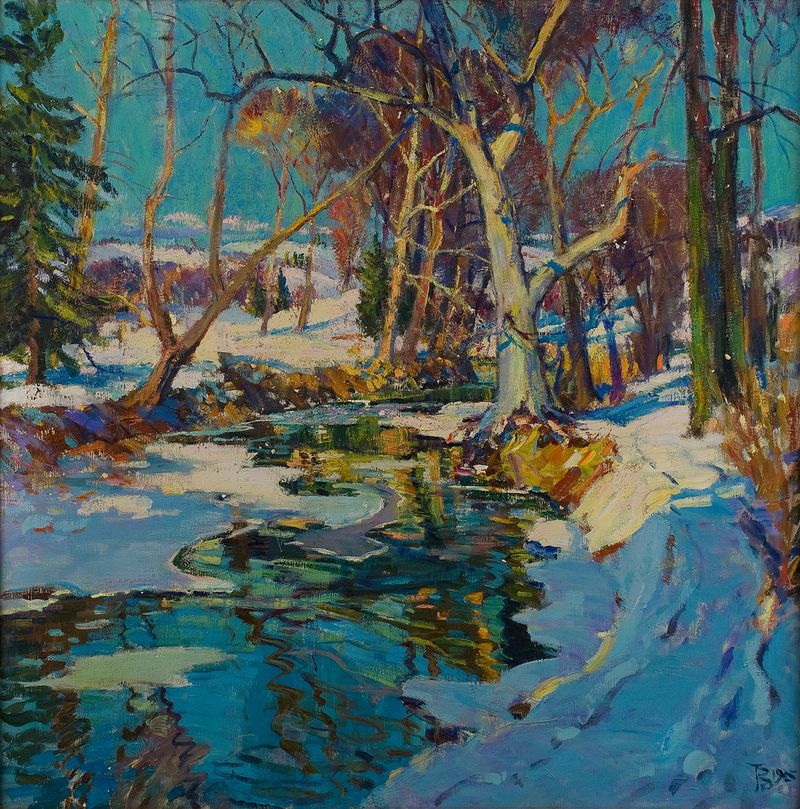
A dream oscillates between clarity and haze, revealing the heart’s quiet battles through shimmering surfaces. First, look to the foreground, where the delicate interplay of color captures the last light of day. Soft, muted tones blend seamlessly, allowing hints of warmth to emerge amidst the cool blues and grays. Notice how Barnett’s brushwork, both fluid and precise, draws attention to the tranquil landscape, evoking a sense of stillness.
The horizon glows, a quiet promise that the day will end, while a gentle mist softens the contours of trees and fields, inviting contemplation. Delve deeper into the composition, and you will find contrasts that speak volumes. The chilling embrace of winter is juxtaposed with the delicate warmth of the dying sun, suggesting a fleeting moment of beauty amidst the harshness of nature. Each stroke seems to encapsulate not just the landscape, but the bittersweet emotions it evokes—a longing for warmth, a nostalgia for days gone by.
Shadows stretch like memories, hinting at the complexities of existence, where joy and sorrow coexist in fragile harmony. In 1914, when this work was created, Barnett was navigating the transformative art scene of early 20th-century America. As the world teetered on the brink of war, artists sought to capture not just the physical realm, but the emotional landscapes within. This painting reflects a moment of introspection, a serene pause in a world soon to be engulfed in turmoil, capturing the essence of a dream just beyond reach.