February Snow — History & Facts
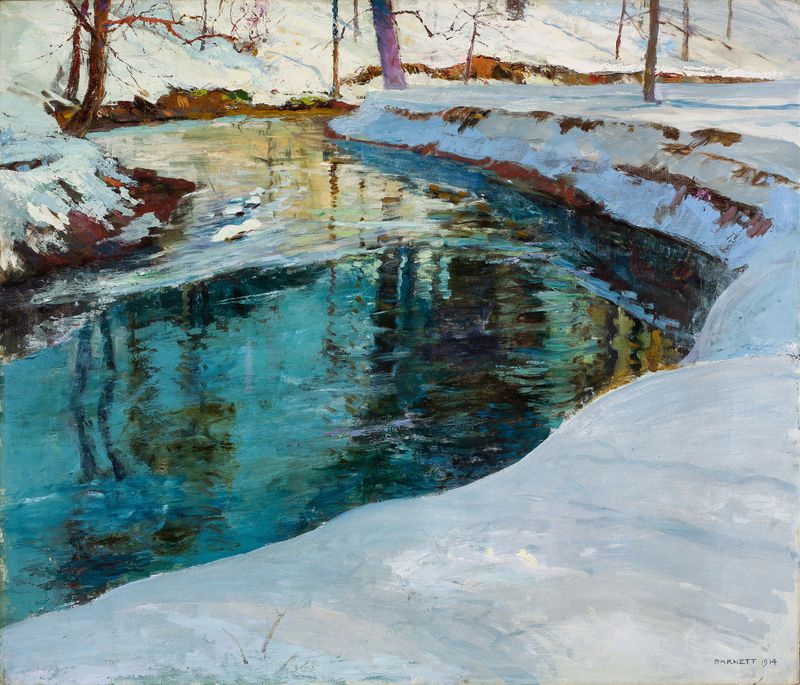
Where does light end, and longing begin? In the delicate interplay of shadow and glow, the answer unfolds like the soft drifts of snow captured on the canvas. Look to the center, where bright whites emerge triumphantly against the muted palette of grays and blues. The gentle undulations of snowflakes create an illusion of depth, inviting you to trace their path as they blanket the landscape. Notice how the light dances across the surface, illuminating subtle textures that speak of winter’s chill while radiating a warmth of nostalgia.
The artist’s brushstrokes evoke a serene stillness, drawing the viewer into a moment suspended in time. Yet beneath this tranquil façade, tension simmers quietly. The stark contrast between light and shadow suggests a deeper emotional landscape—perhaps a longing for warmth amid the cold, or the bittersweet nature of memory frozen in winter. Small details, like the faint outlines of bare trees silhouetted against the luminescence, hint at resilience and the promise of renewal, despite the current desolation.
This duality captures the essence of human experience, where beauty and melancholy coalesce. In 1925, Barnett painted this piece during a period of significant artistic exploration and innovation. Living in the United States, he was influenced by the shifting dynamics of modernism and the impact of the post-World War I era. As artists sought to respond to the changing world around them, Barnett's work emerged as a poignant reflection on the interplay of illusion and reality, masterfully encapsulating the essence of a fleeting winter moment.