Clump of Trees Beyond Hills — History & Facts
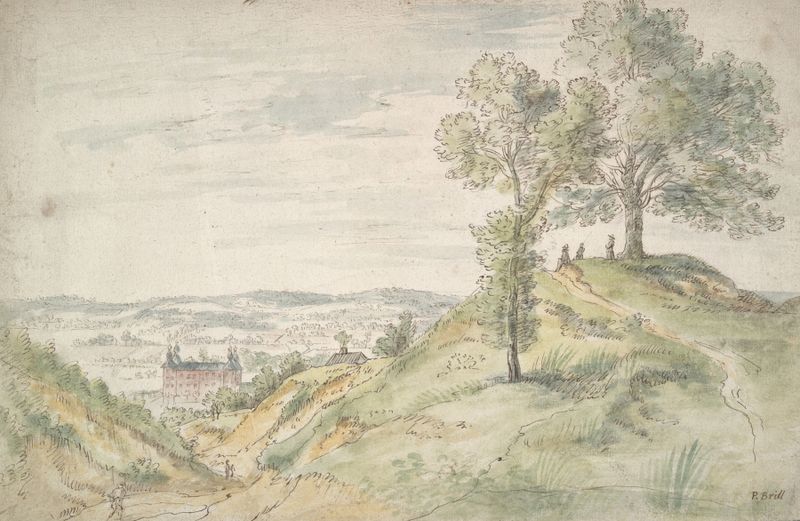
Did the painter know this moment would outlive them? In the serene expanse of a secluded landscape, the solitude captured within the brushstrokes feels palpably eternal, a whisper of loneliness echoing through the ages. The hillside rises gently, cradling the cluster of trees like a secret, inviting the viewer to ponder their own place within nature's vastness. Look to the center of the canvas, where a modest group of trees stands resolute against the undulating hills. Their dark green foliage contrasts with the muted earth tones beneath, drawing the eye into a world both inviting and isolating.
Notice how the light, soft yet persistent, bathes the foliage in a gentle glow while casting elongated shadows across the ground, heightening the sense of stillness. The composition is carefully balanced, with the trees anchoring the scene, their presence a testament to resilience amidst the emptiness. The emotional tension lies in the juxtaposition of the trees’ sturdy form and the vast, open space surrounding them. They symbolize both strength and vulnerability, evoking feelings of solitude and contemplation.
The rolling hills whisper tales of time, inviting reflection on the passage of life, while the sparse landscape suggests a yearning for connection. Each brushstroke binds the viewer to the elements of nature, yet simultaneously evokes an awareness of isolation. Created in the 17th century, this work reflects the stylistic influences of the Baroque period while emerging from the circle of Gillis Neyts, an artist whose life remains somewhat elusive. Neyts was known for capturing landscapes that resonated with emotional depth, during a time when the appreciation for nature in art was blossoming.
His works often served as meditative spaces, inviting viewers to escape and reflect upon their personal journeys within the natural world.