Coastal Landscape — History & Facts
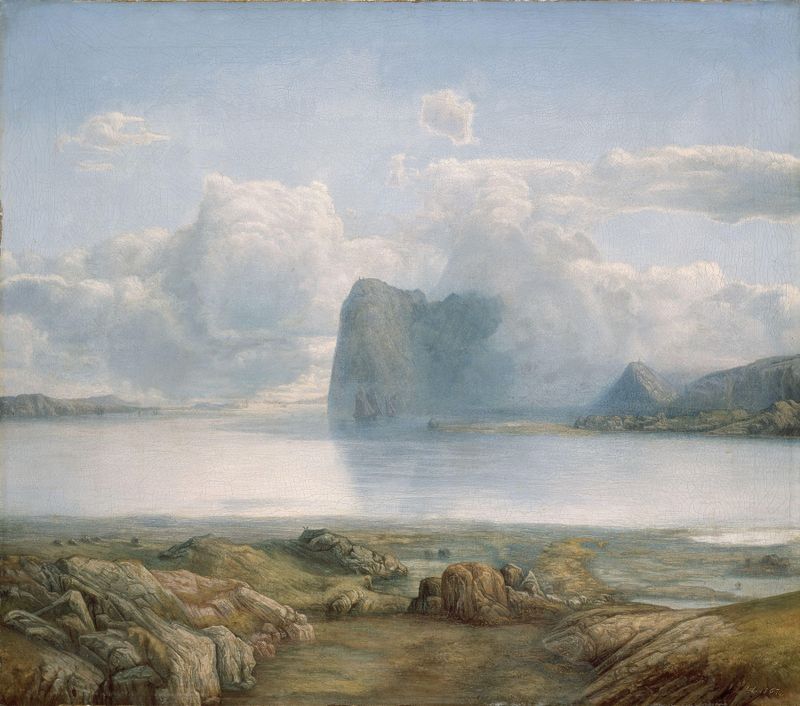
What if silence could speak through light? In Coastal Landscape, a tranquil sea whispers its secrets beneath a sky washed in pastel hues, hinting at a story of hope and betrayal. Focus on the horizon where the soft glow of dawn meets the gentle undulation of waves. The artist’s brush strokes breathe life into the water’s surface, evoking a sense of movement and the unspoken narratives hidden within its depths. Notice the interplay of blues and greens, a palette that balances serenity with an undercurrent of tension, drawing the viewer’s eye towards the distant shore where the light struggles to reveal what lies beyond. Yet, beneath this idyllic facade, there are signs of emotional conflict.
Look closely at the shadows cast by the rocky outcrops; they loom like memories of betrayal, dark and unresolved. The delicate brushwork creates an atmosphere of longing; the shoreline, while inviting, seems to beckon with an uncertainty that leaves the heart uneasy. This landscape, seemingly peaceful, is tinged with a silent anguish, reminding us that even in beauty, there can exist hidden turmoil. Lars Hertervig painted Coastal Landscape in 1855 during a time of personal struggle, grappling with the effects of mental illness and a changing artistic landscape.
Working primarily in Norway, he found himself at the crossroads of Romanticism and emerging modernity, challenged by the new movements in art that sought to redefine perception and emotion. This painting reflects both his mastery of light and his internal battles, capturing a moment where nature mirrors the complexities of the human experience.