
Conway Castle — History & Facts
Is this a mirror — or a memory? In the stillness of Conway Castle, one is drawn into the depths of time, where history and reflection intertwine seamlessly. Focus on the deep, rich hues that envelop the castle’s stone façade, giving it a sense of both strength and fragility. Look closely at the luminous waterway below; it mirrors the towering structure above, creating a dialogue between the past and the present. The composition cleverly draws your eye from the castle’s imposing battlements to the gentle ripples in the water, while the sky, a blend of warm oranges and cool blues, invites a contemplative pause. The painting reveals hidden tensions — the stability of the castle contrasts with the ephemeral nature of the water, suggesting the passage of time that erodes even the mightiest fortifications.
Notice how the delicate brushwork in the clouds juxtaposes the solidity of the stone, evoking feelings of nostalgia and the inevitable decay that all structures face. It's a reminder of how memories, much like architecture, are often subject to the whims of time. Created in an undetermined period, the artist was influenced by the Romantic movement's fascination with nature and the sublime. During this time, artists sought to capture the beauty of landscapes, often intermingling them with historical elements.
The desire to evoke emotion through nature and architecture was a crucial theme for Beaumont, reflecting a society deeply engaged with its past while simultaneously looking toward the future.
More Artworks by George Howland Beaumont
Browse all →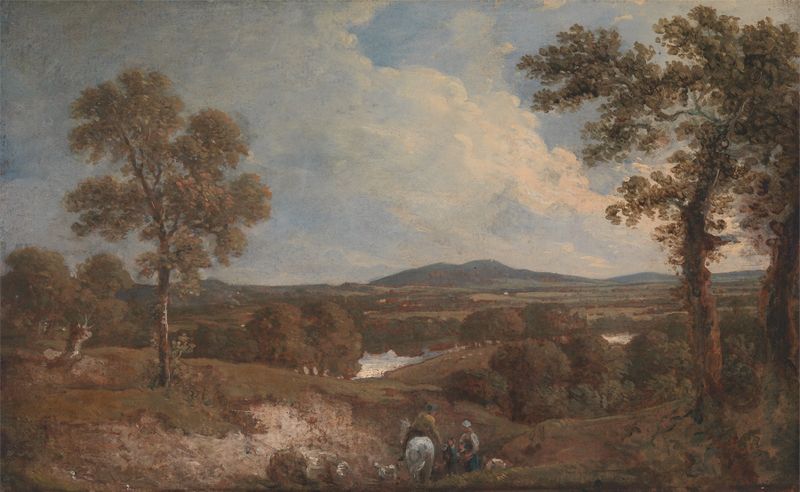
More Architecture Art
Browse all →
The statue of Liberty
Frédéric Auguste Bartholdi

View of Houses in Delft, Known as ‘The Little Street’
Johannes Vermeer

View of Houses in Delft, Known as ‘The Little Street’
Johannes Vermeer

The Cathedral in Rouen. The portal, Grey Weather
Claude Monet

The yellow house
Vincent van Gogh

The Church in Auvers-sur-Oise, View from the Chevet
Vincent van Gogh