Landscape with Figures in the Foreground — History & Facts
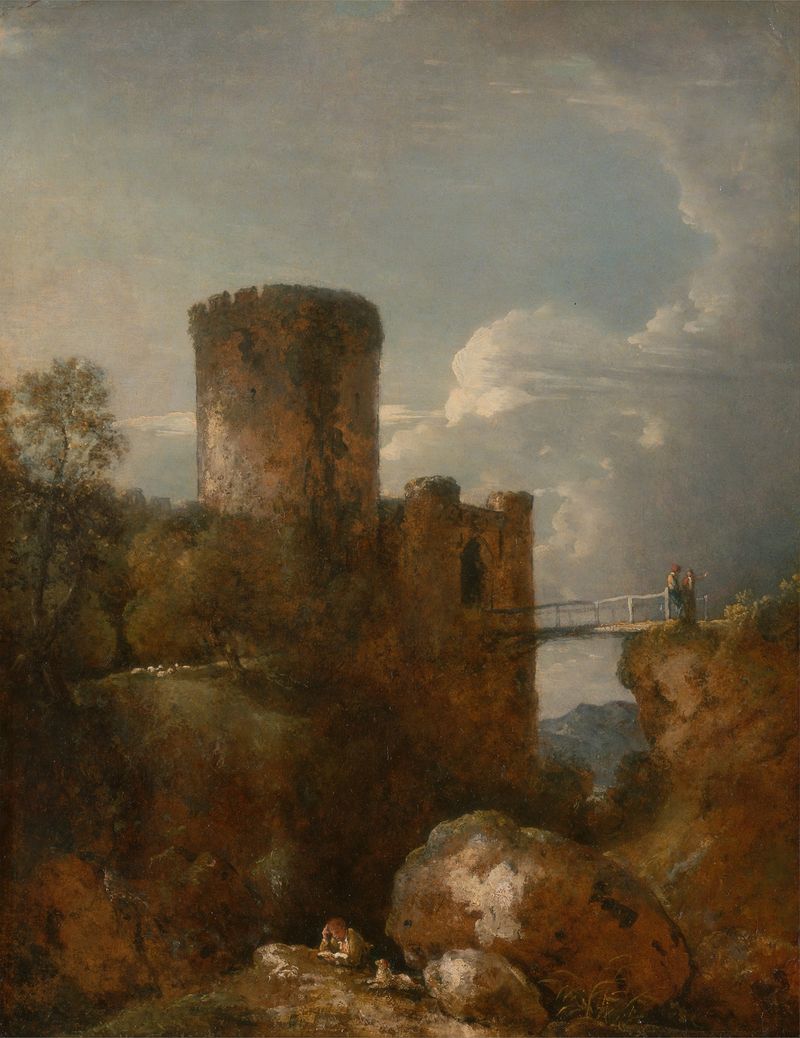
Can paint confess what words never could? In Landscape with Figures in the Foreground, George Howland Beaumont invites us to explore the fragile intersection of nature and humanity, where decay whispers through the vibrant brushstrokes. Look to the left, where a cluster of figures stands, their postures subtly contrasting with the serene backdrop. The greens and browns of the landscape seem to pulse with life, yet the heavy clouds above foreshadow an impending change, capturing the tension between the temporal and the eternal. Notice how the figures are delineated with softer edges, almost blending into the landscape, suggesting a symbiotic relationship between mankind and the natural world. Within this scene lies a poignant commentary on the cycle of life.
The lush foliage is painted with exuberant strokes, yet the darker undertones hint at decay and the inevitable passage of time. The figures, while engaged in their activities, are tinged with a sense of mortality; their presence serves as a reminder of the fleeting nature of existence amidst the robust vitality of the landscape. The interplay of light and shadow adds depth, creating a moment suspended between joy and melancholy. In a period marked by the rise of Romanticism, Beaumont crafted this piece in the early 19th century, likely during his time in England.
As he navigated his own struggles with health and artistic identity, the painting reflects broader societal shifts, where nature was increasingly seen as both a source of beauty and a reminder of human vulnerability. This work encapsulates a moment when the appreciation for landscape painting blossomed, marrying emotional depth with a reverence for the natural world.