
Copses of Trees on the Baraba Steppe. — History & Facts
Could a single brushstroke hold eternity? In Copses of Trees on the Baraba Steppe, nature’s rebirth whispers through the canvas, inviting contemplation on the cycles of life. Look to the left at the clusters of trees, their textured trunks standing resolutely against the gentle undulations of the steppe. The earth, painted in warm hues of ochre and green, radiates the promise of spring, while soft strokes of blue in the sky suggest a calm yet dynamic atmosphere. Smirnov's technique employs a meticulous layering of colors, creating a shimmering effect that captures light filtering through the leaves, effortlessly guiding the viewer’s gaze through the tranquil yet vibrant landscape. Delve deeper, and you’ll notice the interplay between the sparse moments of bare ground and the dense foliage, symbolizing the delicate balance between life and barrenness.
The trees, in their varied heights, evoke a sense of community and resilience, standing together against the vastness of the steppe. This painting subtly communicates the tension between solitude and unity, hinting at the cyclical nature of existence, where endings blend seamlessly into beginnings. In 1904, Boris Vasilievich Smirnov painted this work during a period of artistic exploration in Russia, where artists were beginning to embrace the Impressionist style, diverging from the constraints of realism. Living in the heart of a rapidly changing society, Smirnov’s brush captured not just the essence of the land but also the burgeoning spirit of a nation on the brink of transformation.
More Artworks by Boris Vasilievich Smirnov
Browse all →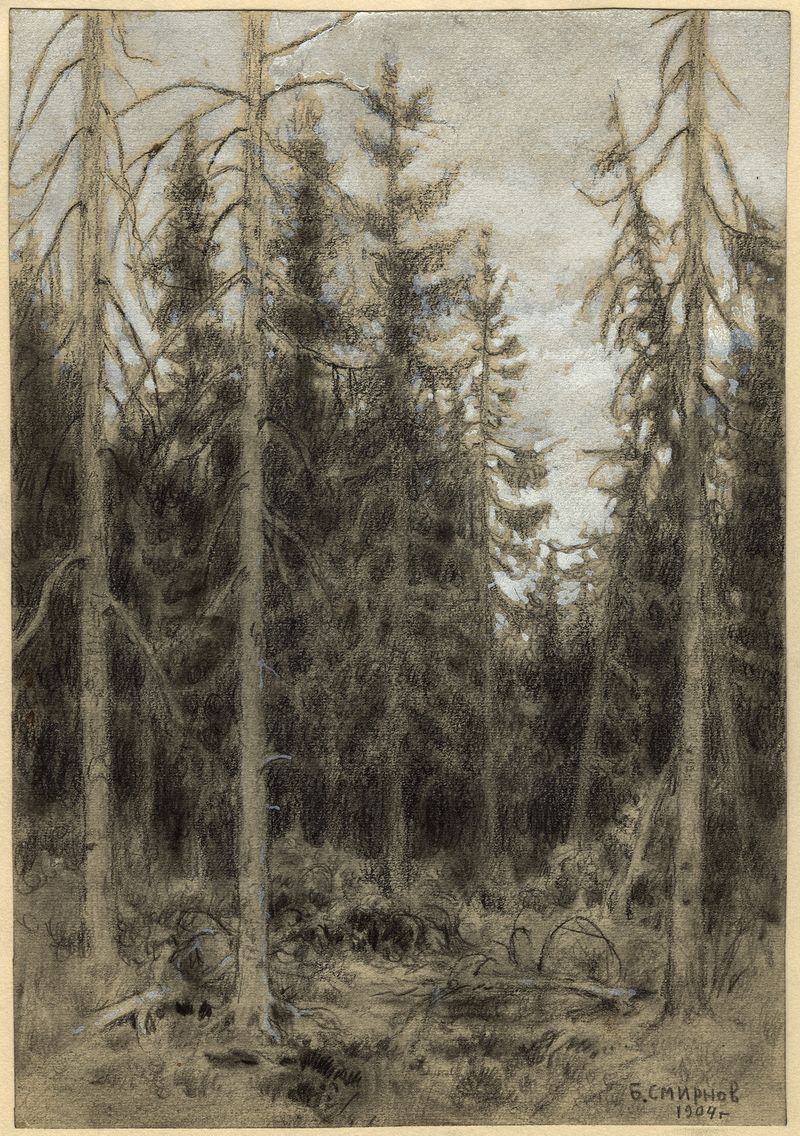
Spruce Taiga near Irkutsk.
Boris Vasilievich Smirnov
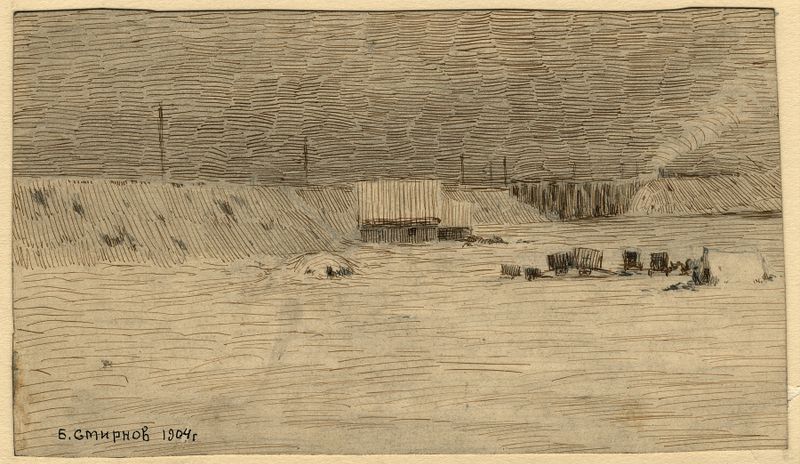
A Bridge over the Irkut River.
Boris Vasilievich Smirnov
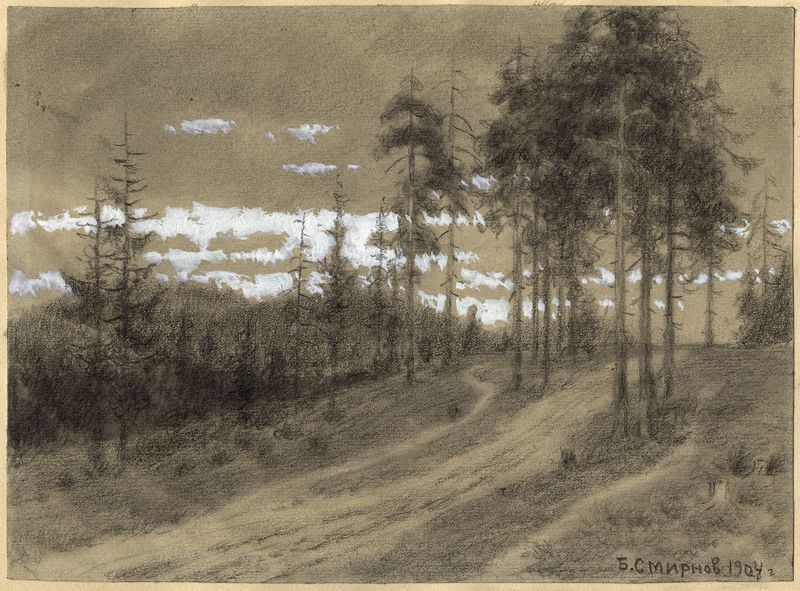
The Great Road in the Baikal Mountains.
Boris Vasilievich Smirnov
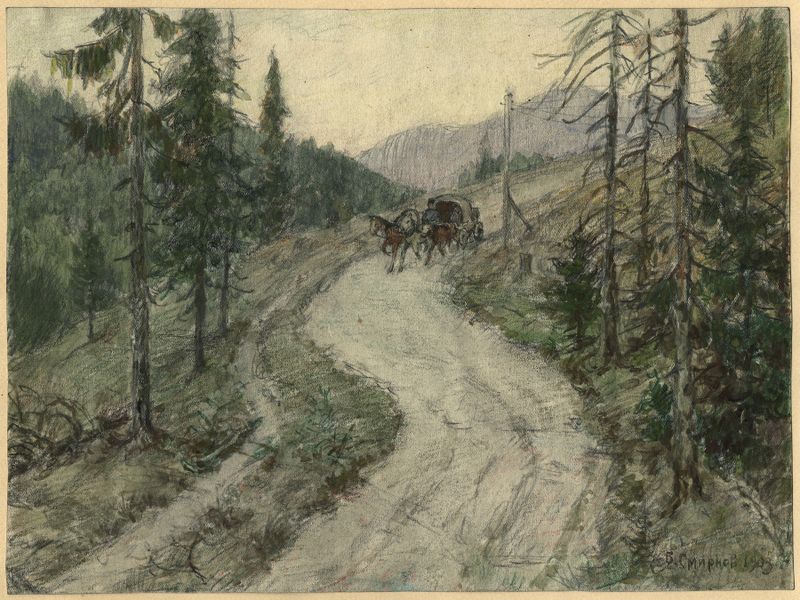
Great Siberian Road in the Krugobaikal Mountains.
Boris Vasilievich Smirnov
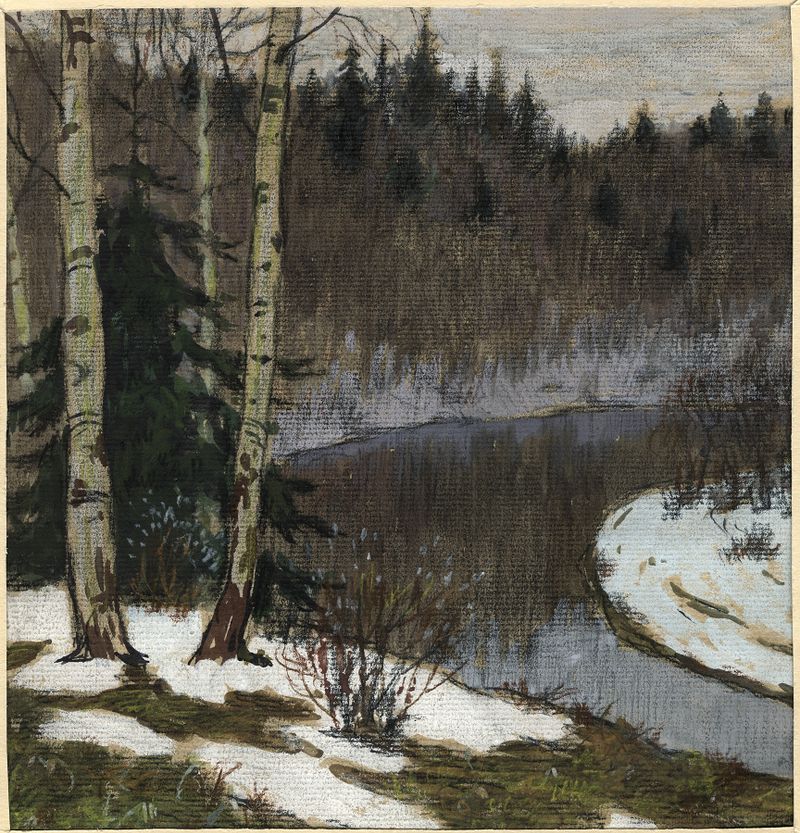
Thawed Patches in the Taiga near Krasnoyarsk. Early Spring.
Boris Vasilievich Smirnov
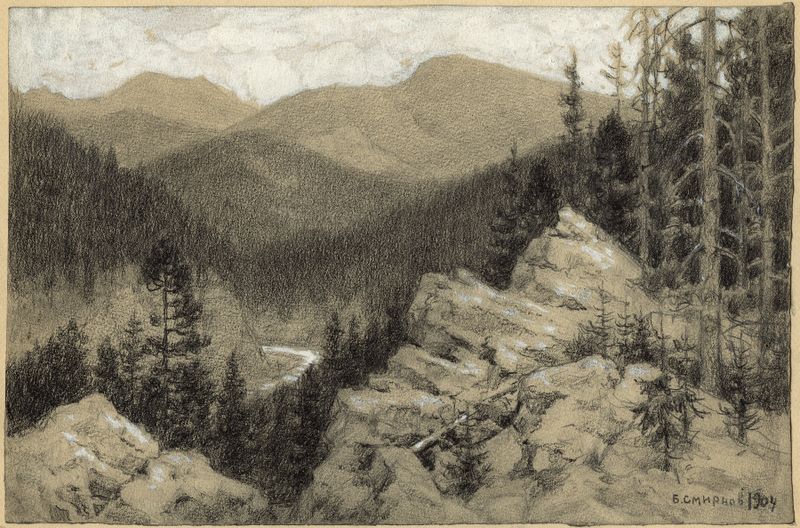
Ural Mountains. Taiga in the Zlatoust Region.
Boris Vasilievich Smirnov
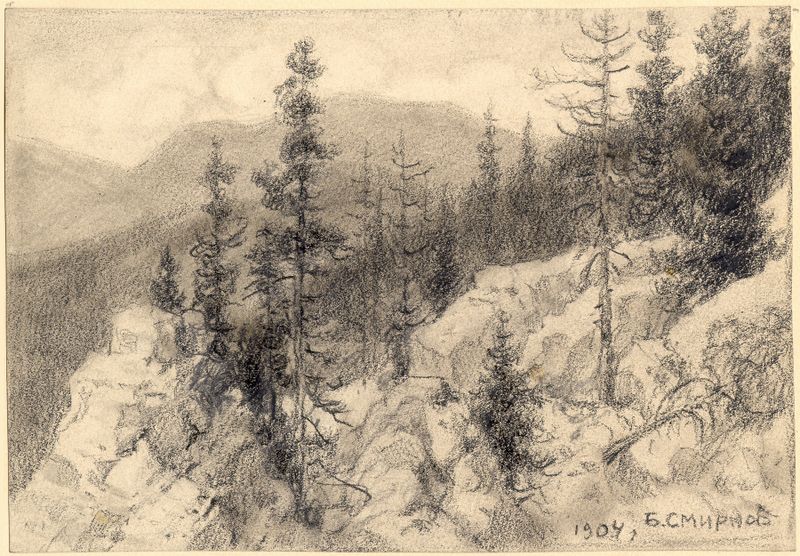
Taiga of the Ural Mountains near Zlatoust.
Boris Vasilievich Smirnov
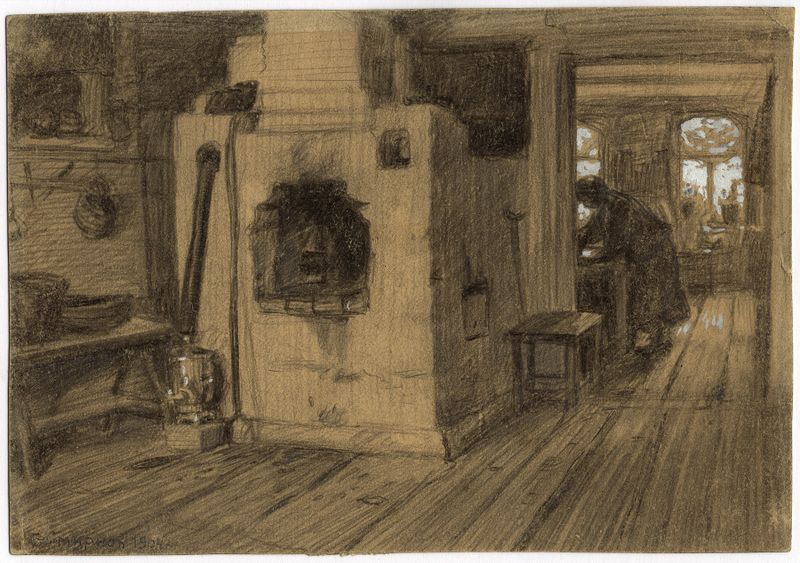
In a Hut on the Outskirts of Irkutsk.
Boris Vasilievich Smirnov
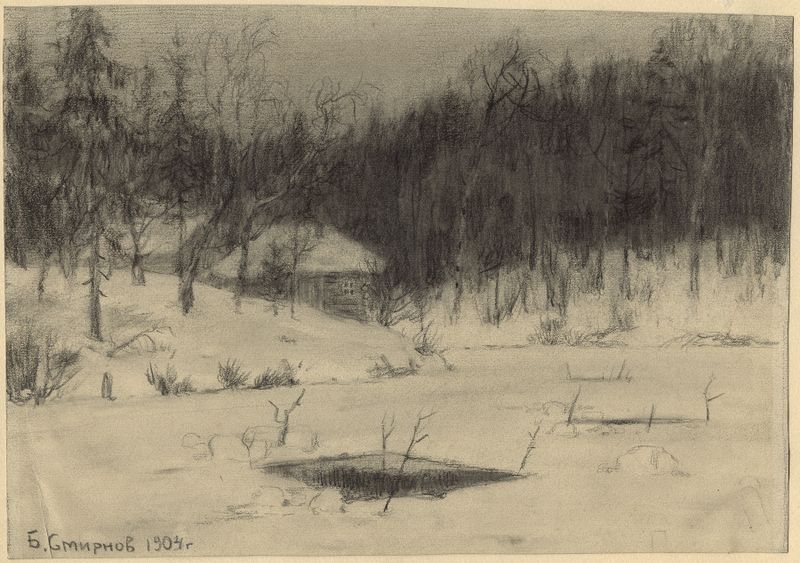
Ice Holes on the Irkut River.
Boris Vasilievich Smirnov
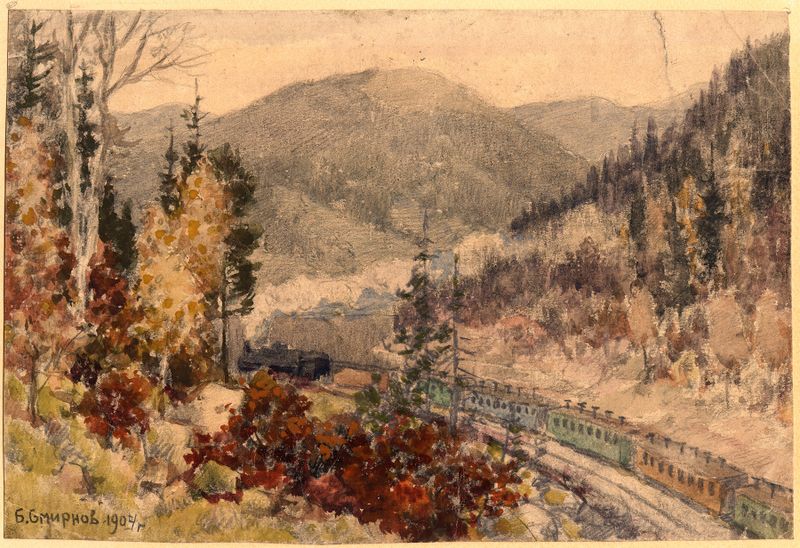
Locomotive in the Ural Mountains near Zlatoust.
Boris Vasilievich Smirnov





