Cornfields near Hastings — History & Facts
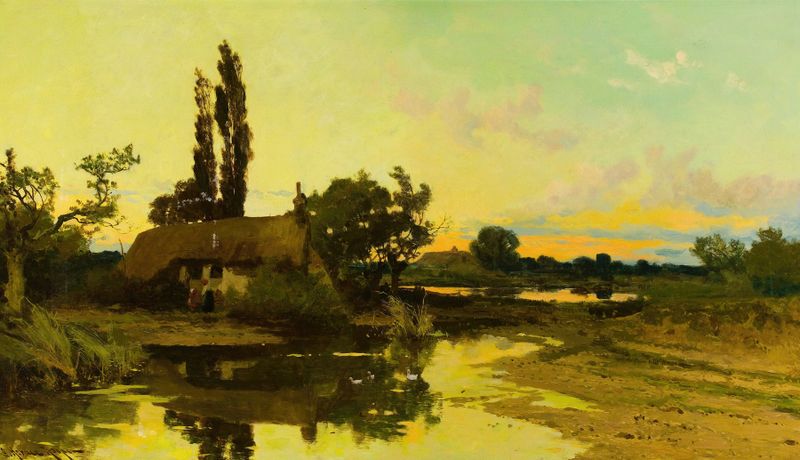
What secret hides in the quiet of the canvas? In Cornfields near Hastings, a world whispers with yearning, where the silence of the fields speaks volumes about the lives intertwined within them. Focus on the gentle undulations of the golden crops, painting a mesmerizing texture that draws the eye across the composition. Notice how the light dances on the blades, each stroke carrying warmth and inviting the viewer to explore deeper. The horizon looms softly, a muted blue that cradles the sun-drenched earth, while wisps of clouds lazily drift, encapsulating a moment caught between time and tranquility. As you delve deeper, you'll find emotional tension woven into the landscape.
The vibrant yellows of the corn symbolize both abundance and the fleeting nature of harvest, embodying a bittersweet beauty. Shadows lurking within the folds of the fields hint at stories left untold, secrets shared only with the wind. This subtle interplay between light and dark evokes a yearning for connection, bridging the viewer's heart with the quiet life of the land. At the time Cornfields near Hastings emerged, John Horace Hooper was navigating the complexities of the late 19th century art scene in England.
This period was marked by a shift toward impressionism and a growing fascination with capturing the essence of rural life. Hooper, influenced by these movements, sought to immortalize the simplicity of nature, reflecting both personal and collective experiences through his brushstrokes.