Cornish Landscape — History & Facts
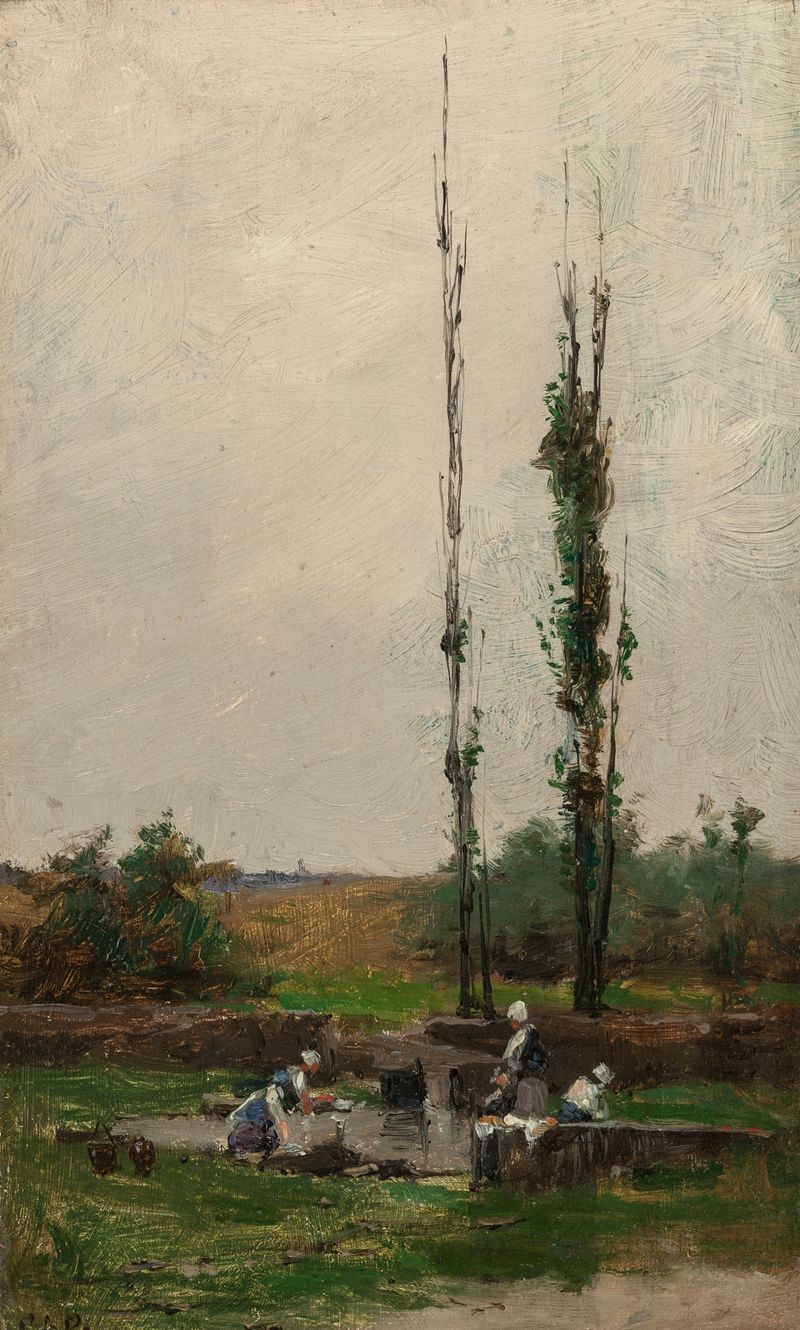
Where does light end, and longing begin? In the Cornish Landscape, the horizon blurs, inviting the viewer into a realm where absence transforms into yearning. Focus on the gentle gradient of the sky, a symphony of pastel hues that beckons your gaze upward. Notice how the soft, diffused light bathes the land below, illuminating rolling hills and the whimsical twists of trees. The sparse architecture barely peeks through the greenery, as if it shares a secret with nature, a reminder of humanity's fleeting touch.
Each brushstroke is deliberate, the colors carefully chosen to evoke a sense of serenity and solitude, compelling the eye to explore the tranquil scene. Delve deeper into the painting’s emotional pulse. The juxtaposition of the vibrant land against the ethereal sky speaks of a profound existential void — a space where hope mingles with melancholy. The sparse elements of the landscape evoke feelings of isolation, while the warmth of the light offers a glimmer of comfort, creating a poignant tension between presence and absence.
These nuances invite contemplation, encouraging the viewer to ponder their own experiences of longing and connection to the natural world. In 1919, Charles Adams Platt created this pastoral view during a time marked by recovery and reflection in post-war America. Living in New York, he was influenced by the shifting art movements of the era, embracing the beauty of nature while grappling with the scars of conflict. This period of his life was characterized by a deep appreciation for the organic, seeking solace in landscapes that echoed both beauty and the fragility of human existence.