Laundry Day — History & Facts
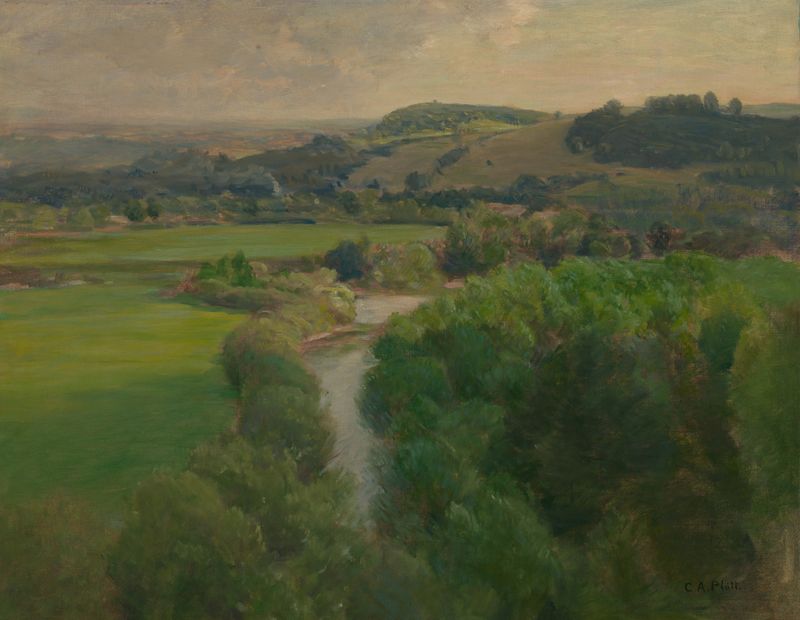
Did the painter know this moment would outlive them? The simple act of hanging laundry now becomes a profound echo of domestic life, laced with subtle violence in its unspoken tensions. Look to the center of the composition, where the sun-kissed whites of freshly laundered garments flutter like whispered secrets against an azure sky. The sharp contrast of the delicate fabrics against the rough-hewn backdrop of the wooden fence draws the eye, inviting reflection on the juxtaposition between fragility and strength. Notice how the light bathes the scene, creating warmth that belies an undercurrent of struggle—the labor it takes to achieve this serene moment is palpable. Within the quietude lies a deeper narrative: the clothes, once dirty and burdened, symbolize the weight of unacknowledged lives and stories.
The act of washing and drying represents a routine tinged with underlying violence—the relentless cycle of toil and domestic oppression, often overlooked. The vibrant colors of the garments hint at the individuality of those who wear them, yet they come together to form a collective scene, suggesting both unity and the isolation inherent in daily life. In 1884, Charles Adams Platt painted this work during a time when the art world was grappling with the tension between realism and the emerging influence of Impressionism. Living in New York, Platt was surrounded by an evolving artistic community, and his focus on everyday scenes reflected a desire to capture the essence of modern life.
This period marked a significant transition in art, as artists sought to represent the beauty found in ordinary moments, even those laced with the complexities of experience and emotion.