Cottage by the River with Washerwomen — History & Facts
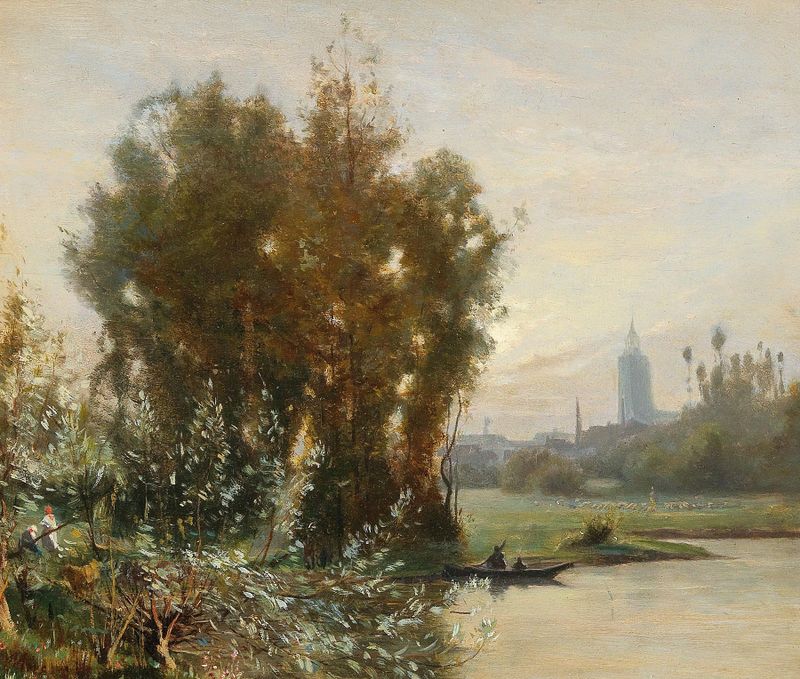
Did the painter know this moment would outlive them? In the tranquility of Cottage by the River with Washerwomen, an enduring sense of emptiness envelops the canvas, whispering stories of labor, leisure, and the passage of time. Look to the left at the gentle curve of the river as it snakes through the landscape, reflecting the soft hues of a waning day. The figures of washerwomen, immersed in their task, draw your gaze with their rhythmic movements. Notice how the warm golds and deep greens of the foliage cradle these women, while the stillness of the water contrasts with their diligent activity, creating a dynamic tension that lingers in the air. Hidden within the scene is a complex interplay between labor and leisure, life and solitude.
The distant cottage stands as a guardian of the river, yet it feels isolated, as if the women exist in their own world, untouched by the larger community. The emptiness of the landscape frames their engagement with nature, reinforcing the notion that even amidst collective effort, loneliness can seep into the essence of daily life. Created in 1835, during a time when Romanticism was flourishing in France, the painter captured this poignant moment while living in a period marked by the Industrial Revolution. Flers painted not far from Paris, where he witnessed the transformations of society and nature.
His work reflects a longing for pastoral simplicity, even as the tides of change began to reshape the world around him.