River Landscape With A City In The Background — History & Facts
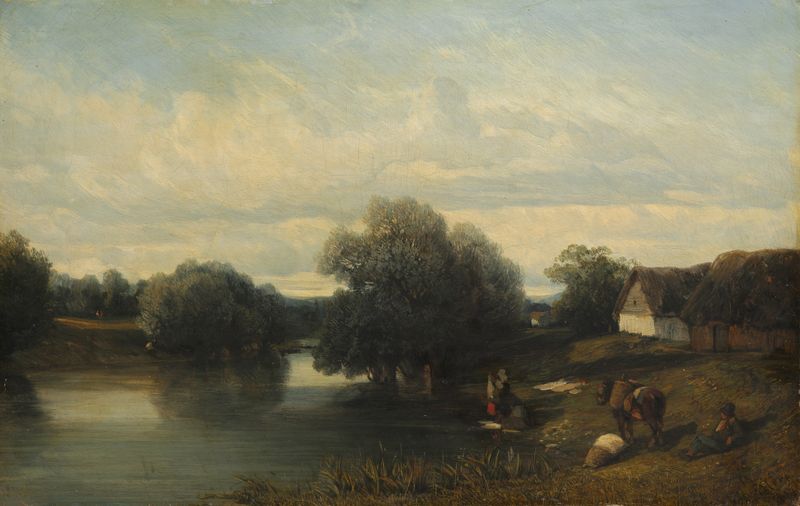
In River Landscape With A City In The Background, we’re beckoned to confront the chaos that lies beneath serene appearances—a madness disguised in nature's beauty. Look to the foreground, where the river meanders with gentle fluidity, reflecting the vibrant hues of the sky. Notice the way the colors blend—soft blues and greens intertwining, yet punctuated by streaks of more frenetic tones that hint at an underlying turbulence. The cityscape looms in the distance, its structures rising like jagged teeth against the horizon, a stark contrast to the tranquility of the water.
The brushwork evokes movement, while the tension between light and shadow creates an emotional dissonance, as if the scene itself is caught in the throes of a restless dream. Delve deeper into the composition, and the hidden madness reveals itself. The harmony of the river belies the chaos in the city, suggesting a struggle between natural beauty and urban encroachment. Small details—perhaps a solitary boat adrift, or the turbulent ripples near the riverbank—serve as reminders of fleeting serenity amidst a backdrop of looming human presence.
This duality encapsulates the delicate balance between peace and unrest, urging viewers to consider their own place in this landscape. During the time River Landscape With A City In The Background was painted, Camille Flers was navigating the tensions of a rapidly industrializing world. Although the date remains unspecified, it reflects a period when artists were increasingly grappling with the contrasts between nature and burgeoning urban landscapes. Flers, like many contemporaries, sought to capture the essence of a changing environment, marking a significant moment in the evolution of landscape painting.