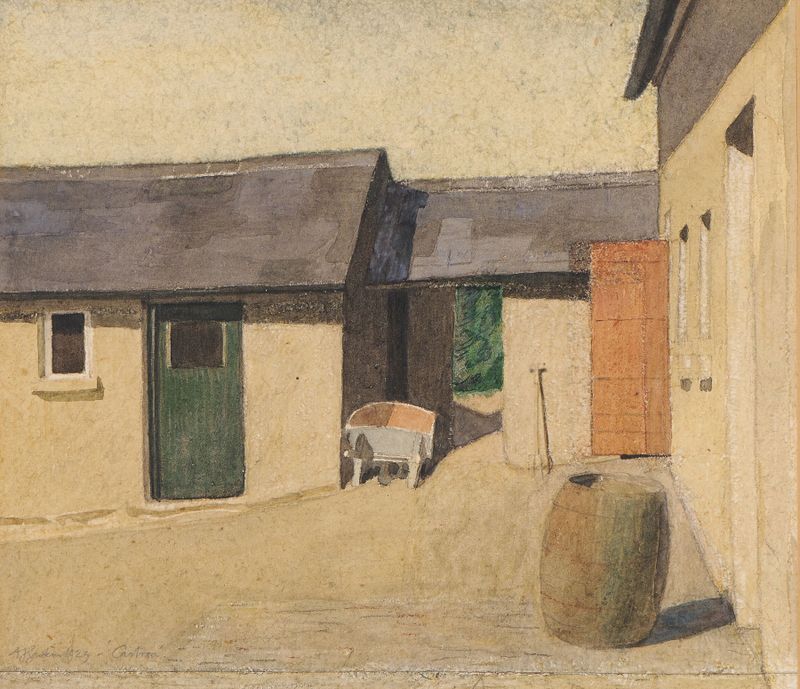
Cottages in Snow — History & Facts
Did the painter know this moment would outlive them? The fleeting beauty of winter, captured in soft strokes, speaks to a fragility that endures well beyond the snowflakes that fall. Look to the foreground, where the quaint cottages emerge from a blanket of white, their roofs heavy with snow. The muted palette of blues and grays evokes a serene chill, while hints of warm ochre in the buildings suggest life within. Notice how the gentle shimmer of light on the snow creates a shimmering pathway, inviting the viewer to step into this quiet, wintry world, each brushstroke meticulously crafted to convey both stillness and movement. Beneath the surface, the contrast between the stark cold of the landscape and the warmth of the cottages echoes a deeper emotional tension—the coexistence of comfort amid nature’s harsh embrace.
This delicate juxtaposition reflects the vulnerabilities of human existence, reminding us that warmth can be found even in the coldest moments. The untouched snow around the houses signifies transience, a reminder that every peaceful moment is fleeting, yet eternal in memory. In 1928, Arthur Joseph Gaskin painted this piece during a time when the world was grappling with the aftereffects of the First World War. Living and working in England, Gaskin was part of the Arts and Crafts movement, which emphasized handcrafted beauty and the profound connection between humanity and nature.
His focus on the interplay of light and landscape reveals his desire to find solace in the natural world, creating works that resonate with a timeless sense of serenity.