
Country Toll House — History & Facts
Where does light end, and longing begin? In the quiet recesses of the human experience, we find creation nestled between these two realms, resonating with unspoken desires and the warmth of home. Look to the center of the canvas, where the toll house stands proudly, its sturdy beams bathed in a gentle, golden light. The play of shadows and highlights brings texture to the rustic wood, inviting the viewer to imagine the stories that have unfolded within these walls. Focus on the surrounding landscape, where lush greenery frames the structure, embodying both serenity and a sense of purpose that the setting conveys, echoing the life of a community built on connection. Amidst the work’s pastoral beauty lies a deeper exploration of human existence—the toll house symbolizes the intersection of journey and homecoming, of travelers pausing in their quests.
The dichotomy of light and shadow reflects the duality of hope and uncertainty, a reminder that every destination carries with it the weight of longing. Each detail, from the curling smoke from the chimney to the distant figures in the fields, speaks to the shared experiences of labor, rest, and the intimate narratives that bind people together. Created between 1795 and 1800, this piece emerged during a period of significant change in England, where industrialization was beginning to reshape landscapes and lives. Clennell, a prominent figure in British art, was deeply influenced by the Romantic movement, which emphasized a return to nature and the human connection to the earth.
This work stands as a testament to his engagement with themes of place and community during a time when such values were undergoing profound transformation.
More Artworks by Luke Clennell
Browse all →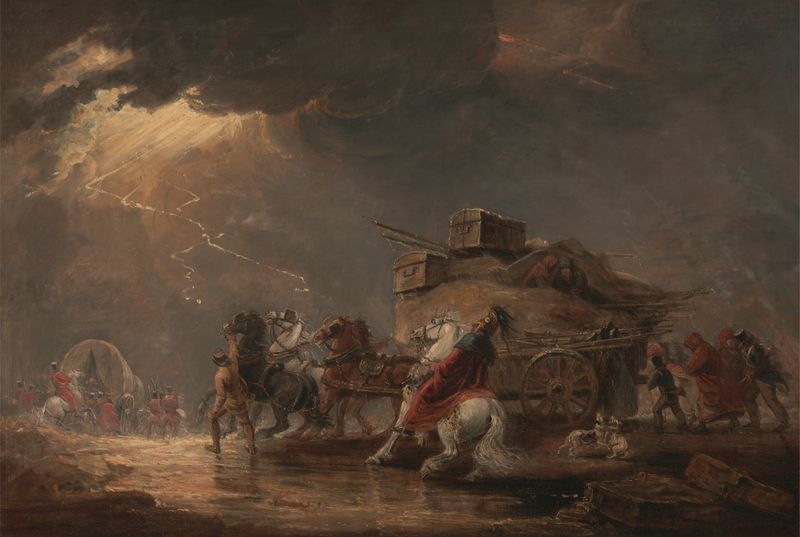


More Architecture Art
Browse all →
The statue of Liberty
Frédéric Auguste Bartholdi

View of Houses in Delft, Known as ‘The Little Street’
Johannes Vermeer

View of Houses in Delft, Known as ‘The Little Street’
Johannes Vermeer

The Cathedral in Rouen. The portal, Grey Weather
Claude Monet

The yellow house
Vincent van Gogh

The Church in Auvers-sur-Oise, View from the Chevet
Vincent van Gogh