Cour de ferme — History & Facts
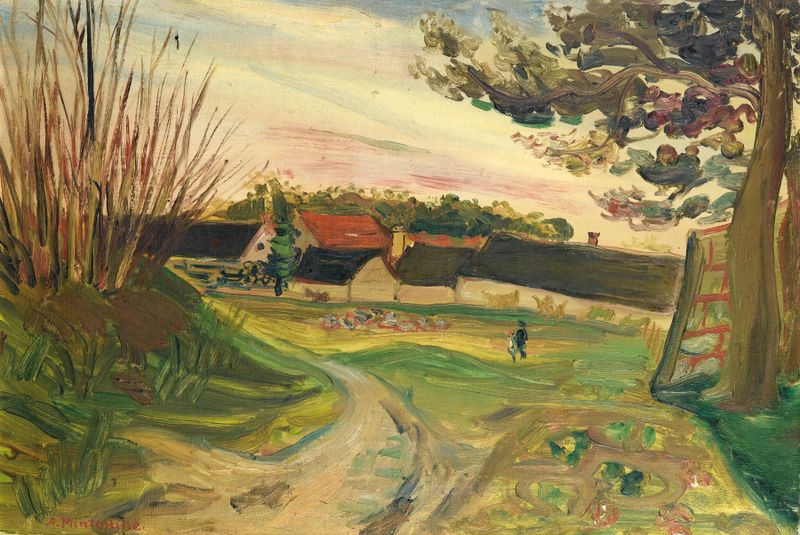
In Cour de ferme, the weight of grief envelops the viewer, a silent echo of loss captured in color and form. Look to the left at the stark wooden beams arching overhead, their rough texture contrasted against the soft, fading light filtering through the open doorway. The muted palette of browns and greens evokes a sense of desolation, while the solitary figure stands still, lost in thought amidst the empty space. Notice how the shadows stretch and bleed into one another, enveloping the scene in an almost palpable stillness, hinting at stories untold and memories left behind. A delicate tension threads through this work.
The absence of life within the farm courtyard speaks to the solitude that follows a loss, where once there may have been laughter and warmth. The positioning of the figure, alone in that vast space, suggests a profound contemplation of what has been lost, contrasting the once vibrant energy of rural life with the stark reality of emptiness. Each brushstroke resonates with a bittersweet nostalgia, a haunting reminder of the past. Created in 1929, this piece emerged during a tumultuous period for its creator.
Living in France, Mintchine was navigating the complexities of his émigré identity as he grappled with memories of his homeland, a world increasingly distant amid the rising tensions of the interwar period. This era shaped not just Mintchine’s personal narrative but the very landscape of art, as artists began to explore deeper emotional truths against the backdrop of societal upheaval.