
Cows in a Meadow — History & Facts
Who listens when art speaks of silence? In Cows in a Meadow, the soft murmur of nature envelops the viewer, inviting introspection through its delicate portrayal of light and tranquility. Look to the left at the gentle slope of the meadow, where the sunlight bathes the grazing cows in a warm, golden hue. The artist’s meticulous brushwork captures each blade of grass, dancing in the breeze, while the light trickles down from the sky, illuminating the serene landscape. Notice how the hues shift from lively greens to muted browns, creating a harmonious balance that reflects the peaceful coexistence of the animals and their environment. The contrasting textures in the painting evoke a sense of warmth and depth.
The smooth, rounded forms of the cows contrast with the roughness of the grass beneath them, symbolizing the fragility of life in nature. The shadows that stretch behind them add a layer of mystery, suggesting an unseen presence or an impending change. This balance of light and shadow serves not only as a visual guide but also as a reminder of the transient nature of pastoral life. In 1852, while painting this serene scene, Mahlknecht was navigating the evolving landscape of Romantic art, which sought to capture the beauty of nature and emotion.
Living in a time when industrialization began to encroach upon pastoral life, his work reflects a yearning for simplicity and an appreciation for the natural world, standing in stark contrast to the changing times around him.
More Artworks by Edmund Mahlknecht
Browse all →
A View of the Dachstein Massif
Edmund Mahlknecht

Returning Home With An Approaching Storm
Edmund Mahlknecht

Landschaft mit Bergsee
Edmund Mahlknecht

Idylle am Bauernhof
Edmund Mahlknecht

Kühe am Seeufer
Edmund Mahlknecht
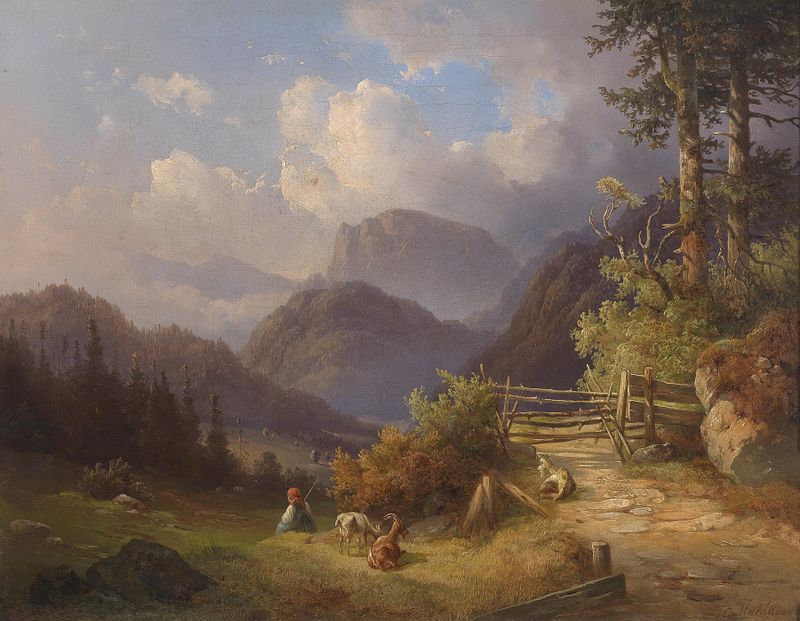
Die junge Ziegenhirtin
Edmund Mahlknecht
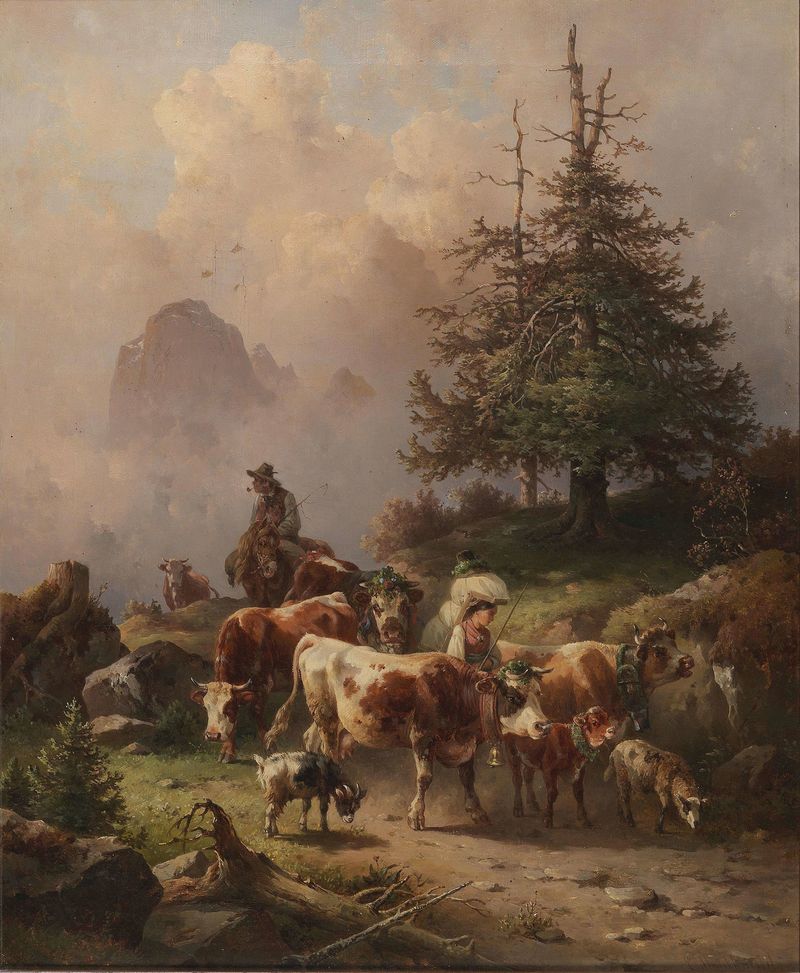
Driving the Cattle down from the Alpine Pastures
Edmund Mahlknecht

Beim Hufschmied
Edmund Mahlknecht
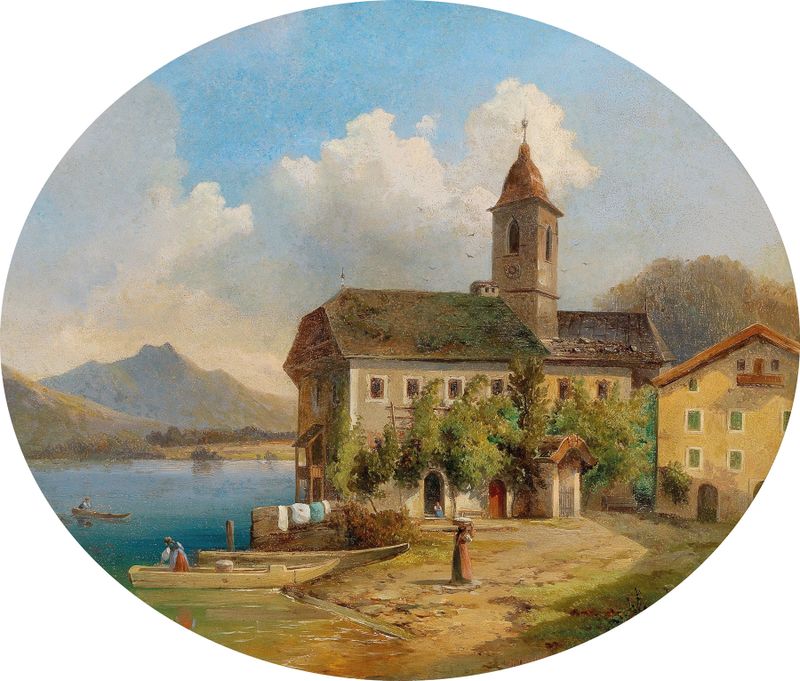
View of St. Wolfgang
Edmund Mahlknecht

Kühe mit Hirten an der Furt
Edmund Mahlknecht





