Crue de la Seine, aux abords du canal Saint-Martin, en novembre 1896 — History & Facts
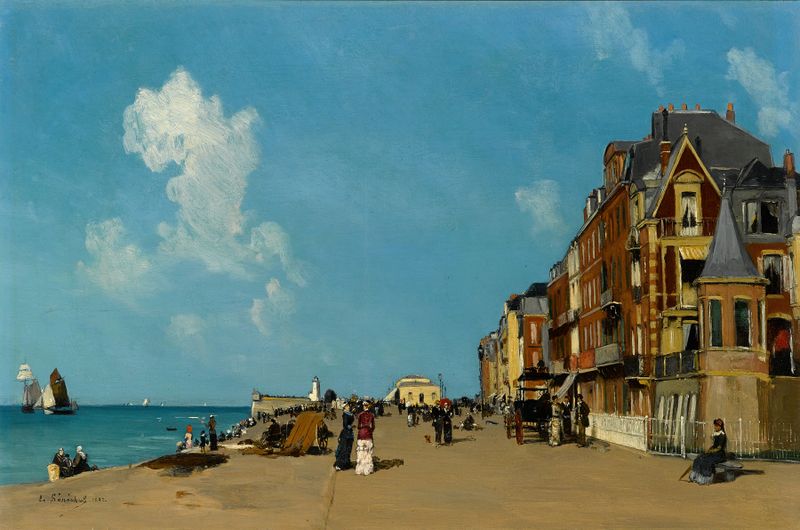
Could a single brushstroke hold eternity? In the delicate balance of an autumnal scene, the transformation from vibrant life to the stillness of winter whispers of awakening, inviting contemplation of our fleeting existence. Look to the foreground where the meandering canal reflects the muted colors of a November sky. The soft blending of blues and greys in the water creates a sense of deep introspection, while the trees lining the banks are caught in a moment of transition, their leaves a tapestry of ochres and burnt siennas. Notice how the light dances across the surface, capturing the fleeting beauty of nature's decay, and how the brushwork conveys both movement and stillness, creating a harmonious symphony of form. This tranquil moment holds a multitude of meanings: the contrast between the vibrant foliage and the encroaching quietude of winter symbolizes the transient nature of life.
The figures in the distance, appearing small against the vastness of the landscape, evoke feelings of solitude and reflection, suggesting that in the face of change, we find both beauty and melancholy. The careful layering of color and light invites the viewer to connect with their own experiences of loss and renewal, prompting a deeper exploration of what it means to awaken to the world around us. In 1896, Le Sénéchal de Kerdréoret was immersed in the vibrant art scene of France, navigating the shifting tides of Impressionism and Post-Impressionism. This period marked his exploration of capturing fleeting moments in nature, as he painted this scene near the canal Saint-Martin, reflecting both personal and societal transformations.
The world was experiencing rapid change, and through his brush, he captured not just a landscape, but an emotional resonance that speaks to the human condition.