Cubist Landscape — History & Facts
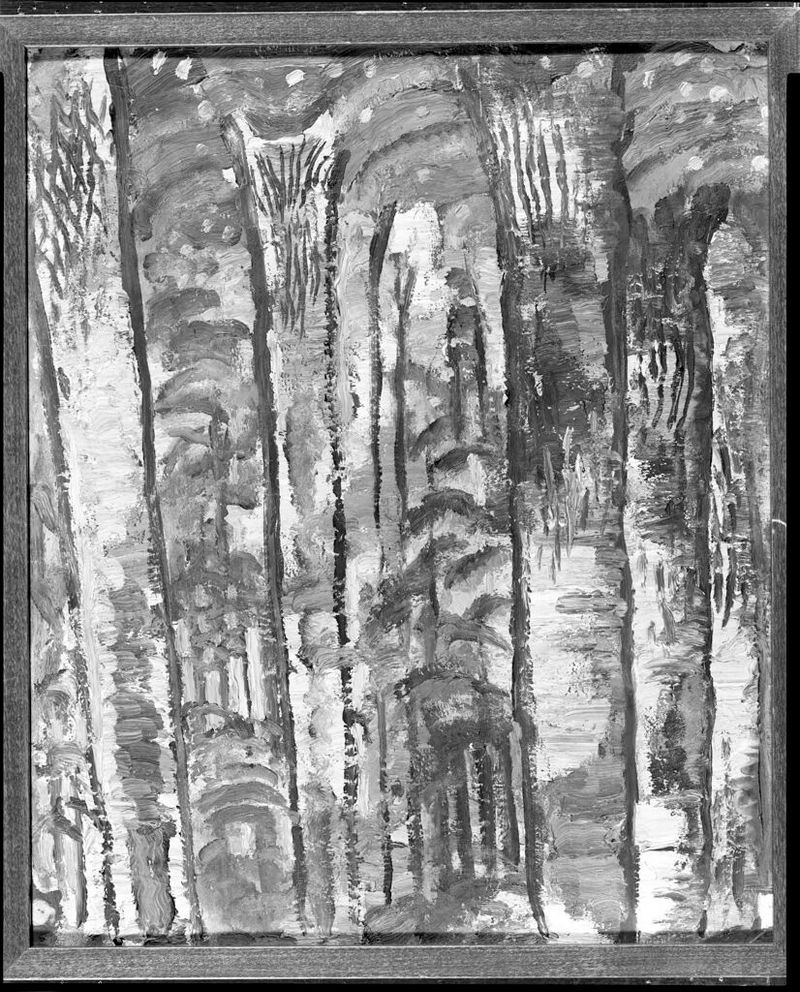
Can paint confess what words never could? In the fractured planes of perception, emotion whispers where language falters, revealing layers of melancholy that linger in the air. Look to the center of the canvas, where jagged shapes collide in a kaleidoscope of muted colors. The angular forms, reminiscent of a shattered mirror, create an intriguing sense of depth. Notice how the soft pastels intertwine with darker hues; the interplay of light and shadow draws your gaze inward, evoking a haunting sense of solitude.
Each brushstroke reflects the artist's meticulous approach to form, inviting the viewer to explore the complex landscape with both curiosity and trepidation. Upon closer inspection, one can discern a profound juxtaposition of nature and abstraction. The disjointed elements suggest a landscape struggling to reclaim its identity while hinting at the human spirit’s turmoil. In the broken lines, there exists a yearning for coherence, mirroring the artist's own emotional state during an era marked by uncertainty and change.
This sense of loss is palpable, yet there is beauty in the chaos, a testament to resilience and the search for meaning. Johann Walter-Kurau created this work in the early 20th century, amidst a post-war Europe grappling with artistic innovation and societal upheaval. Living in a time when traditional forms of art were often rejected, he sought to express complex emotional truths through Cubism. This period of experimentation allowed him to channel personal struggles, ultimately giving voice to a collective sentiment that resonated deeply within a rapidly evolving landscape of art.