Culver Cliff, Isle of Wight — History & Facts
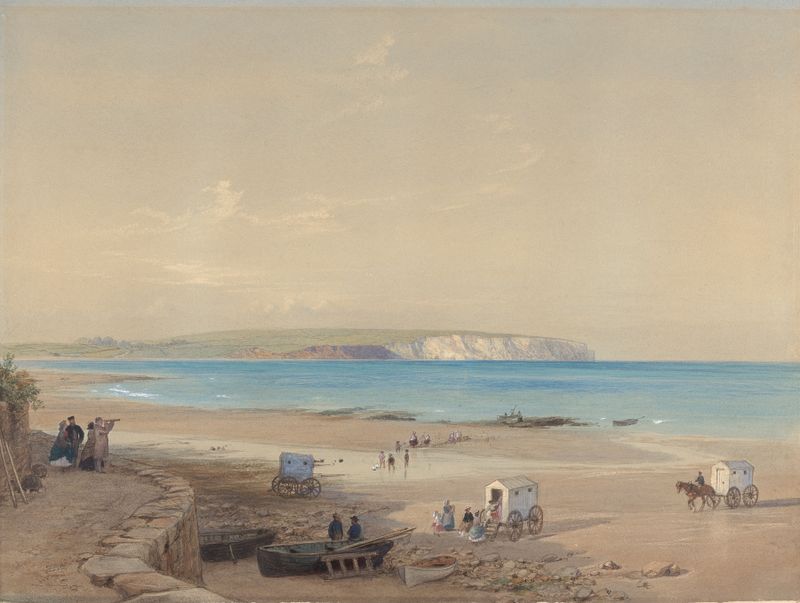
In the quiet of nature’s embrace, innocence breathes through the colors of life and light, revealing the profound emotions that linger beneath the surface. Look to the center of the canvas, where the gentle rise of Culver Cliff stands majestically against a serene sky. The lush greens of the landscape, kissed by soft sunlight, contrast sharply with the deep blues of the sea, inviting the viewer to wander closer. Notice how Dyce uses delicate brushwork to capture the play of light reflecting off the water, creating a shimmering effect that mirrors the fleeting moments of tranquility found in memory. Beneath the surface of this idyllic scene lies a subtle tension between nature's grandeur and the fleetingness of human experience.
The cliff, a steadfast sentinel, watches over the ever-changing tides, suggesting themes of permanence contrasted with the innocence of fleeting moments in life. The gentle undulations of the landscape evoke a sense of nostalgia, a longing for a time when innocence was untouched, each element working in harmony to evoke introspection. William Dyce painted this piece in 1847 while residing in England, a time when the Romantic movement was flourishing. His focus on natural beauty and the purity of landscapes reflected a broader cultural shift towards appreciating the serenity and majesty of nature, especially in response to the industrial changes sweeping across society.
It was a period of personal exploration for Dyce, as he sought to blend observation and emotion in a way that honored both the artistic tradition and the innocence of the world around him.