Culver Cliff, Isle of Wight — History & Facts
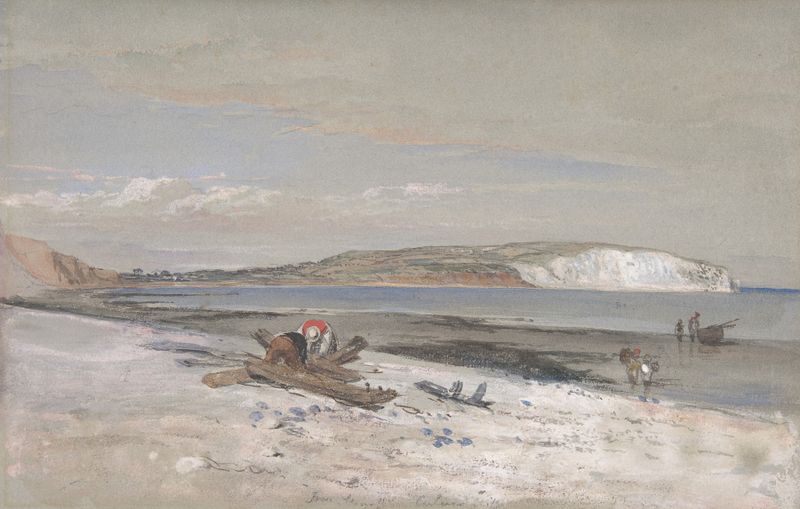
Is this a mirror — or a memory? The brushstrokes seem to echo a distant past, as if inviting us to reflect on the fine line between reality and the tumult of the mind. First, look to the left where the jagged forms of Culver Cliff rise dramatically against a tumultuous sky. Notice how the interplay of light and shadow creates an almost surreal atmosphere, suggesting a world caught in deep contemplation. The palette is rich with muted greens and blues, contrasting with the stark, whitecaps of waves crashing below, echoing the chaotic emotions lurking just beneath the surface. Deeper still, one cannot ignore the wildness of nature mirrored in the cliffs’ rough edges and the stormy sea.
The tumultuous sky hints at internal unrest, perhaps reflecting the artist's own struggles with sanity and creativity. These elements intertwine, forming a dialogue about the sublime beauty found within madness, illustrating how tumult may often coexist with moments of serene introspection. William Dyce painted this piece during a pivotal time in the 19th century, when Romanticism was flourishing and artists sought to capture both nature's beauty and its untamed emotional depths. Living in the throes of this artistic revolution, he was not only exploring the Isle of Wight’s dramatic landscapes but also grappling with his own artistic identity amidst a rapidly evolving art world.