
Dachauer Wintertag — History & Facts
Can paint confess what words never could? In the quiet of Dachauer Wintertag, a hushed solitude envelops the scene, beckoning the viewer to contemplate the vast emptiness. Look towards the expansive canvas, where a muted, wintry landscape sprawls beneath a pale sky. The muted blues and grays wash over the horizon, while skeletal trees stand sentinel, their branches stark against the cold air. Notice how the brushstrokes evoke a chill — soft but deliberate, they create a feeling of stillness punctuated by lingering shadows that seem to retreat into the distance. Deep within this composition lies a stark contrast between the empty spaces and the subtle details of life.
The vacant fields evoke a sense of longing, a yearning for warmth and vibrancy that is absent from the winter scene. As your gaze wanders, the hesitant presence of a distant house emerges, suggesting that though solitude may reign, the essence of humanity quietly persists amidst the desolation. This interplay of absence and presence compels the viewer to reflect on their own experiences of emptiness. Otto Strützel painted Dachauer Wintertag in 1926 during a time of great introspection in the art world.
Having settled in Dachau, Germany, he was surrounded by a burgeoning community of artists exploring new forms of expression in response to a rapidly changing society. Strützel’s work echoed the emotional weight of the post-World War I era, capturing not only the chill of winter but also the pervasive sense of displacement that permeated everyday life at that time.
More Artworks by Otto Strützel
Browse all →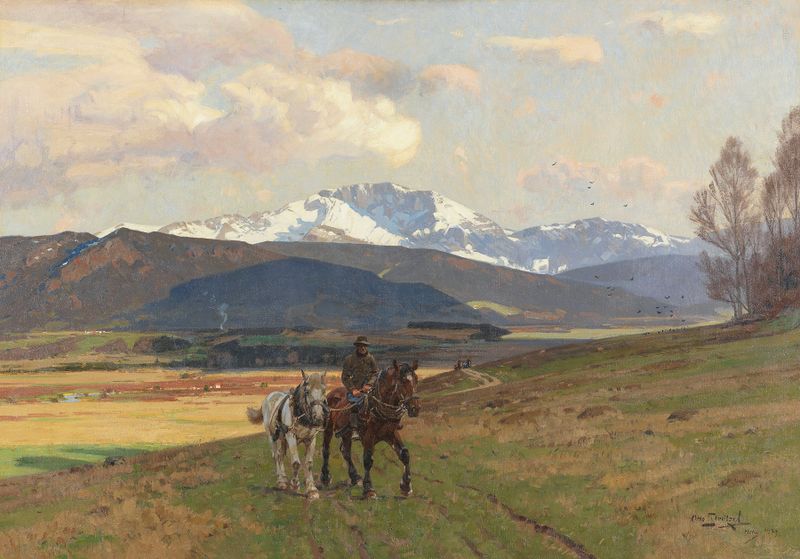
Reiter in Gebirgslandschaft (Benediktenwand)
Otto Strützel

A Moor in Spring
Otto Strützel
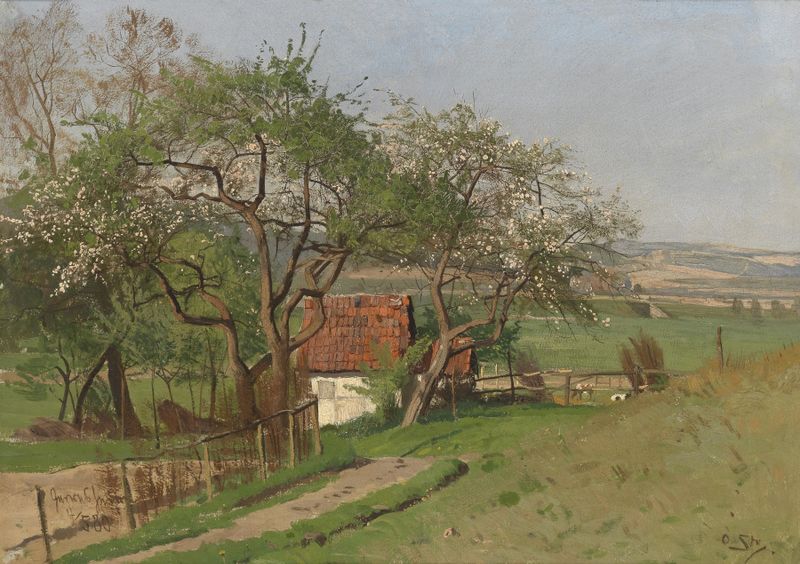
Frühlinglandschaft
Otto Strützel
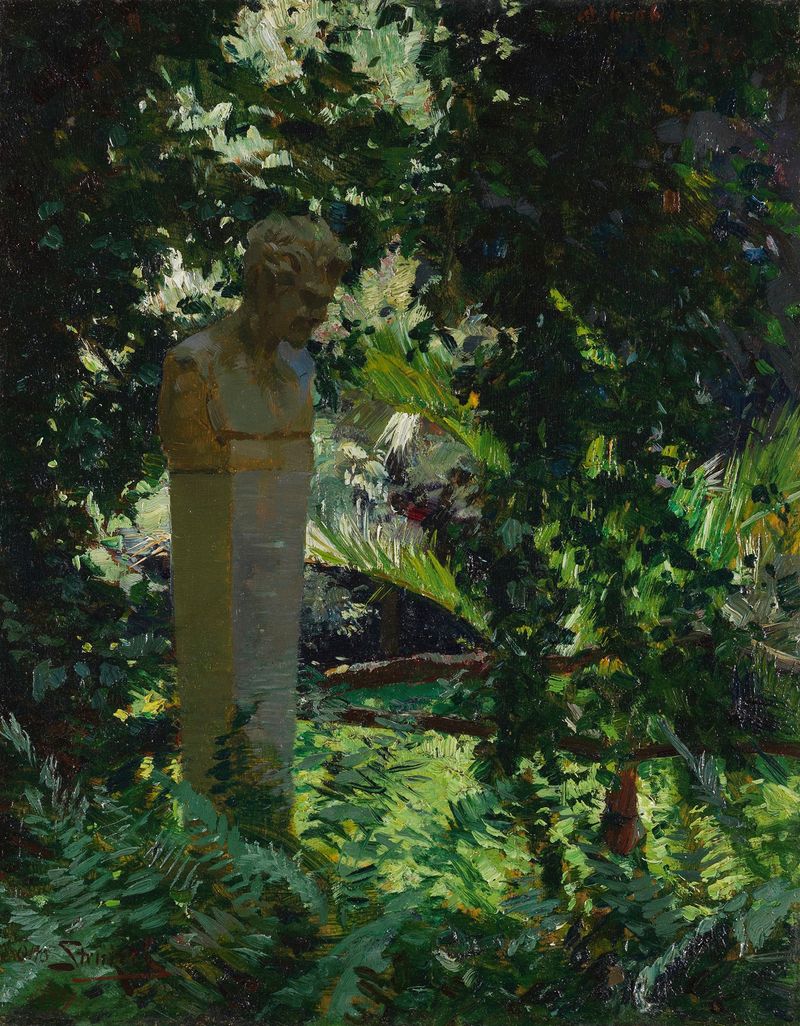
Faun
Otto Strützel

Der Königssee
Otto Strützel

Sommertag an der Küste von Gotland
Otto Strützel

A Peasant at the Edge of the Woods
Otto Strützel

View of Galtrö. Study
Otto Strützel
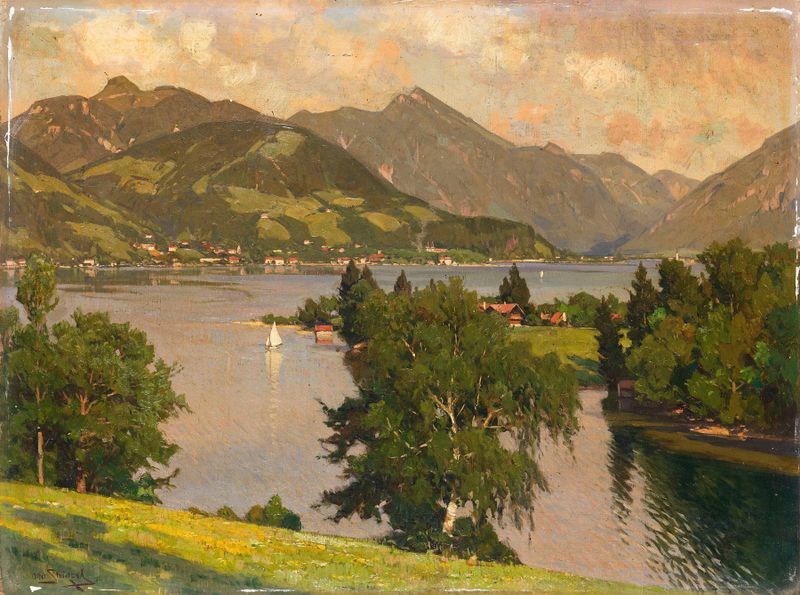
Blick auf den Tegernsee von Westen aus
Otto Strützel

Kühe am Bachufer
Otto Strützel





