Dadizele — History & Facts
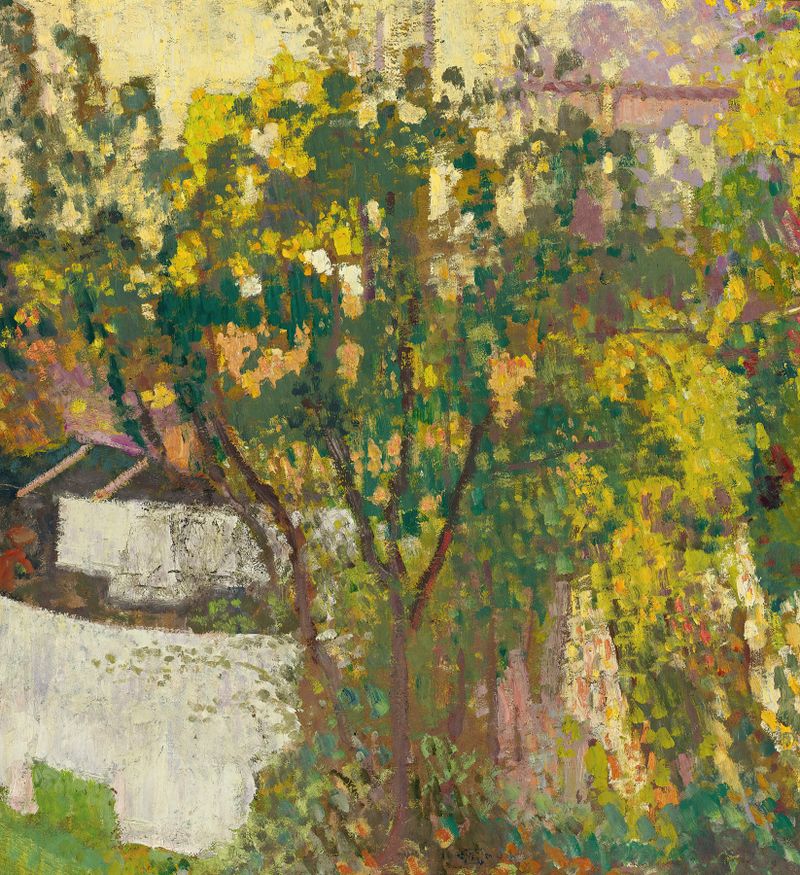
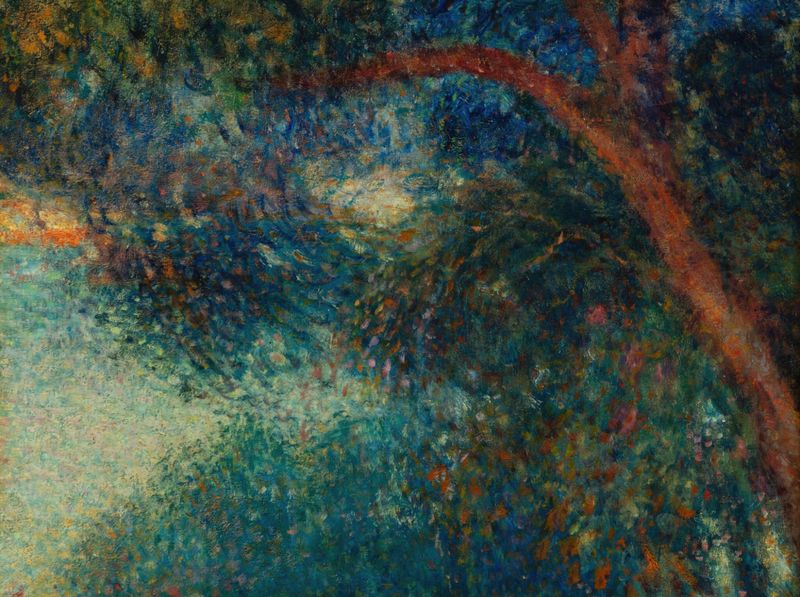
Could beauty survive in a century of chaos? In Georges Lemmen's Dadizele, the question lingers like a whisper, begging for contemplation amid the flurry of modernity. Look to the center of the canvas at the swirling forms of men and women, dancing in rhythmic harmony. Their bodies are painted with fluid brushstrokes that suggest movement, each figure almost blending into the lush, idyllic landscape of Dadizele. Notice how the vibrant greens and blues interlace with the warm hues of their clothing, creating a unity that feels both joyous and ephemeral.
The interplay of light and shadow captures the essence of a fleeting moment, inviting the viewer to bask in the euphoria of the scene. Delve deeper into the composition, where the vibrant colors evoke a sense of hope against the backdrop of impending turmoil. The joyous celebration contrasts sharply with the looming societal changes of the time, hinting at the fragility of happiness. Each figure is both an individual and a part of the collective, their expressions revealing a shared exhilaration that belies the chaos encroaching beyond the edges of the canvas.
This subtle juxtaposition creates a powerful tension, reminding us that beauty can emerge even in uncertain times. During the summer of 1892, while residing in Belgium, Lemmen painted Dadizele as part of his exploration into the Symbolist movement. This period marked a significant evolution in the art world, as artists began to push against traditional boundaries, embracing new forms of expression. Amid industrial growth and social upheaval, Lemmen's work served as both a celebration of life and a poignant reflection on the challenges of a changing society.