Danish Landscape — History & Facts
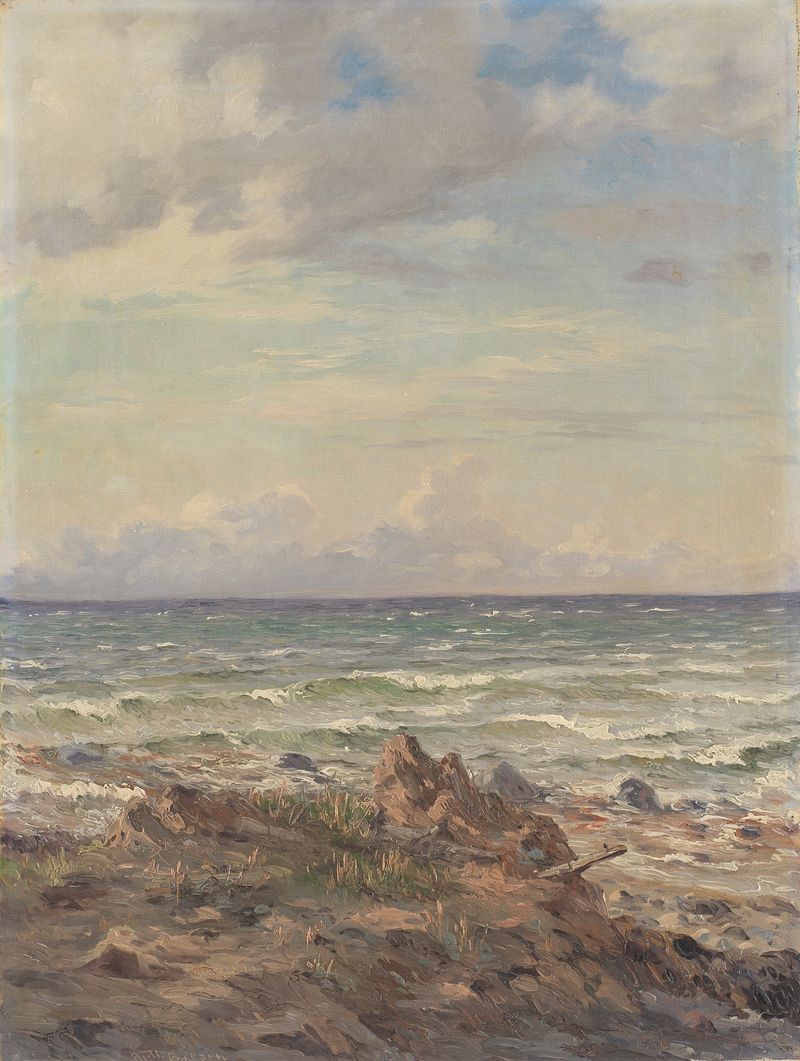
What secret hides in the quiet of the canvas? The tranquil beauty of an unspoken dream beckons the viewer to delve deeper into the serene depths of the landscape. Look to the horizon, where soft, rolling hills blend effortlessly into a sky awash with the gentle hues of dusk. The careful brushstrokes create a sense of movement in the clouds, as if they dance slowly above the land. Notice how the warm golden light spills across the fields, illuminating patches of grass that sway softly, inviting a peaceful reverie.
The palette, dominated by earth tones and muted greens, embodies a harmony that feels both nostalgic and timeless, drawing the eye inward and evoking a sense of calm. Within this idyllic scene, a deeper narrative unfolds—a juxtaposition of solitude and connection with nature. A single tree stands resolute, its presence a solemn reminder of resilience, while the distant outline of a cottage suggests life beyond the canvas. The interplay of light and shadow adds dimension, hinting at the fleeting moments of daily life that pass unnoticed, yet shape the essence of existence.
Here lies a reflection on the intimacy of one’s bond with the world, the silence that speaks volumes. August Wilhelm Boesen painted this work between 1827 and 1844, during a time of significant change in Denmark and the wider art world. He found himself immersed in the burgeoning Romantic movement, which emphasized emotion and individual experience in art. As a contemporary of the Danish Golden Age, Boesen navigated a landscape rich with inspiration, both from nature and the shifting cultural winds of his time, making Danish Landscape a poignant testament to his artistic journey.