Kystparti med stenet strand — History & Facts
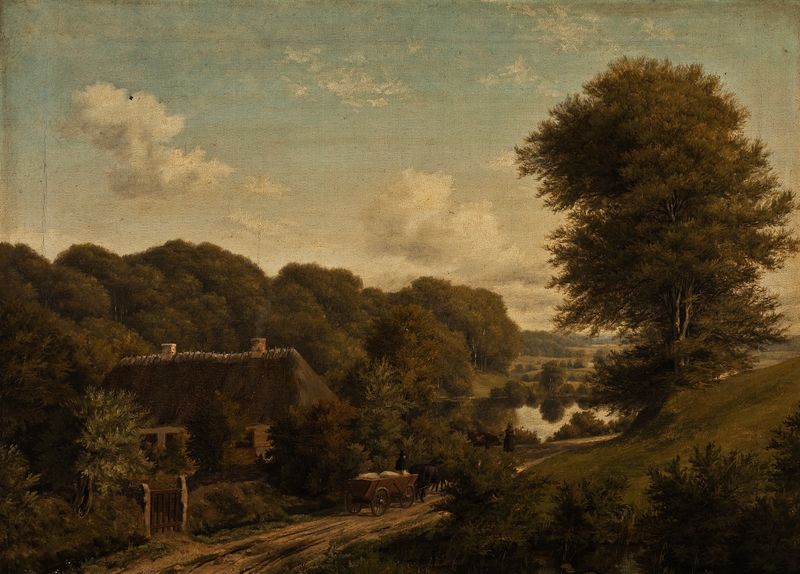
When did color learn to lie? In Kystparti med stenet strand, the hues twist and dance, beckoning the viewer to question the authenticity of nature itself. Look to the left at the soft embrace of greens and blues, where the shoreline melds into the sky, creating a dialogue between land and water. Notice how the light refracts upon the surface, illuminating the pebbled beach with an almost surreal glow. The brushstrokes, both rhythmic and deliberate, draw your eye towards the contrast of rough stones against the delicate play of the waves, instilling a sense of tranquility amidst the ruggedness of the scene. As you delve deeper, observe the hidden tensions in the painting—the stark juxtaposition between the calm surface of the water and the jaggedness of the rocks.
Each stone seems steeped in history, weathered by time yet resolute against the tide, reflecting the struggle between permanence and transience. There is a quiet solitude captured here, an invitation to retreat into one's thoughts while contemplating the seemingly endless horizon. August Wilhelm Boesen painted this work during a period of artistic exploration in the early 19th century, when Romanticism was beginning to take hold in Europe. Working from his studio in Denmark, he was influenced by the shifting tides of nature and the emerging ideals that sought to portray human emotion through landscapes.
This painting stands as a testament to the artist's dedication to capturing the raw beauty of coastal life and the complexities of the world around him.