
Dansk landsbygade — History & Facts
When did color learn to lie? This question echoes through the layers of Dansk landsbygade, a landscape that teeters between the beauty of serene countryside and the lurking shadows of unease. Focus on the vibrant greens and browns that stretch across the canvas, inviting your gaze to the quaint village nestled amid the rolling hills. Notice how the bright light seems to dance across the surface, illuminating the life of the scene—a gathering of villagers, their clothes rich in color and detail. Yet, there’s an unsettling stillness in the faces, a subtle tension that suggests a troubling undercurrent beneath the idyllic façade. As you delve deeper, observe the juxtaposition of the lively colors with the ominous clouds gathering in the distance.
The light falls with an almost deceptive gentleness on the figures, while their postures hint at a deeper fear—perhaps of change or the encroachment of the unknown. The artist captures a moment that is both vibrant and foreboding, suggesting that beauty can often mask underlying anxieties about the future. The warm earth tones may evoke comfort, yet the encroaching darkness looms as a reminder of the fragility of this harmony. Created in 1880, this work emerged during a period of change in Denmark, reflecting both rural life and the tensions of modernity.
Brendekilde, deeply influenced by the natural landscape around him, sought to portray the essence of his homeland while grappling with societal shifts. As the Impressionist movement gained momentum, the artist found himself at a crossroads, blending traditional themes with a new awareness of the emotional complexities of the world.
More Artworks by Hans Andersen Brendekilde
Browse all →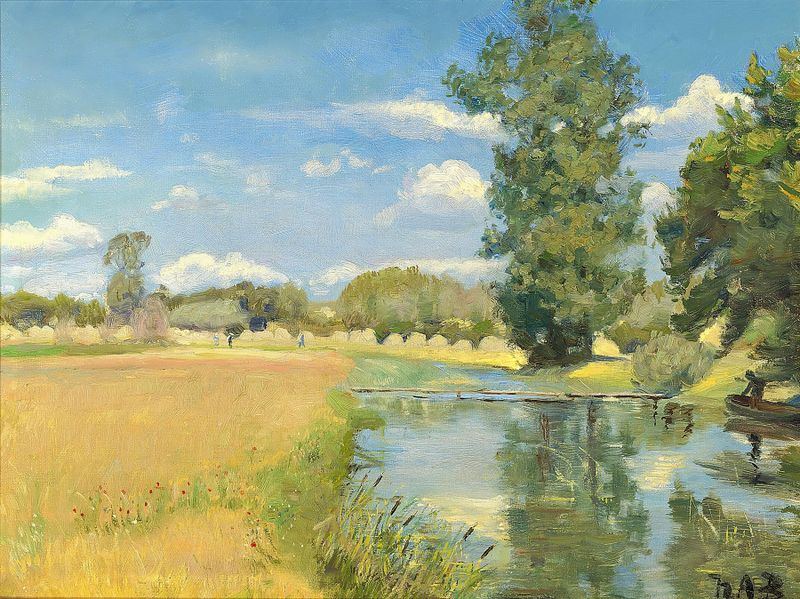
Flod gennem høstlandskab, sommer
Hans Andersen Brendekilde
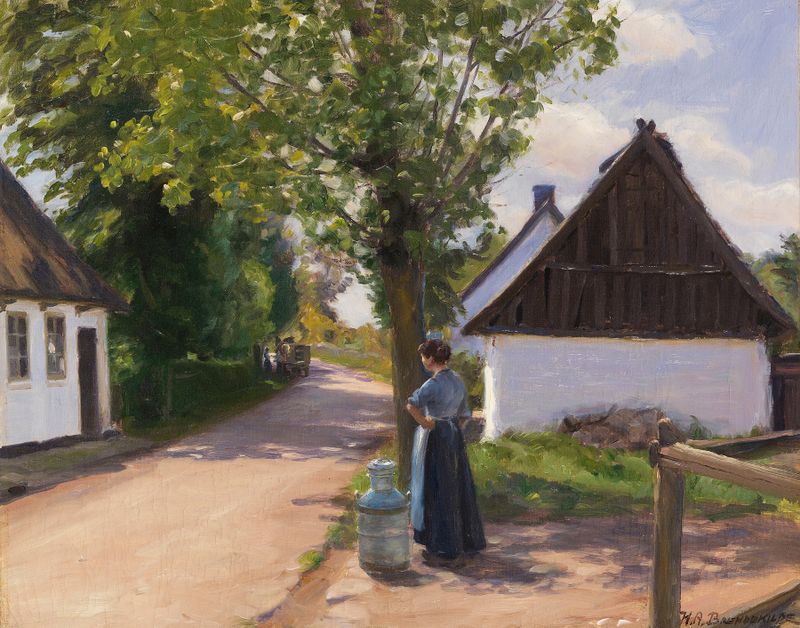
Dänische Dorfstraße mit Bäuerin und Milchmann
Hans Andersen Brendekilde
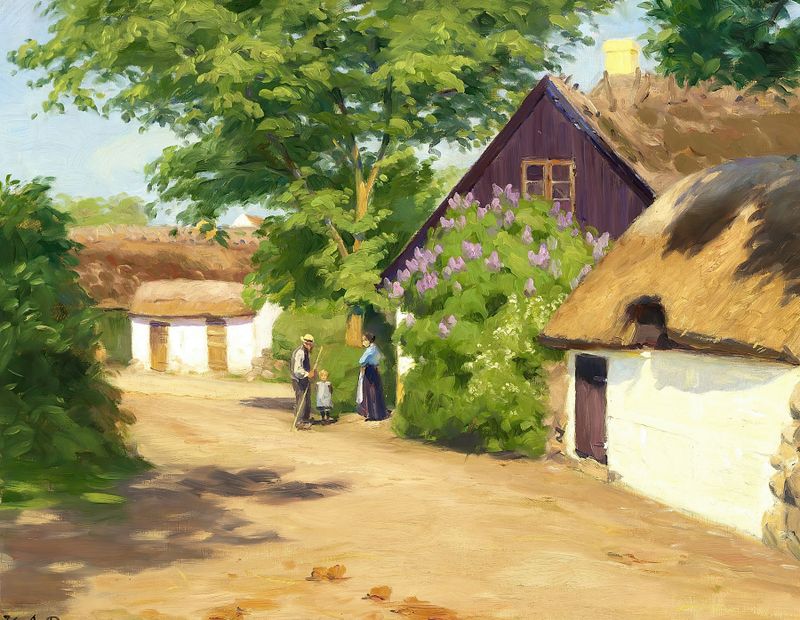
Sommerdag i landsbyen
Hans Andersen Brendekilde
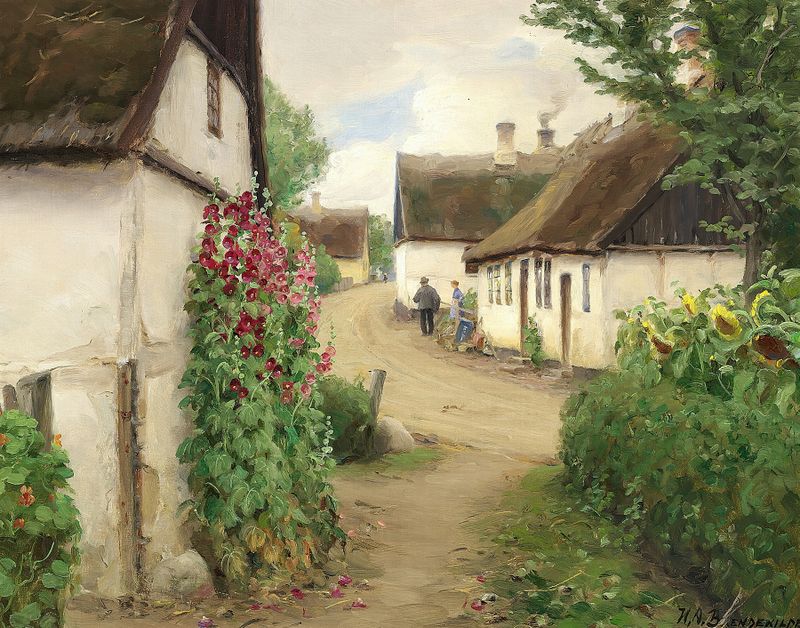
Sommerdag i en landsbygade med solsikker og røde stokroser
Hans Andersen Brendekilde
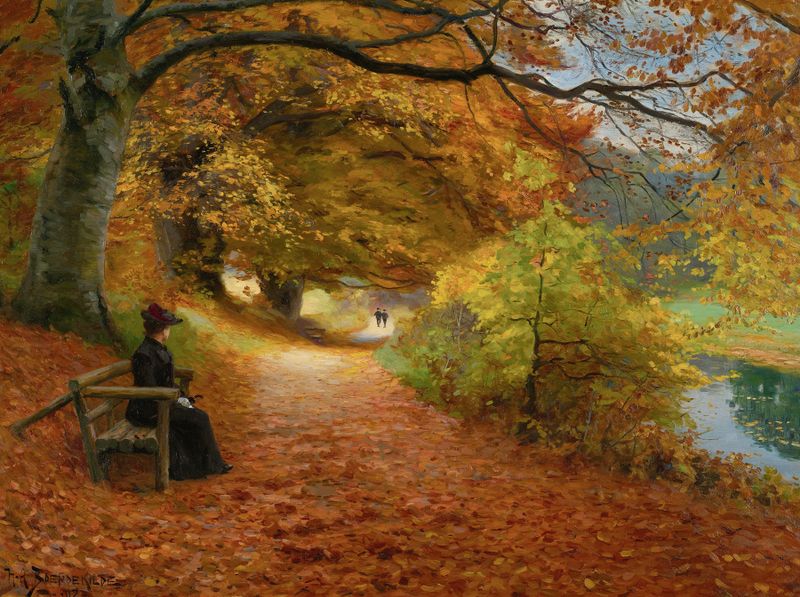
Wooded Path In Autumn
Hans Andersen Brendekilde
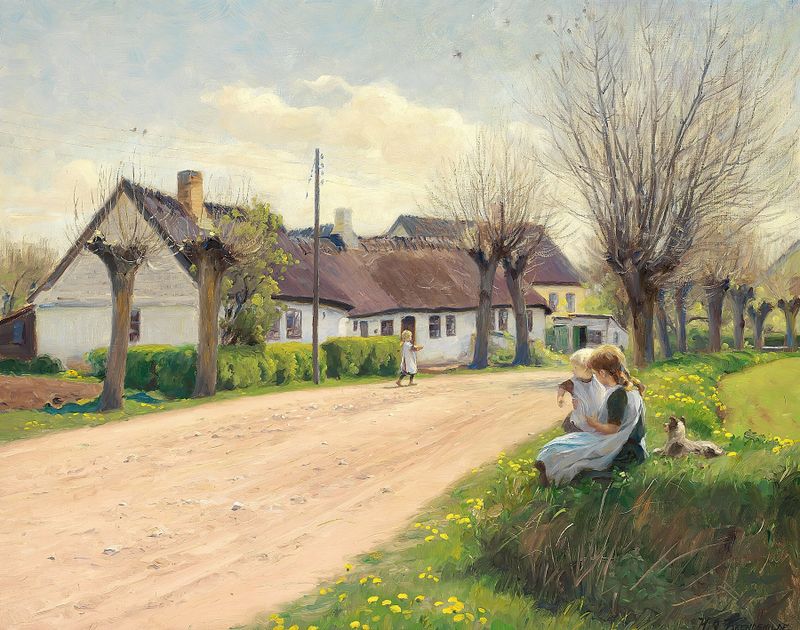
Forår i landsbyen med piger i vejkanten
Hans Andersen Brendekilde
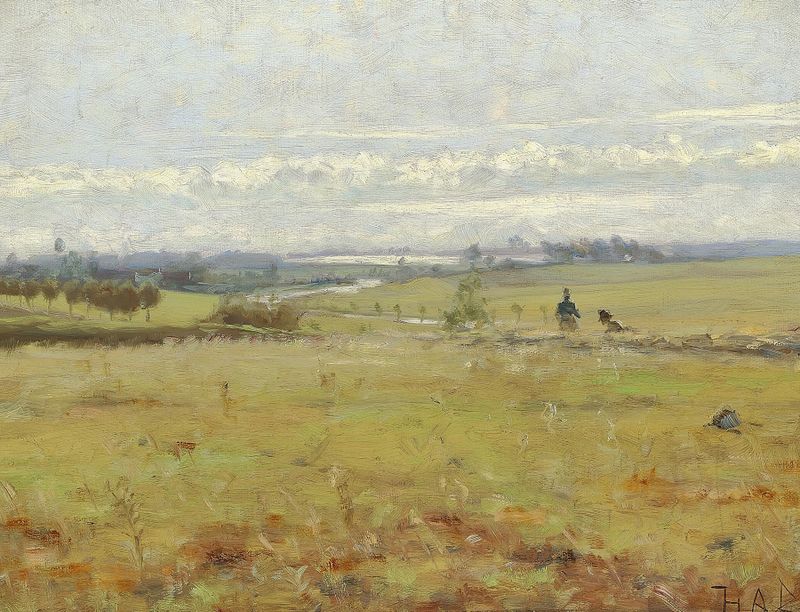
Tidlig Morgen over Mosen
Hans Andersen Brendekilde
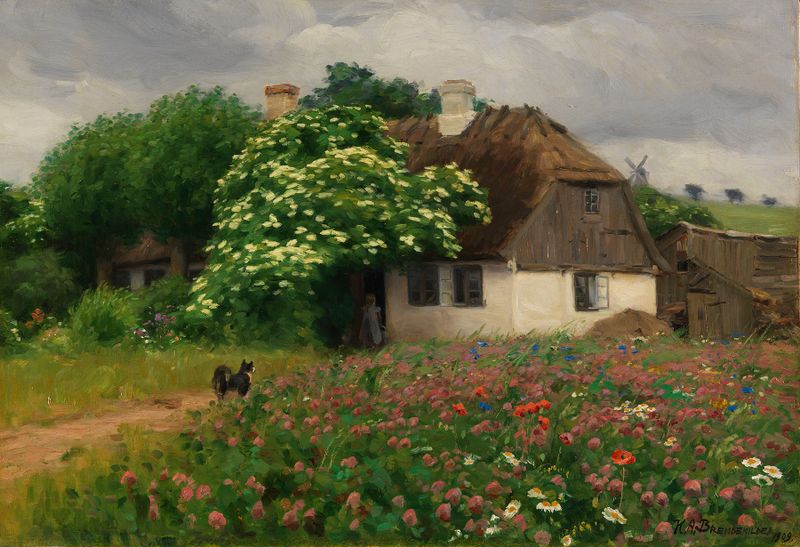
Farmhouse with meadow flowers
Hans Andersen Brendekilde
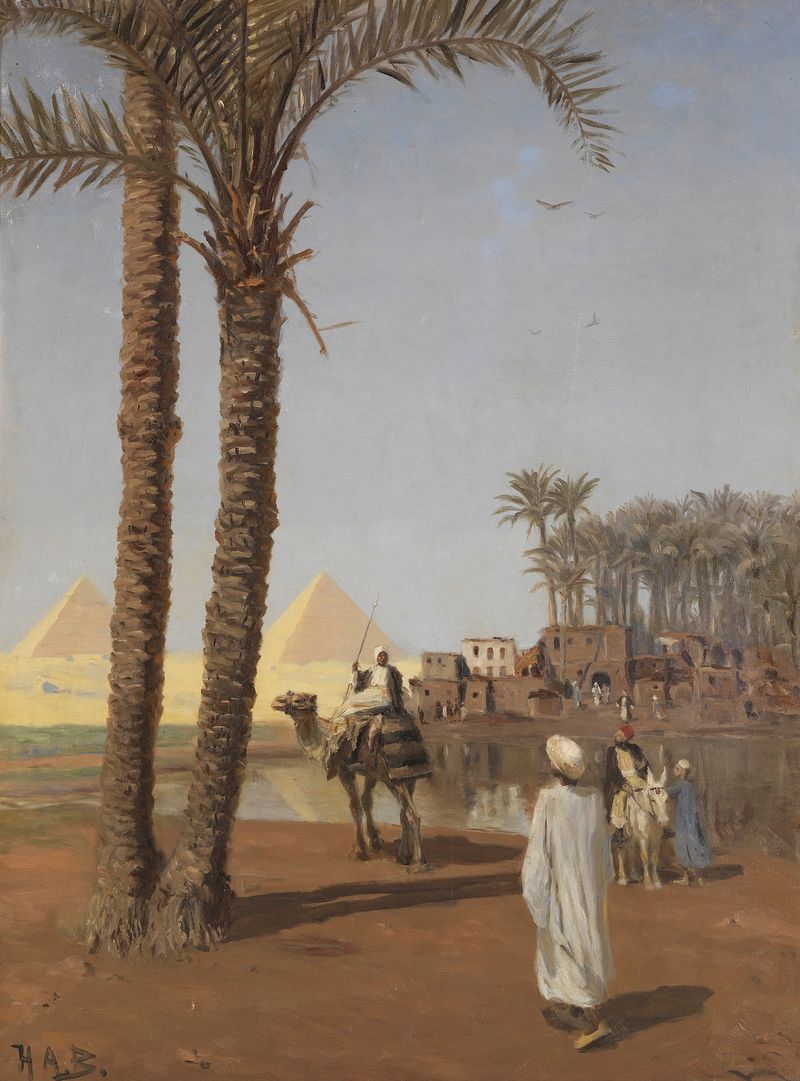
Orientalsk scene
Hans Andersen Brendekilde
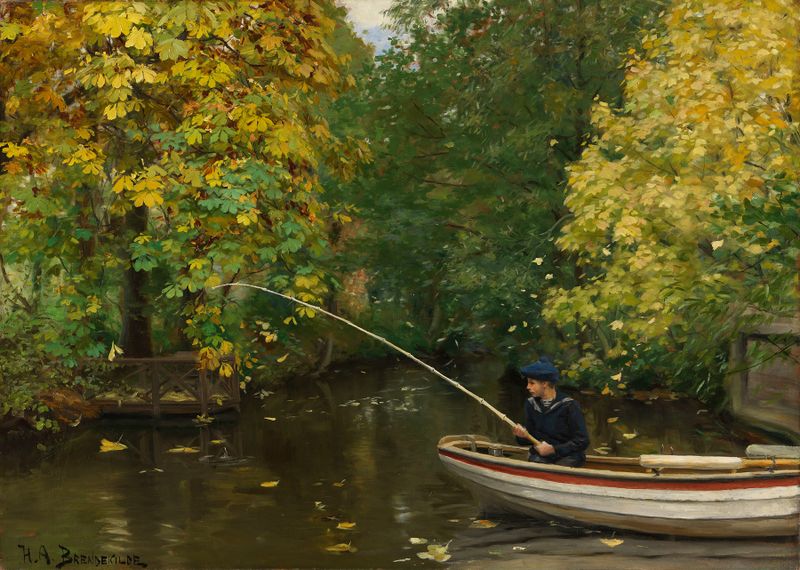
Fishing Boy
Hans Andersen Brendekilde





