
Das alte Haus in der Grünen Thorgasse Nr. 80 in Wien Rossau — History & Facts
Who listens when art speaks of silence? In Das alte Haus in der Grünen Thorgasse Nr. 80 in Wien Rossau, the absence of sound echoes louder than any clamor, revealing the underlying violence of a forgotten world. Look to the left at the timeworn façade of the house, its crumbling bricks and peeling paint telling stories of neglect. The light, a soft golden hue, bathes the structure, creating a haunting contrast between the warmth of the sun and the chill of abandonment.
Notice how the shadows stretch languidly across the cobblestone street, emphasizing the stillness and contemplation that envelops the space. Each brushstroke is deliberate, capturing not just a physical structure but the very essence of a moment suspended in time. Dig deeper, and you'll uncover layers of emotional tension. The house, once a vibrant home filled with laughter and life, now stands as a relic of sorrow, its silence amplified by the bustling city all around it.
The juxtaposition of light and shadow hints at violence beneath the surface, suggesting that even the most peaceful scenes may harbor darker histories. The choice of color and decay serves as a reminder of life's transience, bending our perception of time and memory. In 1858, Carl L. Wiesböck was immersed in the rapidly changing landscapes of Vienna, where the remnants of tradition clashed with a burgeoning modernity.
This period marked a time of upheaval in Europe, with the aftermath of revolutions influencing artistic expression. Wiesböck's work reflects the tension between past and present, capturing a moment where silence becomes a powerful storyteller, urging viewers to contemplate what lies beneath.
More Artworks by Carl L. Wiesböck
Browse all →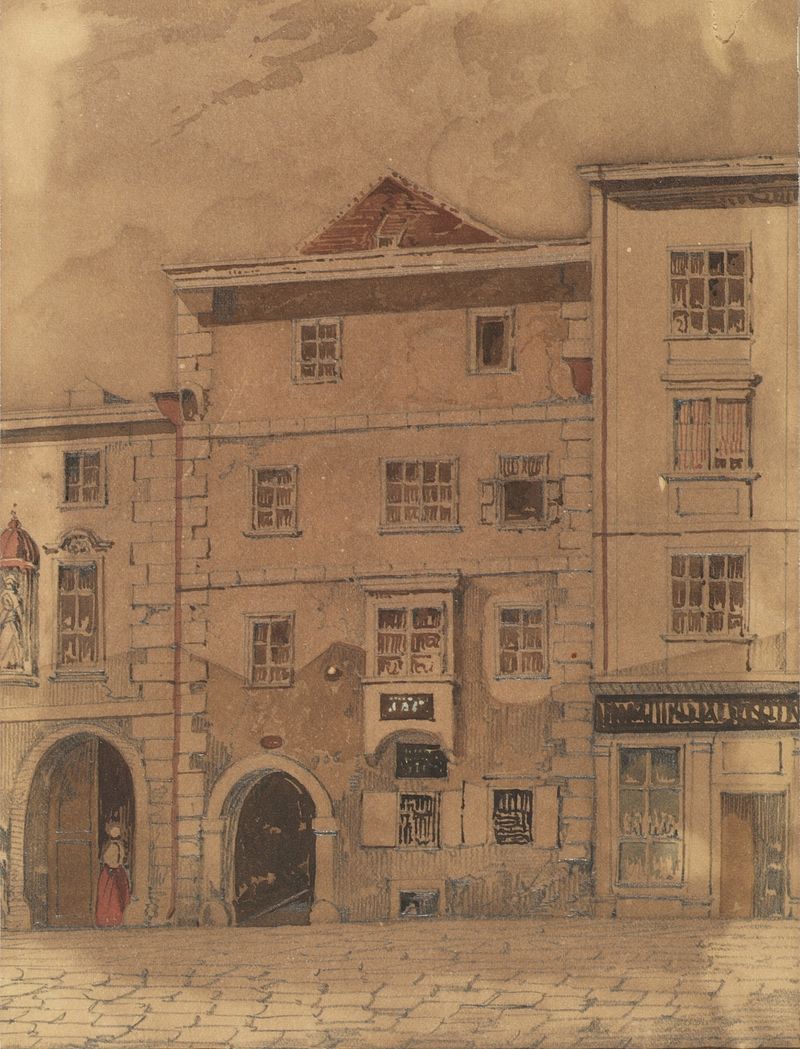
More Architecture Art
Browse all →
The statue of Liberty
Frédéric Auguste Bartholdi

View of Houses in Delft, Known as ‘The Little Street’
Johannes Vermeer

View of Houses in Delft, Known as ‘The Little Street’
Johannes Vermeer

The Cathedral in Rouen. The portal, Grey Weather
Claude Monet

The yellow house
Vincent van Gogh

The Church in Auvers-sur-Oise, View from the Chevet
Vincent van Gogh