
Mozarts Sterbehaus in der Rauhensteingasse in Wien — History & Facts
Where does light end, and longing begin? In the silent echo of memory, we find the intersection of past and present, where the essence of life lingers like a haunting melody. Look to the center of the painting, where the warm glow of light spills across the modest façade of a historic building, suggesting life within. The gentle hues of ochre and soft blues envelop the structure, creating a tender atmosphere that invites the viewer to linger longer. Notice the subtle play of shadows around the windows, hinting at the stories held inside, while the careful brushwork conveys a sense of both reverence and nostalgia. As you examine the details, consider the contrasting elements at play: the solidity of the architecture against the ethereal quality of light, symbolizing the tension between mortality and immortality.
The building stands as a testament to genius and creativity, yet it is imbued with a palpable sense of absence. Each stroke captures not just a physical space, but an emotional landscape, hinting at the rebirth of artistic legacy through memory and remembrance. Created in an undefined period, the artist was likely reflecting on both personal and cultural upheavals as they painted this scene. Capturing the birthplace of a musical legend, this artwork resonates in a time when Vienna was a hub of innovation and artistic exploration, and the shadows of the past were as significant as the promise of the future.
It is a moment frozen, ripe with the potential for rebirth through the arts, delicately intertwined with the life of a great composer.
More Artworks by Carl L. Wiesböck
Browse all →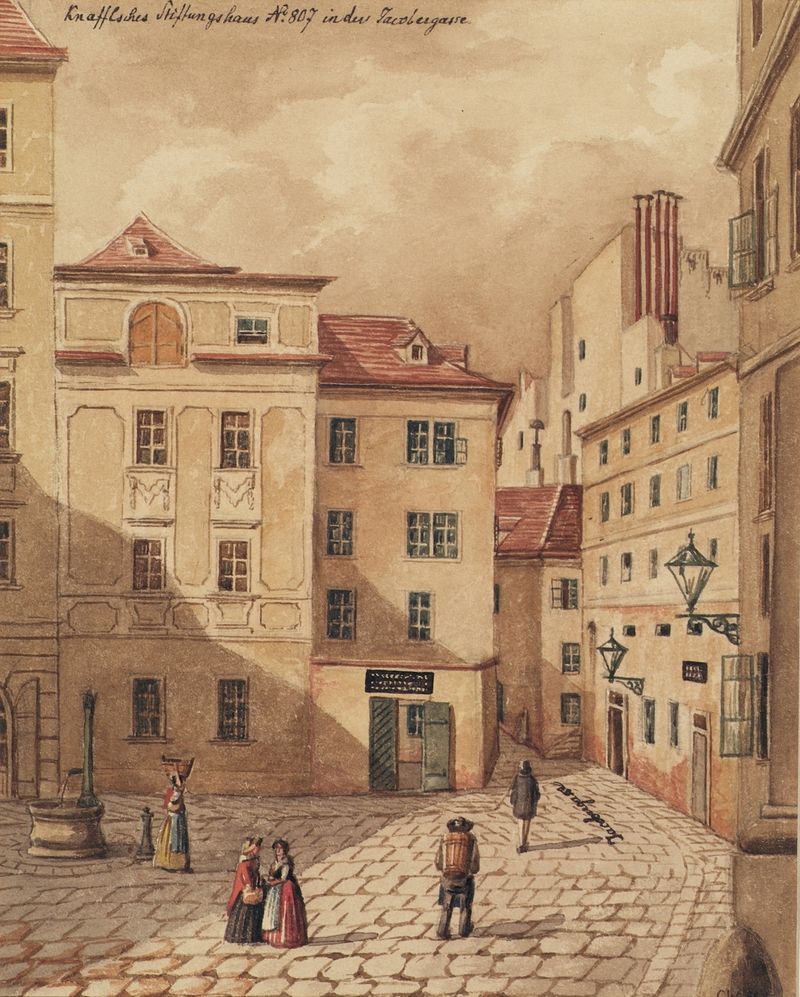
More Architecture Art
Browse all →
The statue of Liberty
Frédéric Auguste Bartholdi

View of Houses in Delft, Known as ‘The Little Street’
Johannes Vermeer

View of Houses in Delft, Known as ‘The Little Street’
Johannes Vermeer

The Cathedral in Rouen. The portal, Grey Weather
Claude Monet

The yellow house
Vincent van Gogh

The Church in Auvers-sur-Oise, View from the Chevet
Vincent van Gogh