
Das Freihaus als Kaserne für das Ersatzbatallon(!) des Landwehrinfanterieregimentes No 24 (Wien) im Kriegsjahre 1916 — History & Facts
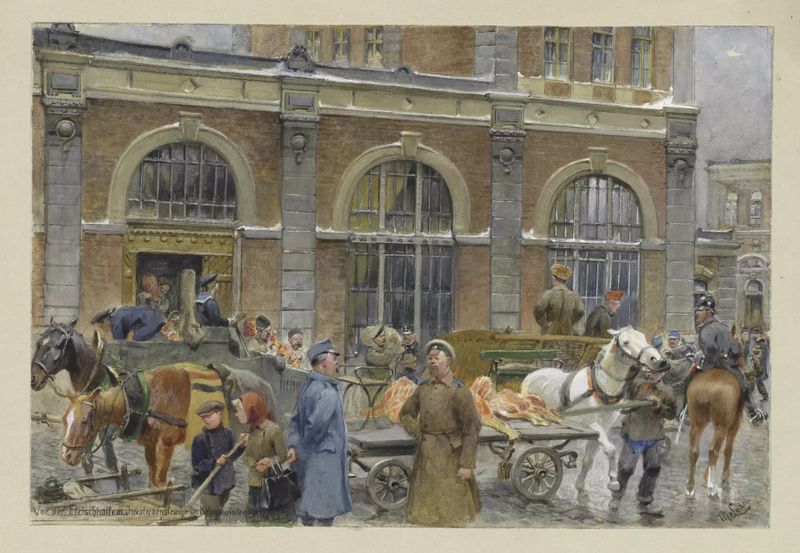
When did color learn to lie? The illusion of light can reveal both truth and deception, enveloping the viewer in a world that is at once vivid and ambiguous. Gaze first at the central structure, where the stark lines of the building rise against a somber sky, casting long shadows that stretch across the canvas. Notice how the muted palette of grays and ochres speaks to the somber realities of wartime, while the subtle glimmers of light reflecting off windows inject a fleeting hope into the otherwise oppressive atmosphere. The angular composition draws your eye into the heart of the scene, where figures, almost ghostlike in their uniformity, march with a sense of purpose—each one a cog in the relentless machinery of conflict. Delve deeper into the stark contrasts present in the work.
The juxtaposition of light and dark symbolizes the struggle between humanity and the mechanistic forces of war. The figures, though uniform, each carry an air of individuality; their postures and expressions hint at a complex array of emotions—fear, determination, and resignation. The building looms large, a metaphor for encroaching authority, while the soft light captures moments of vulnerability amid the stark rigidity of military life. In 1916, Moritz Ledeli found himself at the height of World War I, capturing the harsh realities of military life in Vienna.
This period marked a significant turning point in art, as many artists sought to convey the profound impacts of war on society and individual lives. Ledeli's work reflects a moment when the boundaries between life and art blurred, illustrating not just the physical landscape but also the emotional terrain of a world in turmoil.
More Artworks by Moritz Ledeli
Browse all →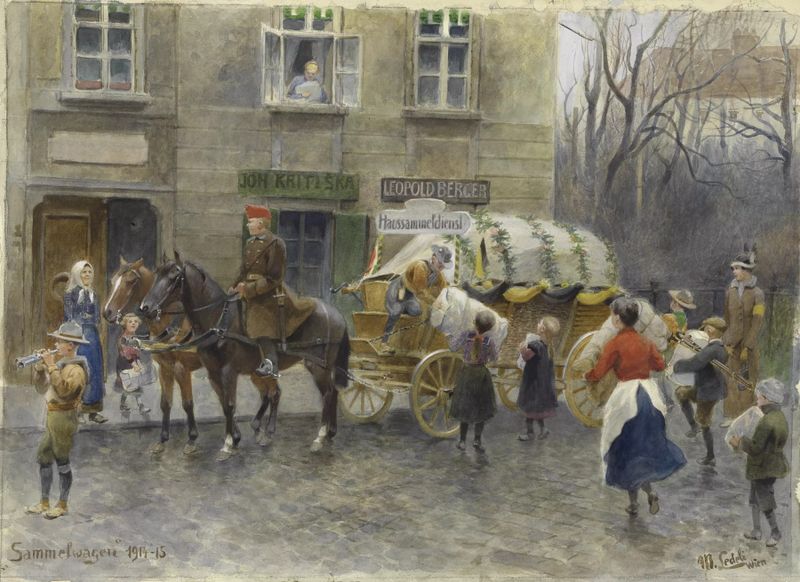
Sammelwagen, 1914-15
Moritz Ledeli

Kohlezufuhr mit Pferden aus den Hofstallungen im Winter 1916-17 in Wien (vor dem Stadtgartenamt)
Moritz Ledeli
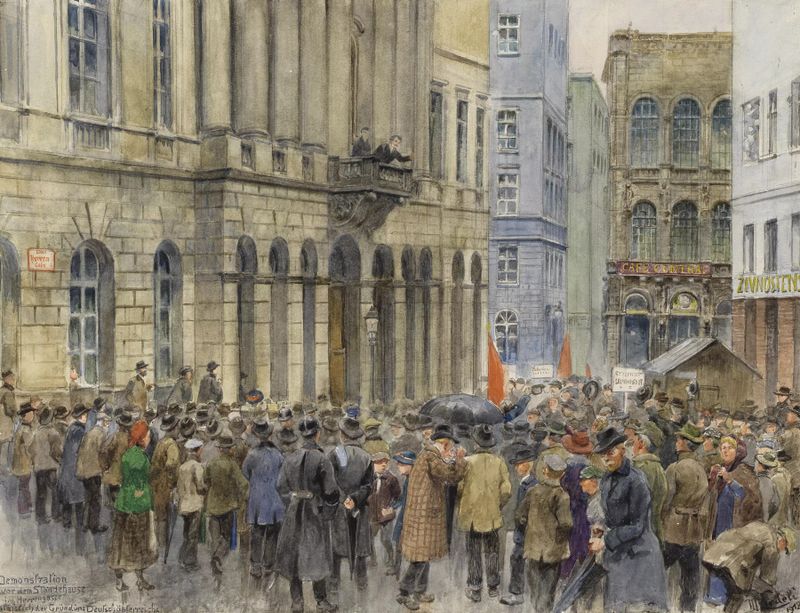
Demonstration vor dem Ständehause in der Herrengasse anläßlich der Gründung Deutschösterreichs
Moritz Ledeli

Ersatz für den Eingerückten, (Weltkrieg 1914-16)
Moritz Ledeli
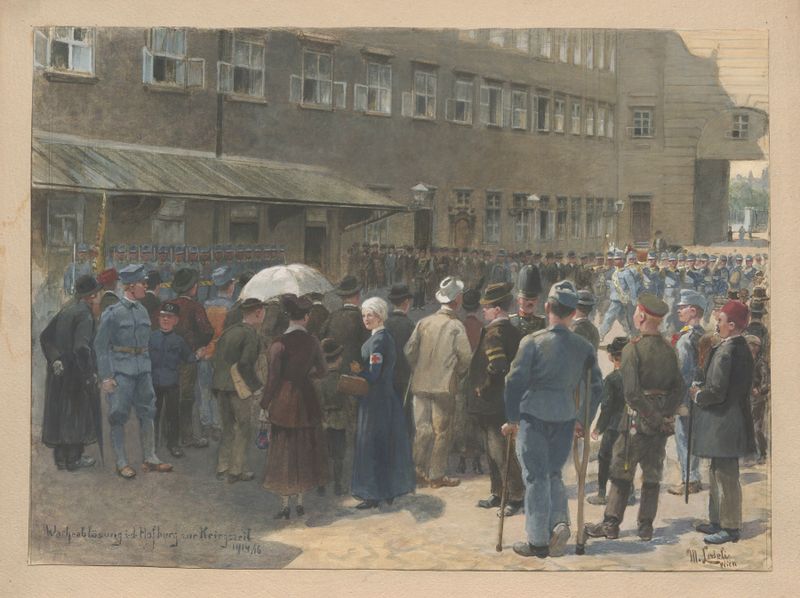
Wachablösung i. d. Hofburg zur Kriegszeit 1914-16
Moritz Ledeli

Hochwasser beim Sperrschiff in Nußdorf 1897
Moritz Ledeli

Überschwemmung bei der Franz Josefs-Brücke
Moritz Ledeli

Patriotische Metallsammlung, Wien, Mai 1915
Moritz Ledeli
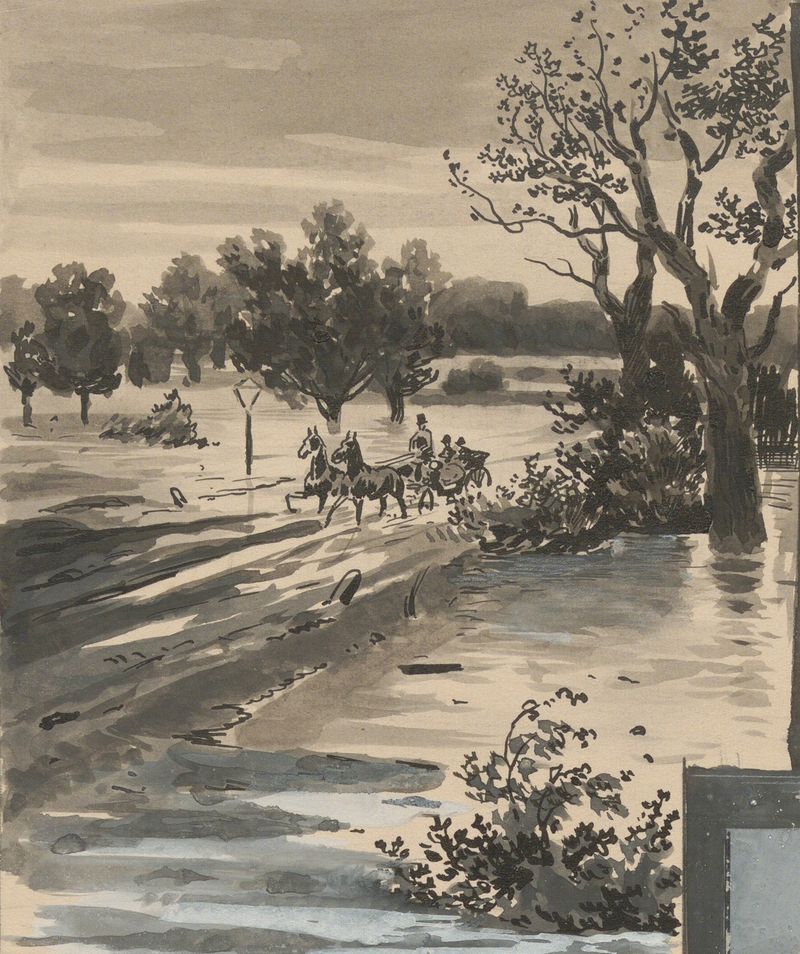
Überschwemmung im Prater
Moritz Ledeli
Vor der Fleisch[markt]halle III. Invalidenstrasse im Kriegswinter 1917-18
Moritz Ledeli
More Architecture Art
Browse all →
The statue of Liberty
Frédéric Auguste Bartholdi

View of Houses in Delft, Known as ‘The Little Street’
Johannes Vermeer

View of Houses in Delft, Known as ‘The Little Street’
Johannes Vermeer

The Cathedral in Rouen. The portal, Grey Weather
Claude Monet

The yellow house
Vincent van Gogh

The Church in Auvers-sur-Oise, View from the Chevet
Vincent van Gogh