Das Gasterntal im Berner Oberland — History & Facts
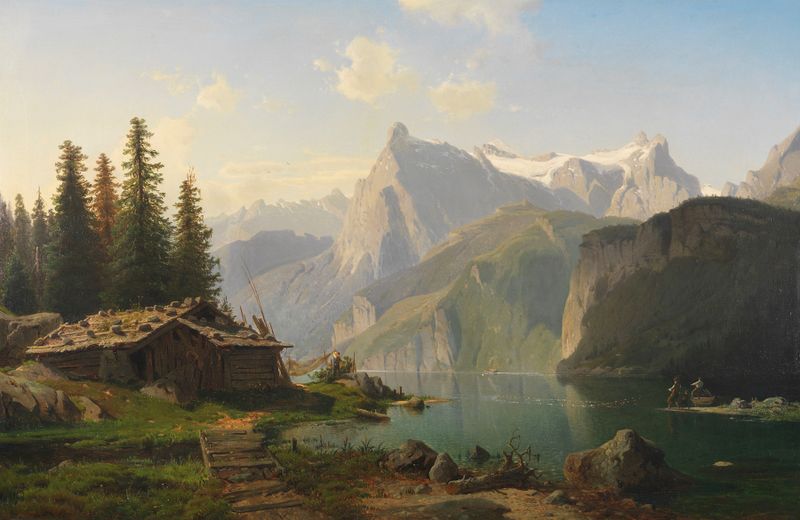
What if beauty was never meant to be finished? In Das Gasterntal im Berner Oberland, the viewer stands on the precipice of an untouched world, a landscape that beckons with whispers of destiny and the promise of the sublime. Focus on the sweeping valley that unfolds to the right, where verdant slopes rise majestically against the backdrop of towering, snow-capped peaks. The soft interplay of greens and blues creates a harmonious balance, drawing the eye toward the tranquil river that meanders through the valley's heart. Notice how the gentle brushstrokes convey a sense of movement, as if the landscape itself breathes under the warm embrace of sunlight filtering through scattered clouds. Intriguingly, the painting juxtaposes the peacefulness of nature with the looming presence of the mountains, suggesting an ever-evolving relationship between humanity and the natural world.
The play of light hints at a fleeting moment, capturing the essence of time and the inevitability of change. This tension between permanence and transience evokes a sense of contemplation, inviting viewers to reflect on their own connection to the landscape. In 1869, Duntze was deeply immersed in the Romantic movement, crafting works that celebrated the awe of nature and its transformative power. Living in Germany, he was inspired by the picturesque beauty of the Swiss Alps, a region that represented both adventure and serenity during a time marked by industrial transformation.
This painting not only reflects his artistic vision but also embodies a yearning for harmony amidst a rapidly changing world.