Am Vierwaldstättersee — History & Facts
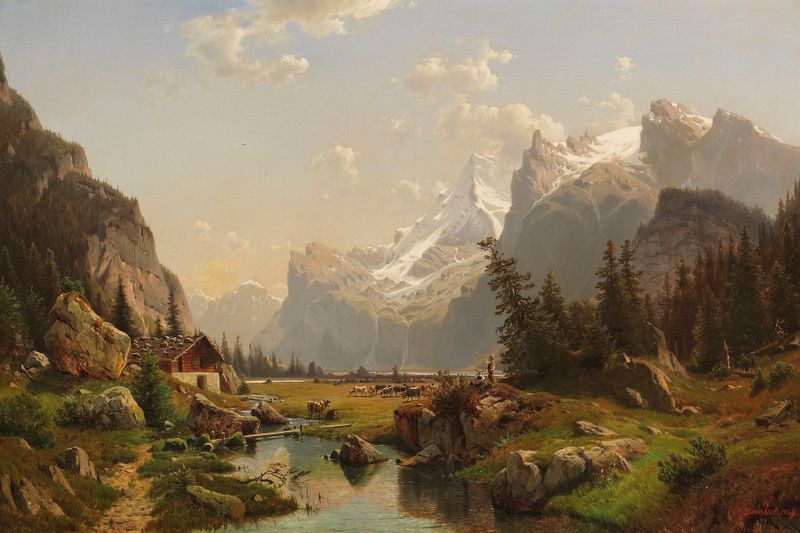
Under the brush, chaos becomes grace. How do we find balance in the ever-shifting dance of land and water, light and shadow? Focus on the tranquil expanse of the lake, where the gentle ripples reflect the soft hues of twilight. The landscape unfolds with majestic mountains standing sentinel over the serene waters, their peaks kissed by the last gold of the setting sun.
Notice how the rich greens of the surrounding foliage contrast with the deep blues of the lake, inviting a moment of stillness amid the vibrancy of nature’s palette. In the foreground, a solitary boat glides quietly, embodying solitude and contemplation. The choice of light—soft yet commanding—casts an ethereal quality to the scene, suggesting both connection and distance. The composition evokes a sense of harmony, where each element, from the towering mountains to the delicate waves, contributes to a greater equilibrium, inviting the viewer to pause and reflect on the interplay of nature and the human spirit. Johannes Bartholomäus Duntze created this work in 1859, during a time of personal exploration and artistic evolution.
Living in the picturesque landscapes of Switzerland, he was influenced by the Romantic movement’s emphasis on nature and emotional depth. This piece reflects the era’s fascination with sublime landscapes, merging realism with an introspective view of the natural world, and encapsulating Duntze's commitment to conveying serenity through the beauty of his surroundings.