Das Tor — History & Facts
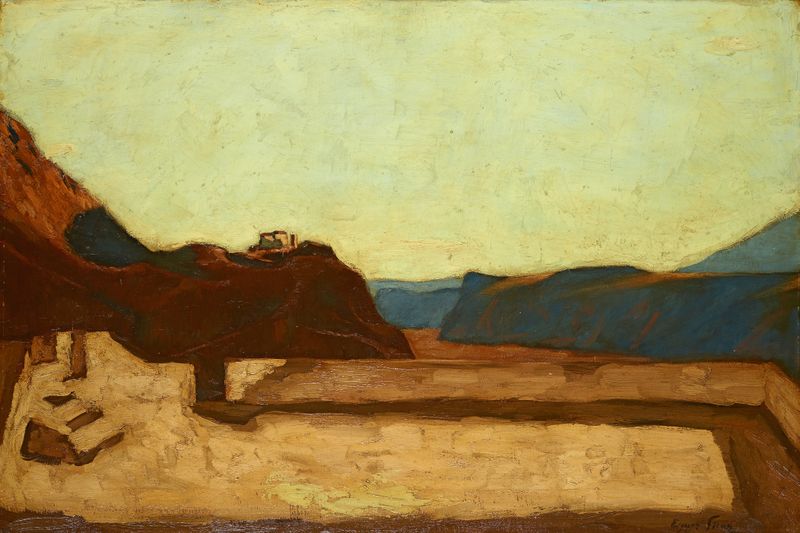
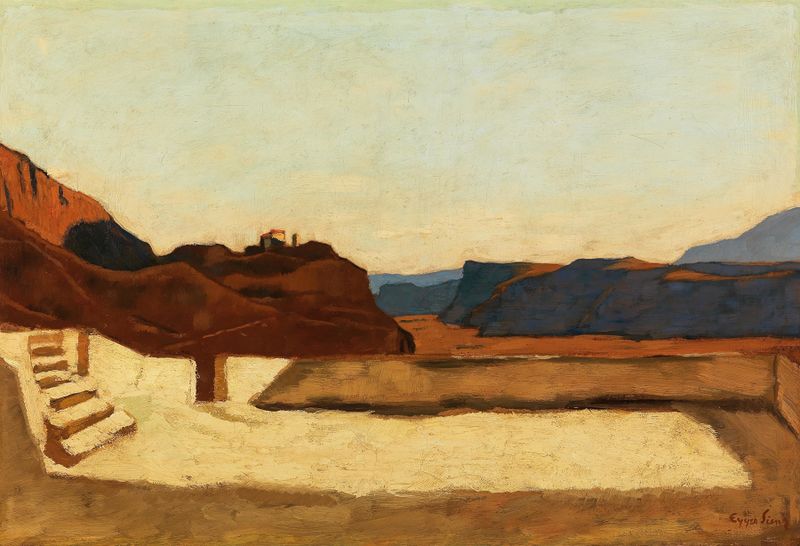
This sentiment reverberates through the canvas, whispering of divinity hidden in the mundane. In a world constantly in flux, art becomes the sacred vessel preserving the essence of fleeting moments. Look to the soft hues in the upper left corner; they blend seamlessly into the warm earth tones below. The interplay of light and shadow draws the eye toward the grand archway, a striking contrast that embodies both confinement and freedom.
Notice how the arch stands as a metaphorical threshold, inviting viewers to contemplate the space beyond, while the surrounding landscape is awash in a gentle, ethereal glow, suggesting something otherworldly just out of reach. The figures bowed beneath the weight of their burdens evoke a sense of quiet desperation, as if their toil is a testament to life's struggles. Each gesture tells a story of perseverance, yet the serene backdrop whispers of divine grace, suggesting that even in hardship, there is a higher purpose. This duality of existence—earthly toil and celestial longing—imbues the work with a profound emotional resonance, compelling the viewer to reflect on their own journey. Around 1890, Albin Egger Lienz was immersed in the rich tradition of Austrian painting while exploring themes of spirituality and humanity.
Living in Tyrol, a region known for its striking landscapes, he sought to merge the divine with the earthly, capturing the struggles of his contemporaries against the backdrop of sublime nature. This period marked a transformative time in his career as he began to move away from conventional depictions, embracing a more introspective approach that would influence generations.