Dawn — History & Facts
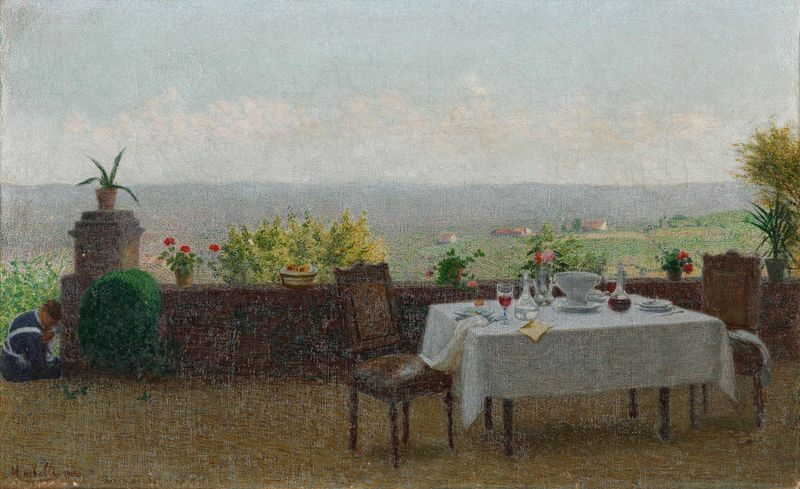
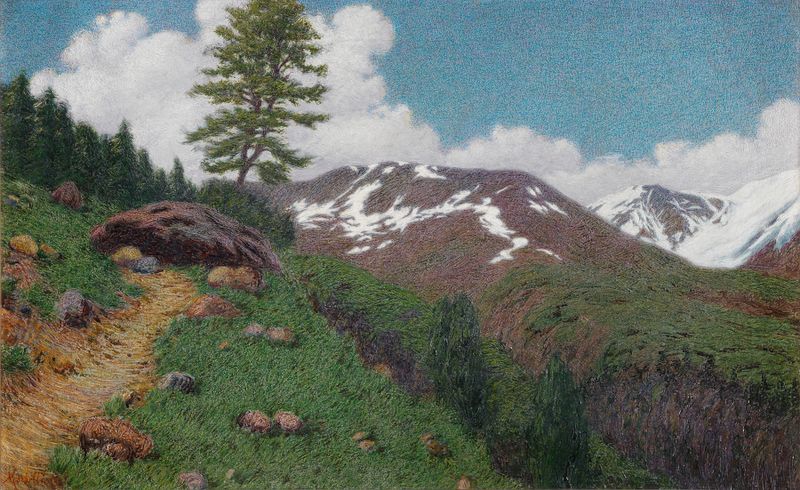
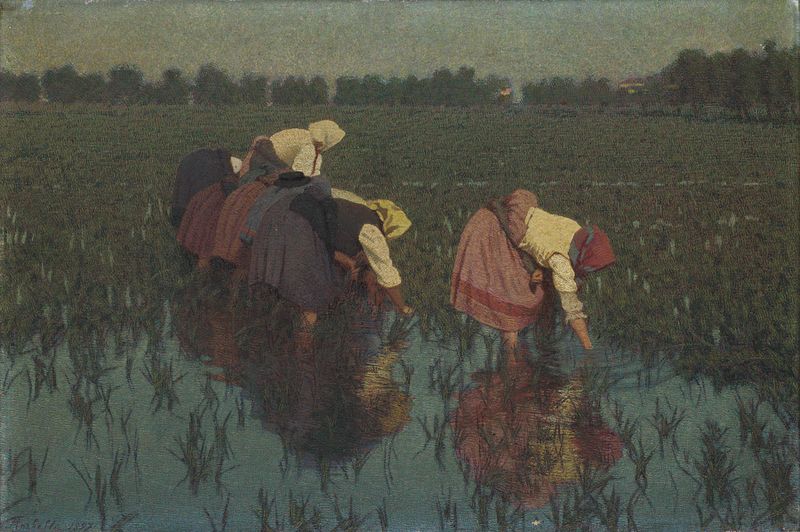
Can paint confess what words never could? In the soft, muted light of dawn, a world awakens, yet beneath its fragile beauty, a tension brews, hinting at an unseen violence. Look to the left at the delicate interplay of light and shadow, where a horizon blushes with the promise of a new day. The ethereal glow seems to cradle the landscape, drawing your eye across the undulating fields, kissed by dew. Notice how Morbelli uses a palette of pastels—gentle pinks and soft blues—to evoke tranquility, yet the subtle undercurrents in his brushwork betray a more turbulent reality lurking beneath the surface.
Each stroke seems to whisper stories of struggle, reminding us that dawn is not merely a beginning, but also a moment fraught with tension. Deeper insights emerge when you consider the curvature of the hills, the way they cradle the horizon, almost as if guarding secrets that may not be whispered aloud. The juxtaposition of serenity against the backdrop of a world not yet fully awake speaks of anticipation, a moment caught in time before the chaos of the day ensues. This lingering stillness captures the duality of existence—the promise of hope entwined with the rawness of conflict that defines human experience. In 1891, Morbelli painted this evocative piece during a time when Italy was undergoing significant social and political change.
The artist, known for his ability to capture light and atmosphere, was influenced by the Symbolist movement, seeking to convey emotional depth through his landscapes. While the world around him grappled with turmoil, he turned to the quiet moments of dawn, exploring themes of beauty and violence woven tightly into the fabric of life.