Il telegramma — History & Facts
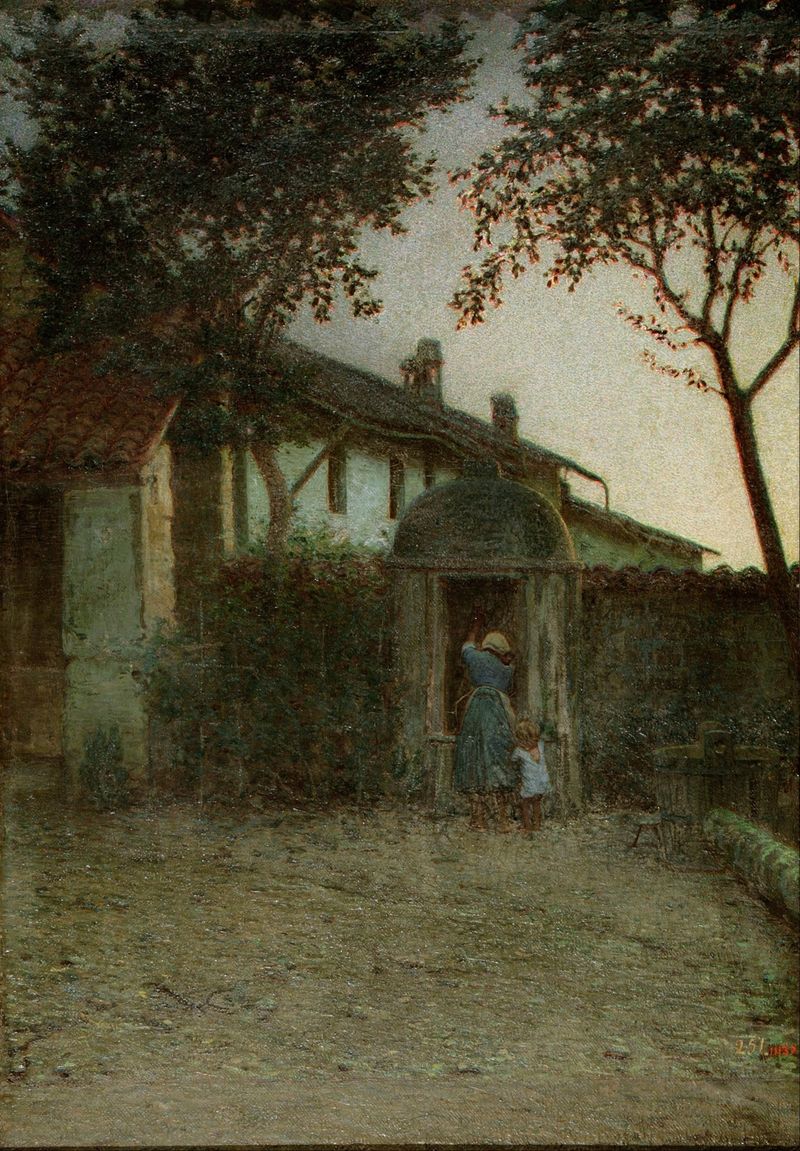
What if silence could speak through light? In Il telegramma, Angelo Morbelli manifests this idea with a haunting energy, capturing the tension between calmness and underlying turmoil. Look to the left where the soft, diffused light streams through a window, illuminating an elderly man seated in a chair, clutching a telegram. The contrast of light and shadow creates a palpable sense of intimacy within the scene. Notice how the muted palette, dominated by warm earth tones, envelops the figures and surroundings, imbuing the moment with a deeper emotional weight.
The textures of the man's clothing and skin are rendered with meticulous detail, inviting the viewer to ponder his story. Yet, beneath this serene facade lies a stark tension. The telegram, a harbinger of change, and perhaps violence, stands in stark contrast to the stillness of the room. The elderly man’s expression, a mix of anticipation and dread, suggests a past filled with loss or impending disruption.
The absence of any other figures amplifies the isolating effect of this moment, turning the telegram into a symbol of both communication and disconnection. Created during a period of significant social upheaval in Italy, Morbelli painted this work in an era marked by the rise of modernism and the shifting landscapes of human experience. Though the exact date remains uncertain, the artist’s focus on psychological depth reflects the broader artistic movement towards realism and the exploration of the human condition. Here, he captured not just a moment, but the silent violence that often lurks beneath the surface of everyday life.