Days of Sunshine — History & Facts
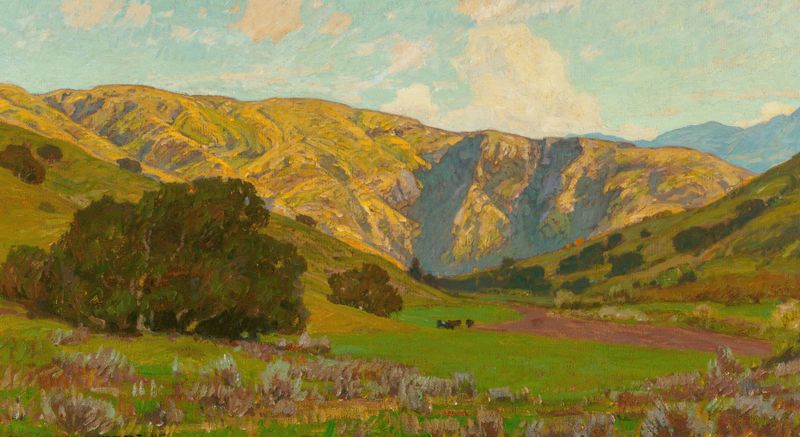
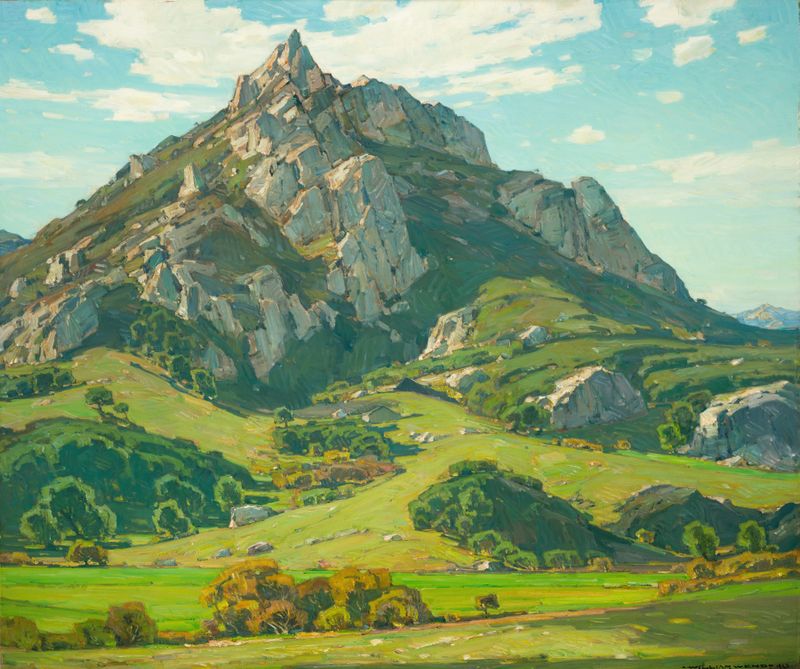
When did color learn to lie? The vibrant hues that saturate the canvas beckon us to delve deeper, revealing layers of emotion hidden in the shadows. Look to the left at the sun-drenched meadow, where golden light dances across swaying grasses. Notice how the shadows elongate at the edges, darkening the vibrant greens into deep, mysterious hues. Wendt's bold brushstrokes create a texture that invites touch, while the smooth transitions between light and dark evoke a sense of warmth and tranquility.
The composition flows with the gentle curves of nature, drawing the eye to the horizon, where the interplay of color captures the essence of a serene afternoon. Yet, beneath this idyllic surface lies a duality. The cheerful colors hint at joy, yet the deepening shadows suggest an impending evening, a transition from day to night that carries a whisper of melancholy. Perhaps the sunshine brings with it a fleeting happiness, reminding us that every moment is tinged with the inevitable passage of time.
These subtleties resonate with anyone who has felt the bittersweet nature of life's brightness and shadows, urging us to reflect on our own experiences. In 1925, Wendt was immersed in the California landscape, painting en plein air as part of the burgeoning California Impressionism movement. His works reflected not only the beauty of the natural world but also the growing tensions within the art community as artists sought to break away from European techniques. The combination of light and shadow in this piece encapsulates both his mastery over color and his desire to capture the essence of a transient moment in time.