De driemastbark ‘Koophandel’ op stormachtige zee met noodroer — History & Facts
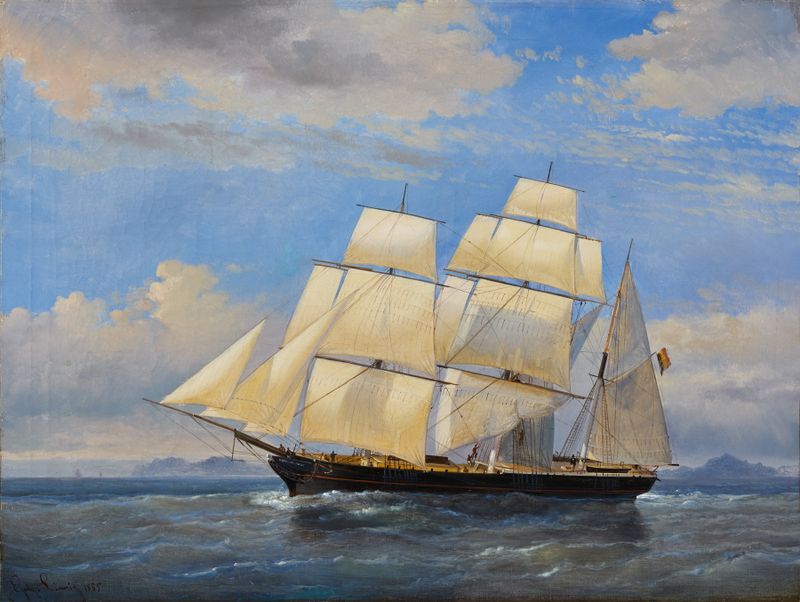
In De driemastbark ‘Koophandel’ op stormachtige zee met noodroer, the tumultuous dance of wind and water is transformed into a masterful expression of power and struggle. Here, the fury of nature contrasts vividly against human endeavor, creating a compelling narrative that invites deeper reflection. Look to the center where the ship, a three-masted bark, battles monumental waves, its sails taut with the relentless gusts of the storm. Notice how the painter employs sharp contrasts between dark, roiling clouds and the frothy white of the cresting waves, capturing the raw energy of the scene.
The vessel, depicted with precise detail, stands resilient against the chaos surrounding it, and the colors—deep blues, grays, and hints of white—convey both danger and beauty, drawing the viewer’s eye along the tumultuous sea. Beneath the surface lies a profound contrast between man and nature, as the bark becomes a symbol of human ingenuity against the backdrop of the unfathomable forces of the ocean. The emergency rudder, rendered with meticulous attention, speaks to a moment of desperation and resilience, while the sweeping waves suggest an almost violent beauty, highlighting the frail yet daring spirit of those who dare to sail. This tension between chaos and control evokes a visceral reaction, prompting reflections on our vulnerability in the face of nature's might. Egide Linnig created this work in 1856, during a period marked by growing interest in maritime themes and realism within the art community.
Painting in the Netherlands, where the sea was an integral part of daily life and history, he captured the essence of a genre that resonated deeply with audiences. At this time, Linnig was establishing himself as a notable marine painter, merging technical skill with emotional depth—a testament to his understanding of both the sea and the human experience intertwined with it.