De haven van Civitavecchia — History & Facts
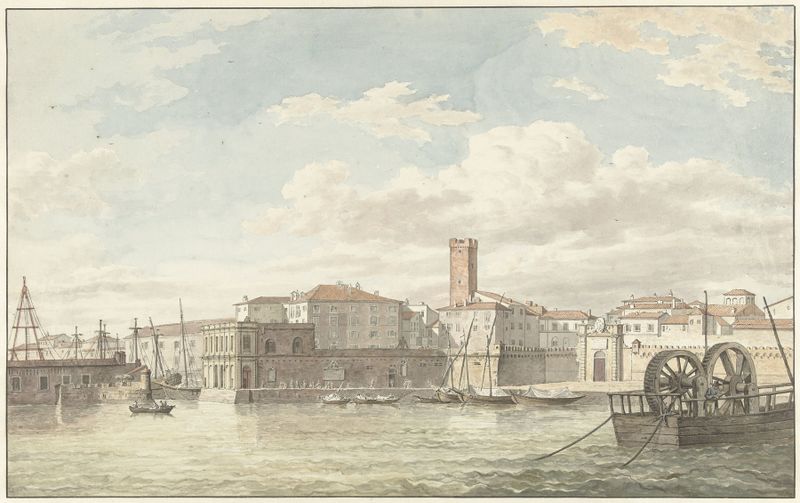
Could beauty survive in a century of chaos? The canvas whispers of a world poised between serenity and upheaval, inviting viewers to explore its depths. Look to the left where the gentle curve of the harbor meets the horizon, a harmonious blend of azure and earthy tones. The strokes of soft pastels create an ethereal sky, transitioning from the warm glow of dawn to the cool embrace of the sea. Notice how the boats rest peacefully on the water, their reflections dancing with the light, inviting contemplation of movement and stillness.
An intricate interplay of shadows suggests both the fleeting nature of time and the enduring spirit of the place. Delve deeper into the composition, where the bustling activity of port life contrasts with the tranquil beauty of nature. The figures engaged in labor hint at the toil of daily existence, juxtaposed with the serene backdrop that embodies a fleeting moment of peace. Here, the artist captures not only the physical space of Civitavecchia but also the emotional landscape of a world awakening from turmoil, where every brushstroke serves as a reminder of resilience amidst uncertainty. Jean Grandjean painted this piece in 1779, during a period marked by political unrest and shifting artistic movements.
At the time, Europe was navigating the complexities of revolution and change, and the artist found inspiration in the juxtaposition of daily life against a backdrop of beauty. Working in the heart of Italy, he sought to evoke a sense of calm, perhaps as a response to the chaotic world around him, encapsulating a moment in history where hope and beauty could still emerge.