
De heilige Gregorius leest een boek — History & Facts
Could beauty survive in a century of chaos? In a world swirling with upheaval and uncertainty, transformation breathes life into the quiet moments captured by the brush. Look to the left at the serene figure of St. Gregory, surrounded by a warm, muted palette that evokes a sense of sanctuary. The subtle interplay of light and shadow on his robes draws your gaze inward, while the soft glow illuminating the open book hints at profound knowledge and reflection.
Notice how the delicate details of the golden chalice beside him contrast with the darker, weighty background, symbolizing the duality of the sacred and the mundane. Beneath the tranquil exterior lies a wealth of meaning. The open book signifies not only wisdom but also the potential for transformation within turbulent times. The stillness of the saint contrasts with the tumult beyond his immediate surroundings, suggesting that in moments of chaos, there exists a sanctuary of thought and faith.
The ornate textures of the fabric and the gilded elements may reflect a clash between the spiritual and the earthly, inviting contemplation on the nature of true beauty amidst disarray. Theodorus van Kessel painted this piece in the mid-17th century, a period marked by political strife and cultural tension in the Netherlands. Emerging from the Mannerist tradition, he sought to blend realism with a spiritual undertone, capturing the soul’s quest for solace and enlightenment during an age of transformation. This artwork stands as a testament to the possibility of finding beauty and sanctuary within chaos.
More Artworks by Theodorus van Kessel
Browse all →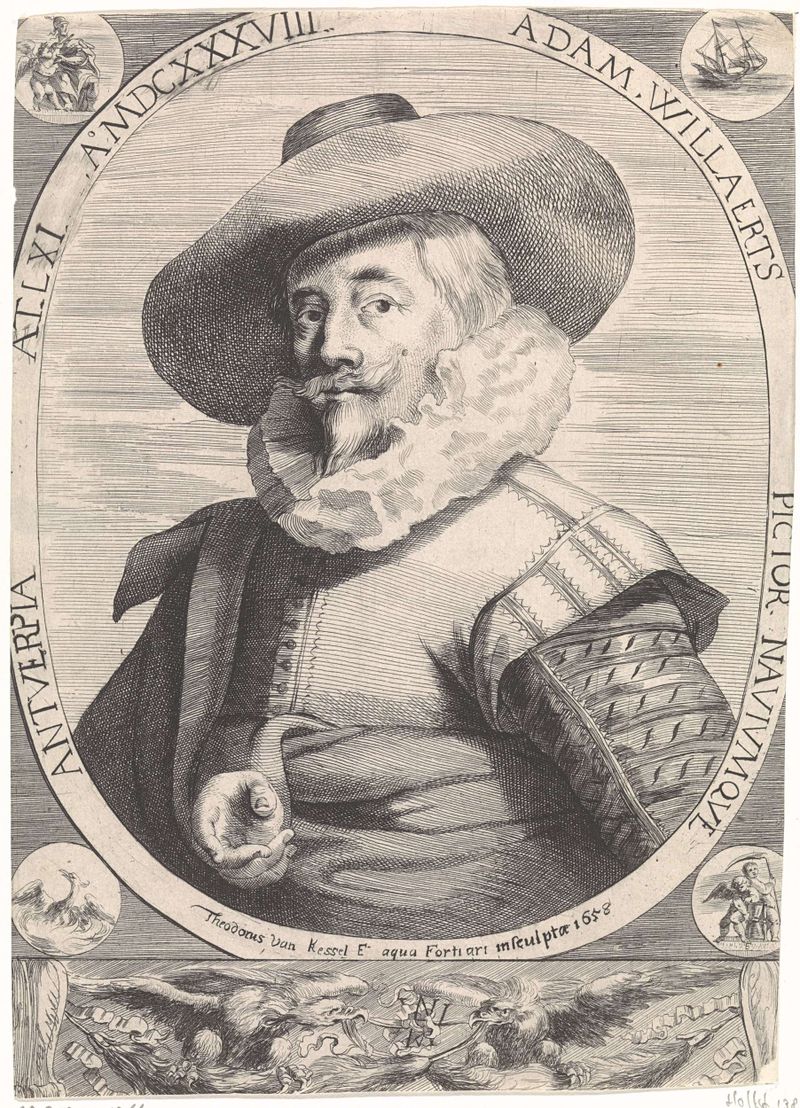
More Religious Art
Browse all →
The Return of the Prodigal Son
Rembrandt van Rijn

The Garden of Earthly Delights
El Bosco

Count Orgaz’ funeral
El Greco

The Hundred Guilder Print: the central piece with Christ preaching, the plate arched
Rembrandt van Rijn

The Descent from the Cross
Rogier van der Weyden

The return of the prodigal son
Rembrandt van Rijn