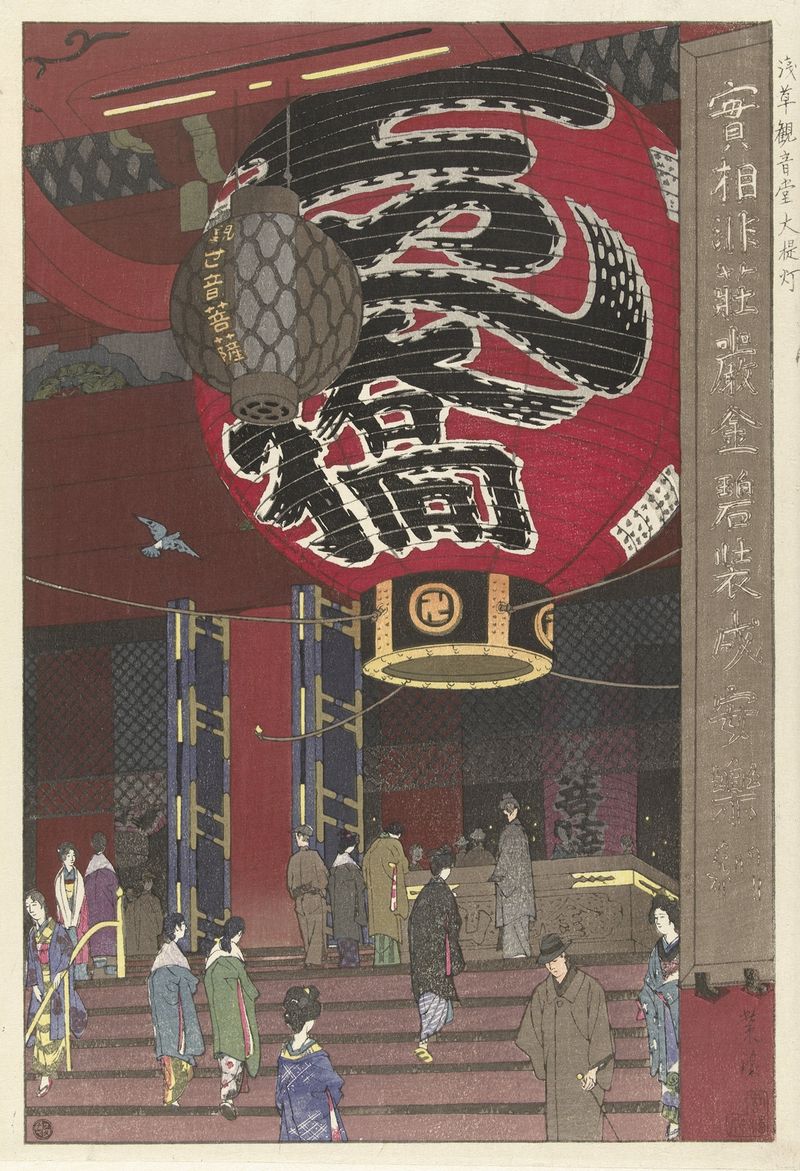
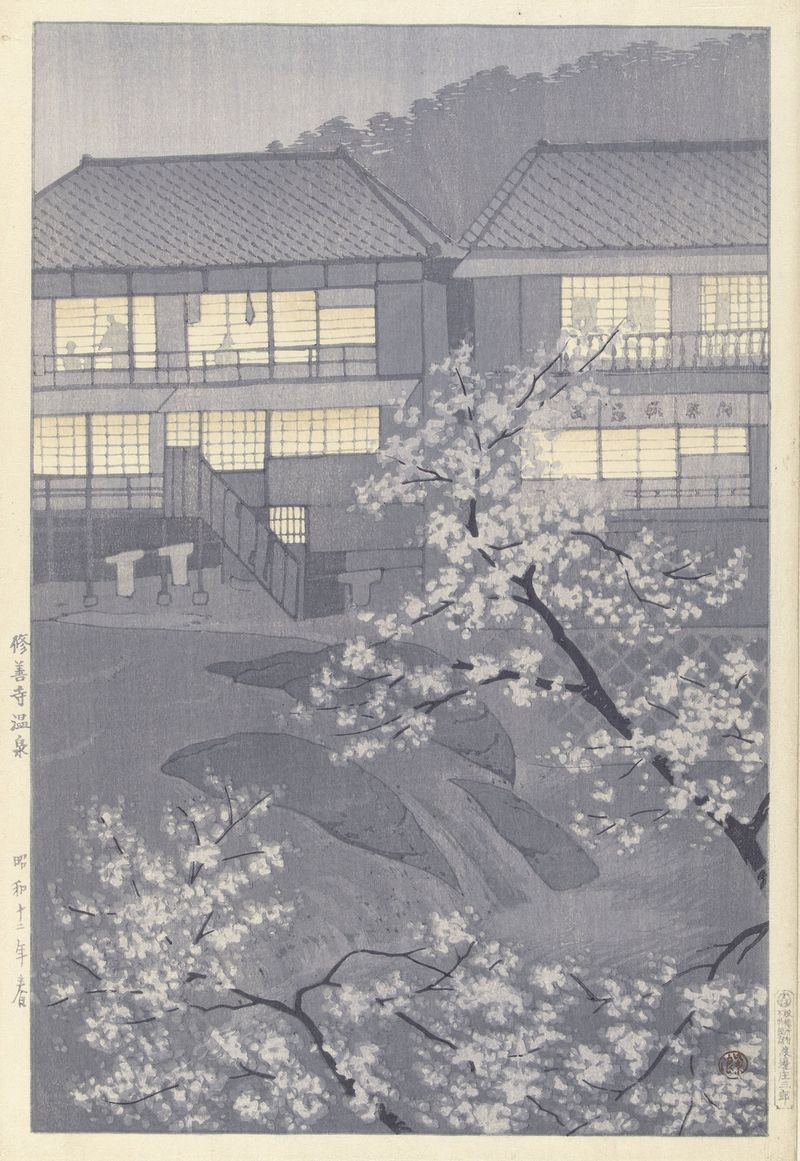
De rand van de Shinobazu vijver tijdens een mistige avond. — History & Facts
In the hushed embrace of twilight, we find ourselves at the edge of a tranquil pond, where ethereal beauty meets the divine in the obscured light of a misty evening. Here, nature whispers its secrets, urging us to pause and reflect, to immerse ourselves in the soft veils of color that cascade over the landscape. Begin by looking at the center of the composition, where the shimmering water captures the fading light of day. The palette of blues and greens evokes a serene atmosphere, merging seamlessly with the gossamer fog that hangs in the air.
Observe how the delicate brushstrokes create a sense of movement in the stillness, leading the eye toward the distant silhouettes of trees that guard this sacred space. The contrast between the softness of the mist and the sharp outlines of nature’s forms invites contemplation. As you explore the edges of the scene, subtle details reveal deeper meanings. The interplay of light and shadow hints at hidden realms, suggesting a connection between the earthly and the spiritual.
The encroaching mist symbolizes the divine presence, a reminder of the unseen forces that shape our existence. The stillness of the water reflects both tranquility and mystery, urging viewers to confront their own introspections amid the beauty of the transient moment. In 1932, Kasamatsu Shirô painted this evocative piece during a period when Japan was navigating rapid modernization and cultural shifts. Living in a time when traditional art forms were being overshadowed by Western influences, Shirô sought to capture the essence of his homeland through landscapes that evoke harmony with nature.
With a commitment to preserving the spiritual connection to the environment, this work stands as a testament to his artistic vision and the legacy of Japanese woodblock printing.