De redding van Kapitein Cantillon — History & Facts
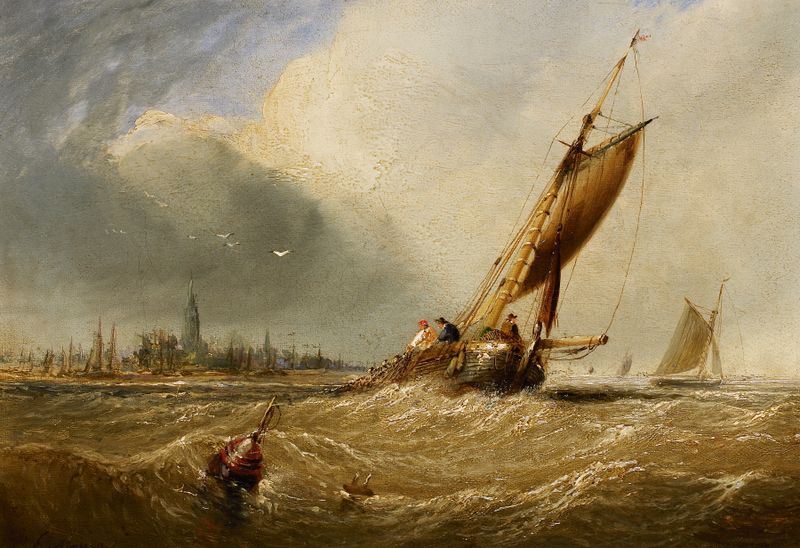
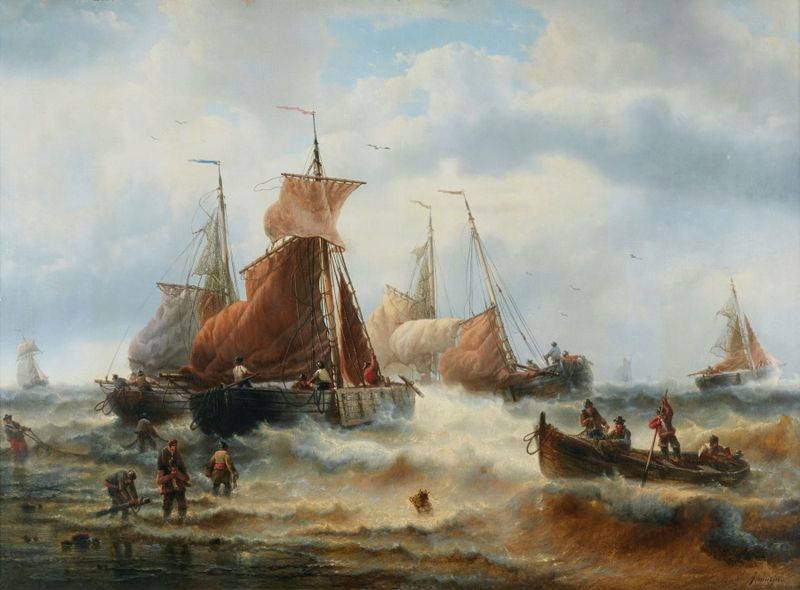
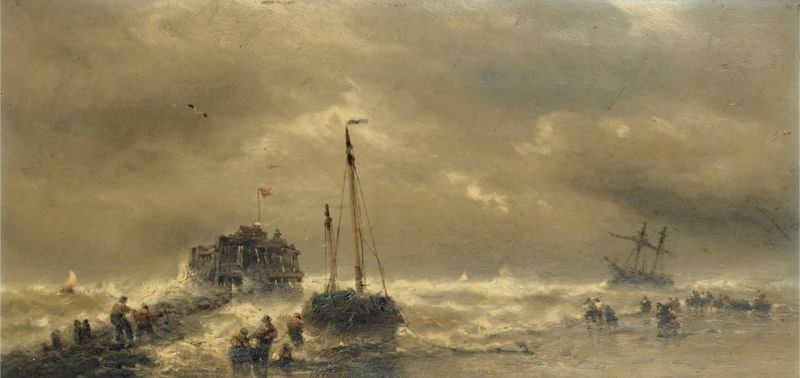
Where does light end, and longing begin? In the delicate interplay of shadow and illumination, we find the essence of human experience distilled into a singular moment. Look to the center of the composition, where the solitary figure of Captain Cantillon is illuminated against a backdrop of tumultuous waves and dark clouds. The painter’s deft brushstrokes create a vivid contrast between the warm glow of the captain’s form and the cold, unyielding shadows that encircle him. Notice how the light reflects off the crests of the struggling sea, suggesting not just a physical struggle but an emotional urgency that reverberates through the painting. The tension is palpable; each stroke conveys the weight of desperation and hope.
The captain’s posture, a blend of determination and vulnerability, speaks to the duality of heroism. While he fights against nature’s wrath, the looming shadows suggest an existential battle with fate itself. Each element—the turbulent sky, the swirling water—embodies the uncertainty of survival, contrasting the resilience of the human spirit. François Musin likely created this work in the mid-19th century, a time when maritime drama was a popular subject in art.
Living in Belgium, he was part of a movement that sought to capture both the beauty and the peril of the sea, reflecting the anxieties and ambitions of his era. As seafaring continued to shape economies and lives, it was an appropriate backdrop for exploring themes of courage and sacrifice, encapsulated so poignantly in this evocative piece.