
The two Synagogues in Amsterdam — History & Facts
Can paint confess what words never could? In The Two Synagogues in Amsterdam, the artist unveils a poignant dialogue between architecture and faith, each brushstroke whispering the yearning of a community. First, look to the left—there, the grandeur of the Portuguese Synagogue stands tall, its warm light illuminating the textured stone and wooden beams. Notice how the artist captures the delicate interplay of shadow and light, a technique that breathes life into the structure, while the vibrant blue sky wraps around it like a promise. Direct your gaze to the right, where the smaller Ashkenazi Synagogue rests—its muted tones evoke a sense of intimacy, revealing the contrast between the two houses of worship and their distinct narratives. Within this serene landscape lies a tension steeped in history.
The juxtaposition of the two synagogues reflects the varied Jewish experiences in Amsterdam, a city marked by both acceptance and segregation. The careful detailing of each building hints at the cultural richness they embody, yet there is an underlying sadness—an unfulfilled yearning for unity in diversity. The soft colors suggest a world bathed in hope, yet the viewer senses the weight of untold stories hidden beneath the textured surfaces. In the years between 1680 and 1685, Berckheyde was immersed in the lively artistic environment of Amsterdam, a flourishing hub for artists and thinkers.
This period was marked by an increasing interest in landscapes and urban scenes, offering the artist a canvas to explore the complexities of identity and belonging amid a changing world. The duality captured in this painting not only reflects Berckheyde's technical prowess but also serves as a testament to the enduring spirit of a community navigating its place in a bustling society.
More Artworks by Gerrit Adriaensz. Berckheyde
Browse all →
View of the Golden Bend in the Herengracht
Gerrit Adriaensz. Berckheyde
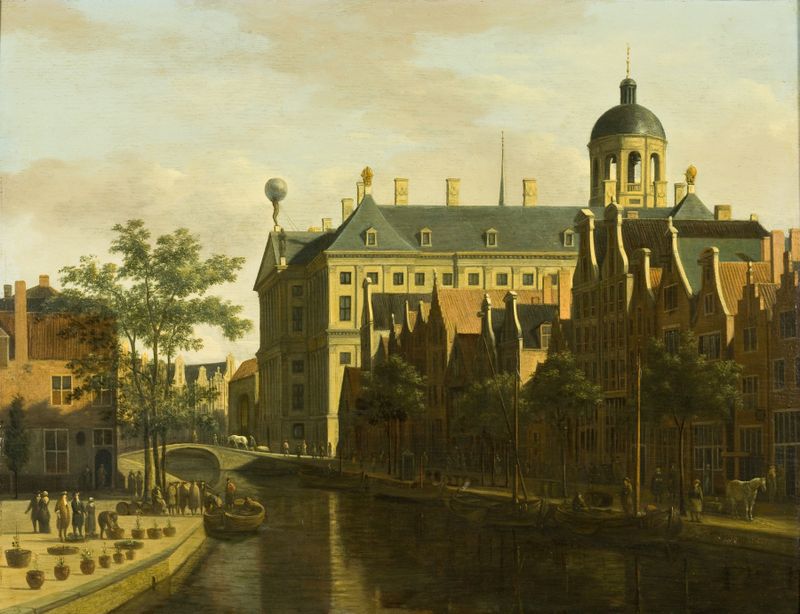
The Nieuwezijds Voorburgwal with the Flower and Tree Market in Amsterdam
Gerrit Adriaensz. Berckheyde
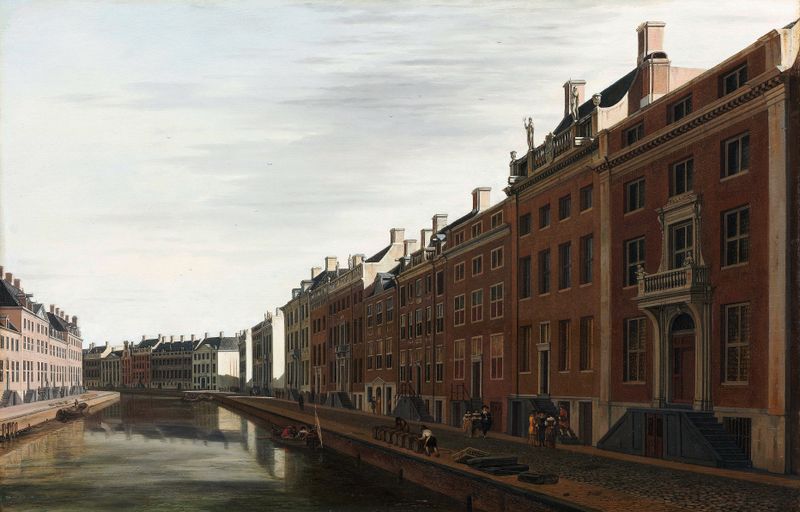
De Gouden Bocht in de Herengracht in Amsterdam vanuit het westen
Gerrit Adriaensz. Berckheyde
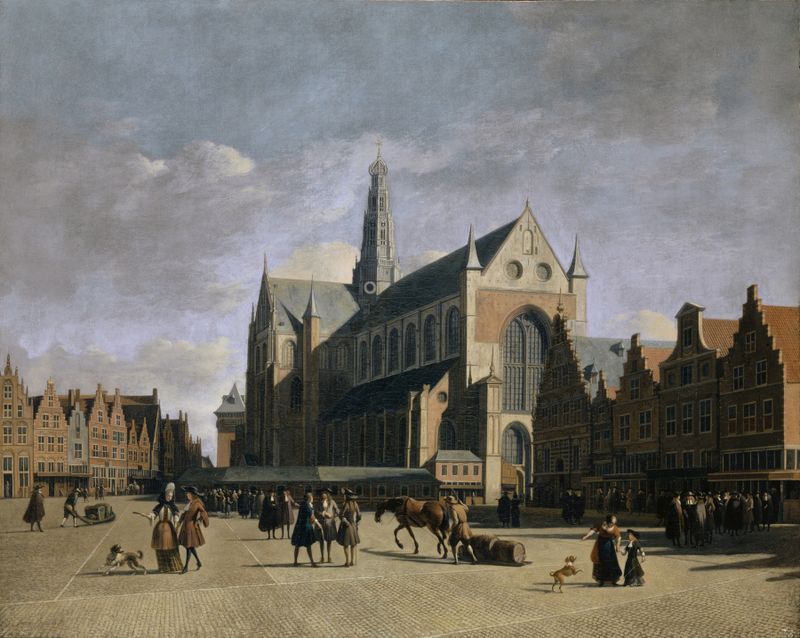
The Market Place in Haarlem
Gerrit Adriaensz. Berckheyde
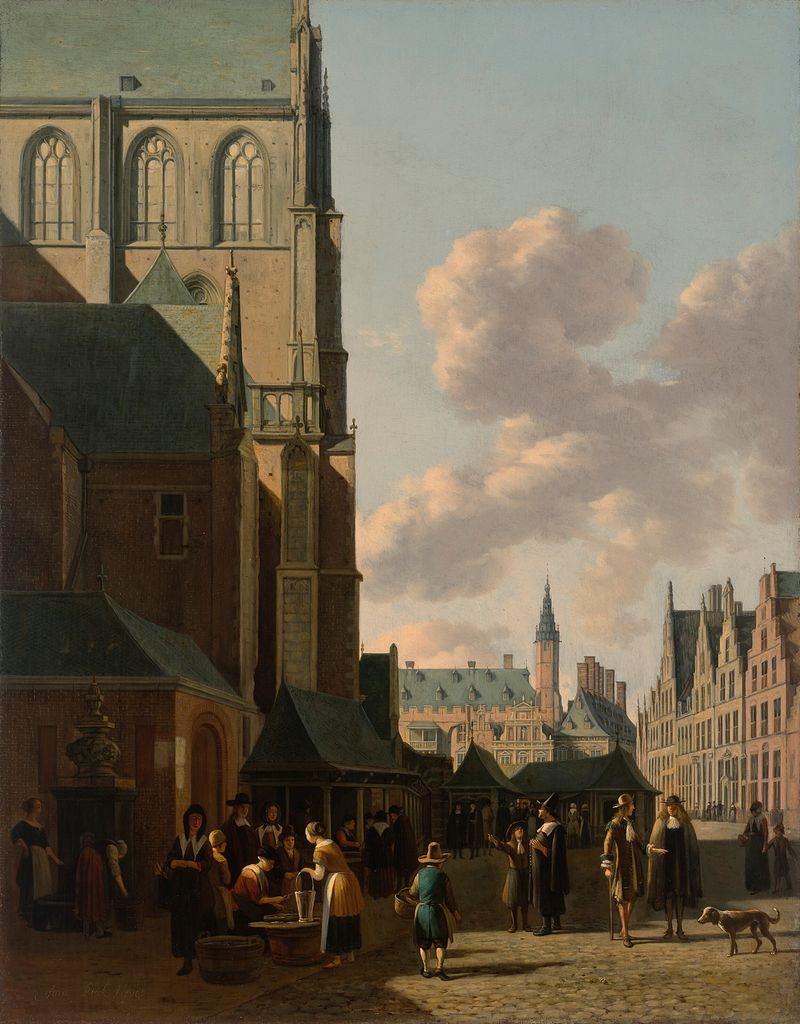
The Grote Markt, Haarlem, looking west, with the Grote Kerk (St Bavo’s) and the fish-market, the Town Hall beyond
Gerrit Adriaensz. Berckheyde
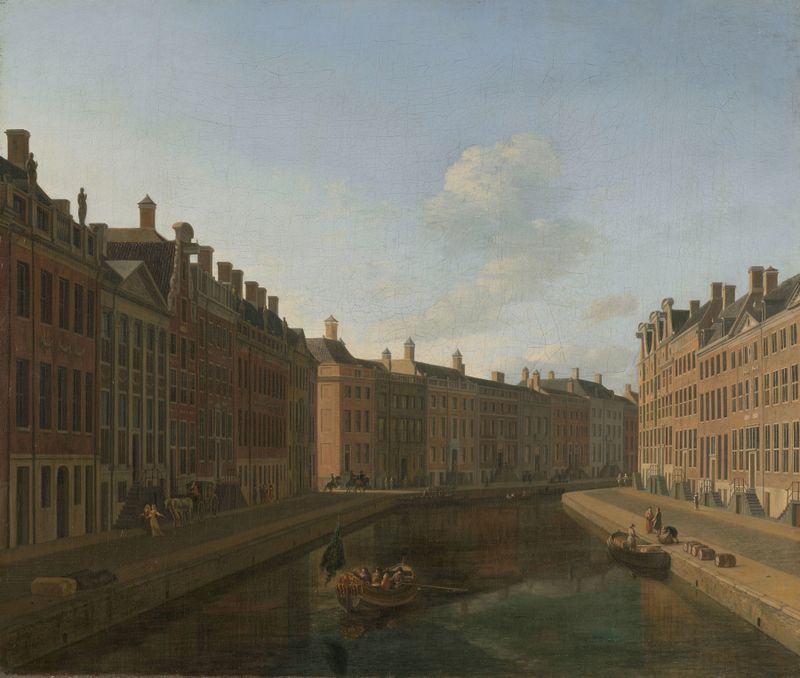
Gezicht op de Gouden Bocht in de Herengracht vanuit het oosten
Gerrit Adriaensz. Berckheyde

The Town Hall on Dam Square, Amsterdam
Gerrit Adriaensz. Berckheyde

The Town Hall in Amsterdam
Gerrit Adriaensz. Berckheyde
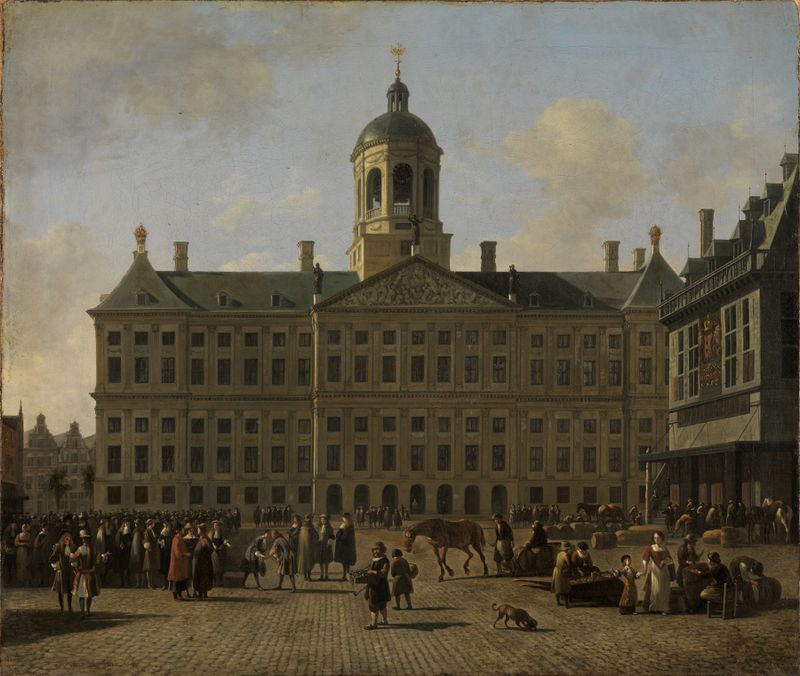
Der Damplatz zu Amsterdam mit dem Rathaus und der Waage
Gerrit Adriaensz. Berckheyde
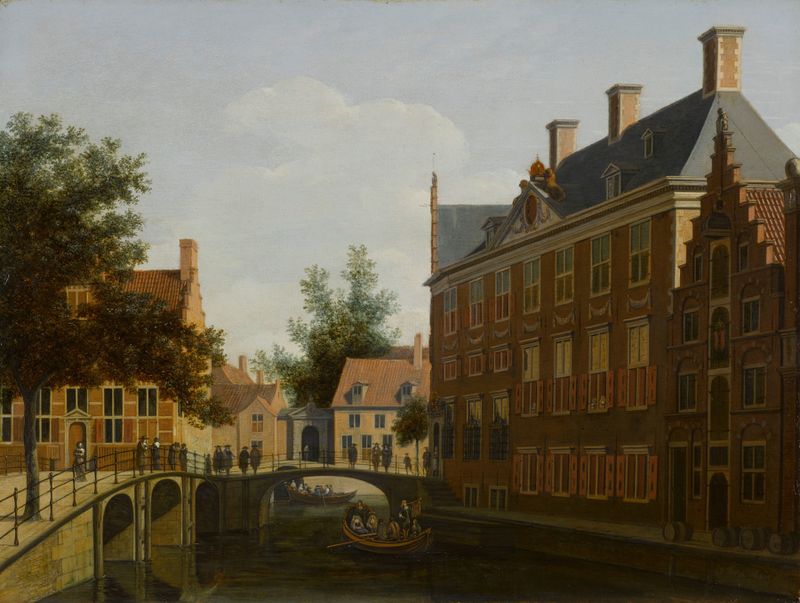
The Oude Zijds Herenlogement (Gentlemen’s Hotel) in Amsterdam
Gerrit Adriaensz. Berckheyde
More Architecture Art
Browse all →
The statue of Liberty
Frédéric Auguste Bartholdi

View of Houses in Delft, Known as ‘The Little Street’
Johannes Vermeer

View of Houses in Delft, Known as ‘The Little Street’
Johannes Vermeer

The Cathedral in Rouen. The portal, Grey Weather
Claude Monet

The yellow house
Vincent van Gogh

The Church in Auvers-sur-Oise, View from the Chevet
Vincent van Gogh