Der Gasthof Pettar in St. Agatha — History & Facts
What if beauty was never meant to be finished? The lingering emptiness in a moment can speak volumes, whispering of stories untold and lives unfulfilled. Focus first on the vast, open space within the painting. The viewer's gaze should be drawn to the empty tables under the dim glow of overhead lights, each one a silent witness to the absence of human presence. Notice how the muted colors of browns and ochres create a warm yet melancholic atmosphere, where shadows stretch across the floor, reflecting both the passage of time and the weight of unfulfilled expectations. Delve deeper into the small details that elevate this work beyond mere observation.
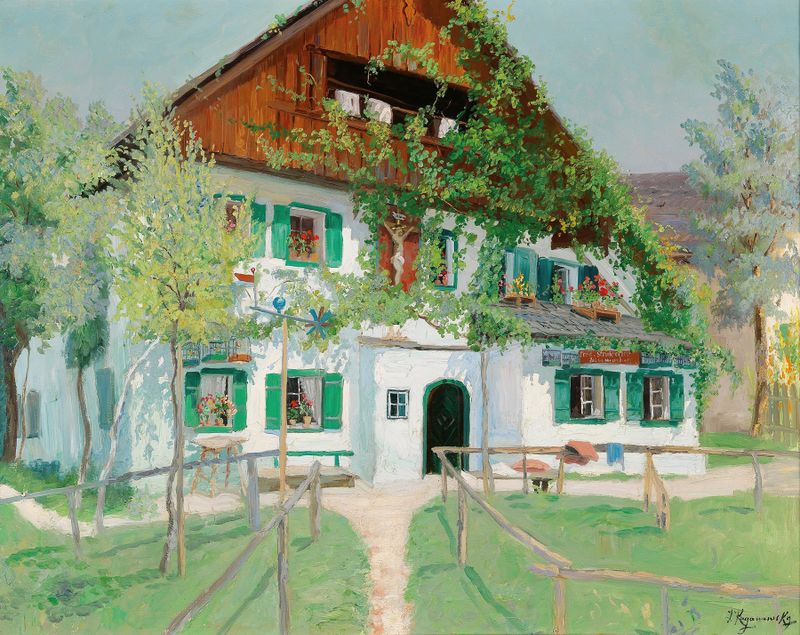
The slightly ajar door hints at the outside world, suggesting that life continues beyond these walls, while the barren tables echo a sense of loneliness that pervades the scene. Each empty chair becomes a vessel for longing, and the stillness of the room contrasts sharply with the vibrancy of life that feels just out of reach. This tension between absence and potential creates a powerful emotional resonance that lingers in the mind. In 1904, Jakob Koganowsky painted *Der Gasthof Pettar in St.
Agatha* during a time of personal upheaval and transition. Living in Europe amidst a rapidly changing artistic landscape, he sought to capture the nuances of everyday life while grappling with themes of isolation and longing. This piece reflects not only his personal journey but also the broader existential inquiries of an era poised between tradition and modernity.