Der Geier im Felsengestein — History & Facts
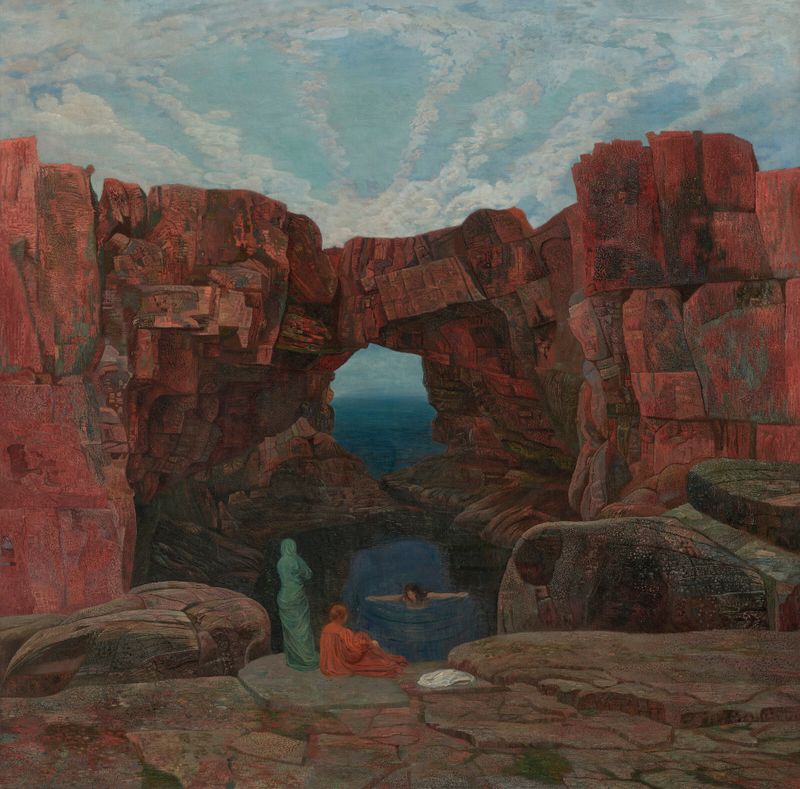
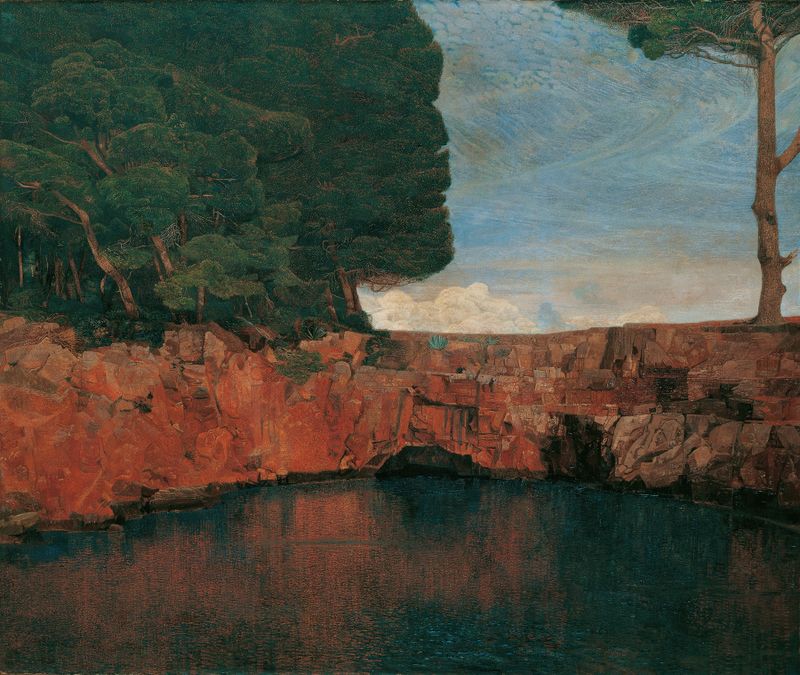
Is this a mirror — or a memory? In the interplay of rock and bird, Der Geier im Felsengestein beckons us to contemplate the boundaries between nature and the divine. Karl Mediz captures a moment suspended in time, where the rugged cliffs cradle a lone vulture, embodying both the earthly and the ethereal. Look closely to the center, where the vulture perches on the jagged ledge, its wings poised as if ready to take flight. The intricate textures of the stone are meticulously rendered, each crevice and shadow a testament to Mediz's skill.
Notice how the light cascades down the cliff face, illuminating the bird's plumage with an almost celestial glow, creating a contrast between the starkness of the rock and the softness of the creature's feathers. The choice of earthy tones, punctuated by hints of gold, invites the viewer deeper into the scene, evoking a sense of reverence. This painting embodies a tension between the permanence of stone and the fleeting nature of life. The vulture, a symbol of both scavenging and soaring, reflects a duality – the earthly struggle for survival against the backdrop of a transcendent sky.
The rugged cliffs, towering and imposing, may represent the barriers we face, while the bird, seemingly at ease, suggests an elevated perspective that embraces the broader journey of existence. It invites introspection on the divine presence within the natural world. Created in 1897, this work emerged during a period of artistic exploration in Europe, where nature was increasingly revered as a source of inspiration. Mediz was deeply influenced by the Symbolist movement, which emphasized emotional experience and the mystical aspects of reality.
Amidst the artistic upheaval of the late 19th century, he found a voice that balanced realism with a profound sense of spirituality, capturing a moment that resonates across time.