Felsenlandschaft bei St. Canzian — History & Facts
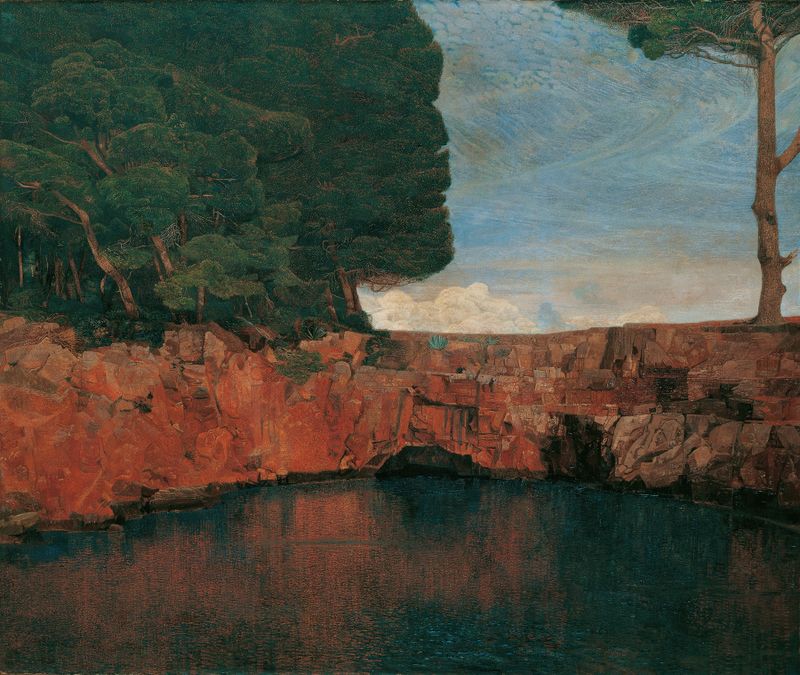
It captures the essence of solitude and the weight of forgotten places, a reminder that even in nature, loneliness can resonate profoundly. Look to the left where a rugged cliff rises, its jagged edges softened by layers of lush greenery. The interplay of light and shadow creates a tapestry of textures, inviting the eye to trace the contours of the rocky landscape. The earthy browns and vibrant greens evoke a sense of life amid stillness, while the subtle blues of the distant sky promise freedom yet remain untouched by the nearby tumult. In this composition, the stark contrast between the formidable cliffs and the gentle foliage encapsulates the tension of isolation versus belonging.
Each element seems to whisper untold stories of nature's resilience and the quiet despair of the spaces left behind. The expansiveness of the vista suggests both a profound beauty and an underlying sense of abandonment, where the viewer is left to ponder their place in the world. In 1897, while creating Felsenlandschaft bei St. Canzian, the artist worked in a shifting landscape of artistic movements, navigating the rise of Impressionism and the encroachment of modernity.
Mediz was based in Austria, reflecting a period of personal introspection amidst rapid societal changes. This work embodies his exploration of natural beauty, infused with a deep awareness of the emotional landscapes that mirror human experience.