Der Inn bei Suben gegen Norden — History & Facts
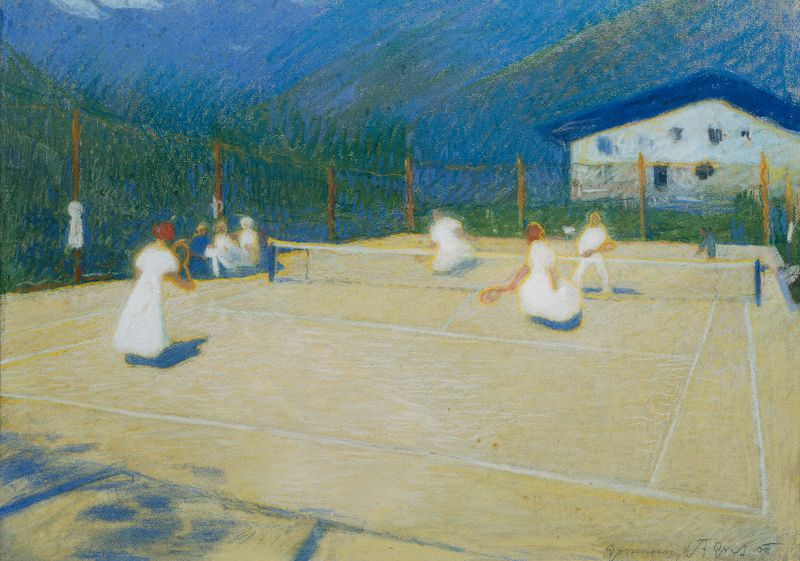
In the haunting stillness of Der Inn bei Suben gegen Norden, silence engulfs the landscape, inviting contemplation and quiet reflection. The tranquil waters mirror an untouched world, while the trees stand sentinel, seemingly whispering secrets of the past. Look to the left at the gentle curve of the river, where the soft hues of blue and green blend seamlessly, evoking a sense of harmony. Notice how the light delicately plays on the water's surface, creating a shimmering path that draws the eye inward.
The composition balances the foreground with the distant horizon, where muted clouds blend into a whisper of twilight, hinting at the day's end. Each brushstroke is deliberate, as if the artist sought to capture not just a moment in time, but a feeling that transcends it. Beneath the serene exterior lies a deep tension between nature and human absence. The stillness of the scene speaks to the silence of forgotten memories, encouraging viewers to ponder the narratives woven into the landscape.
The juxtaposition of the lively, rippling water against the stillness of the trees reflects a quiet yearning, as if the landscape holds its breath, waiting to be remembered. This painting embodies a longing not only for connection with nature but also for the stories that time has obscured. In 1930, Ludwig Ferdinand Graf painted this piece while living in Austria, during a time of significant social and political upheaval in Europe. The interwar period was marked by a search for identity and solace amid chaos, and the simplicity of the natural world offered a refuge for the artist.
This work arose from a broader movement in painting that sought to capture the essence of place and memory, making it a poignant reflection of both the artist's personal experiences and the collective consciousness of his time.